How to Choose Your First Grow Tent? A Complete Beginner’s Guide
What Is a Grow Tent?
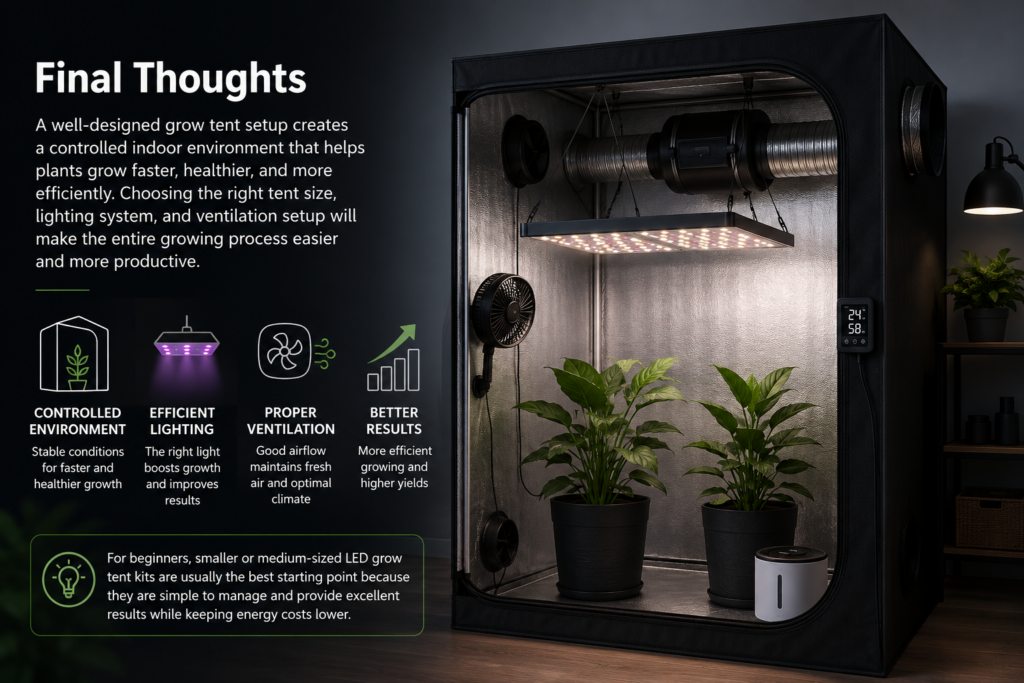
A grow tent is an enclosed indoor growing environment designed to help you control light, airflow, temperature, and humidity.
Modern grow tents use reflective interior walls and ventilation systems to create stable conditions for healthy plant growth throughout the entire growing cycle.
For beginners, grow tents are one of the easiest ways to start indoor growing because they simplify environmental control and help maximize lighting efficiency.
How to Choose the Right Grow Tent Size
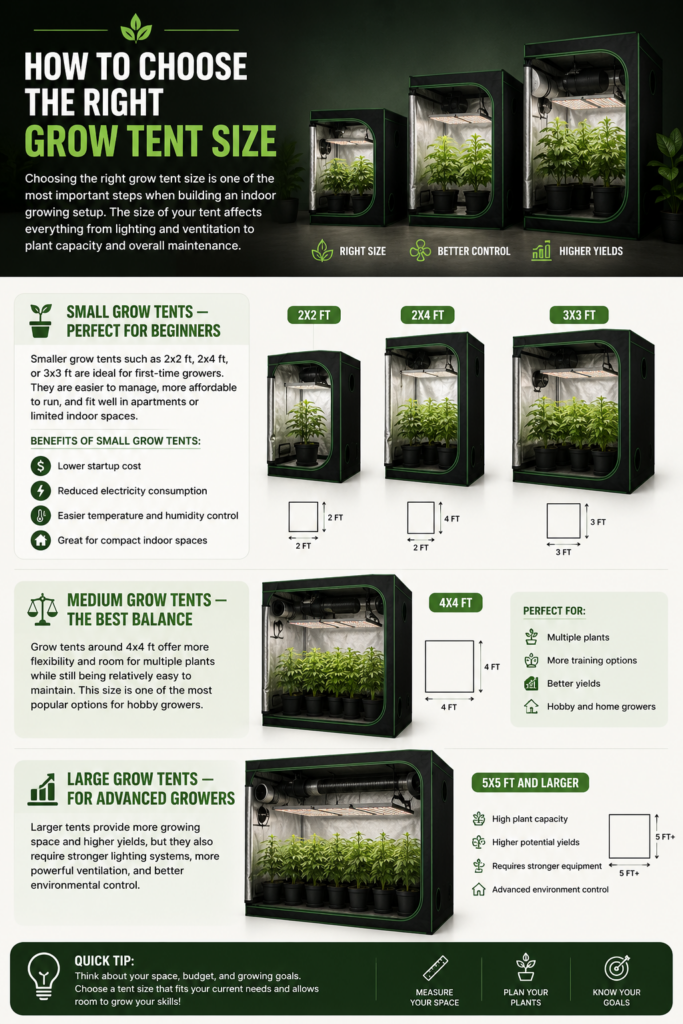
Choosing the right grow tent size is one of the most important steps when building an indoor growing setup. The size of your tent affects everything from lighting and ventilation to plant capacity and overall maintenance
Small Grow Tents — Perfect for Beginners
Smaller grow tents such as 2×2 ft, 2×4 ft, or 3×3 ft are ideal for first-time growers. They are easier to manage, more affordable to run, and fit well in apartments or limited indoor spaces.
Benefits of Small Grow Tents:
Lower startup cost
Reduced electricity consumption
Easier temperature and humidity control
Great for compact indoor spaces
Medium Grow Tents — The Best Balance
Grow tents around 4×4 ft offer more flexibility and room for multiple plants while still being relatively easy to maintain. This size is one of the most popular options for hobby growers.
Large Grow Tents — For Advanced Growers
Larger tents provide more growing space and higher yields, but they also require stronger lighting systems, more powerful ventilation, and better environmental control.
Choosing the Right Grow Light
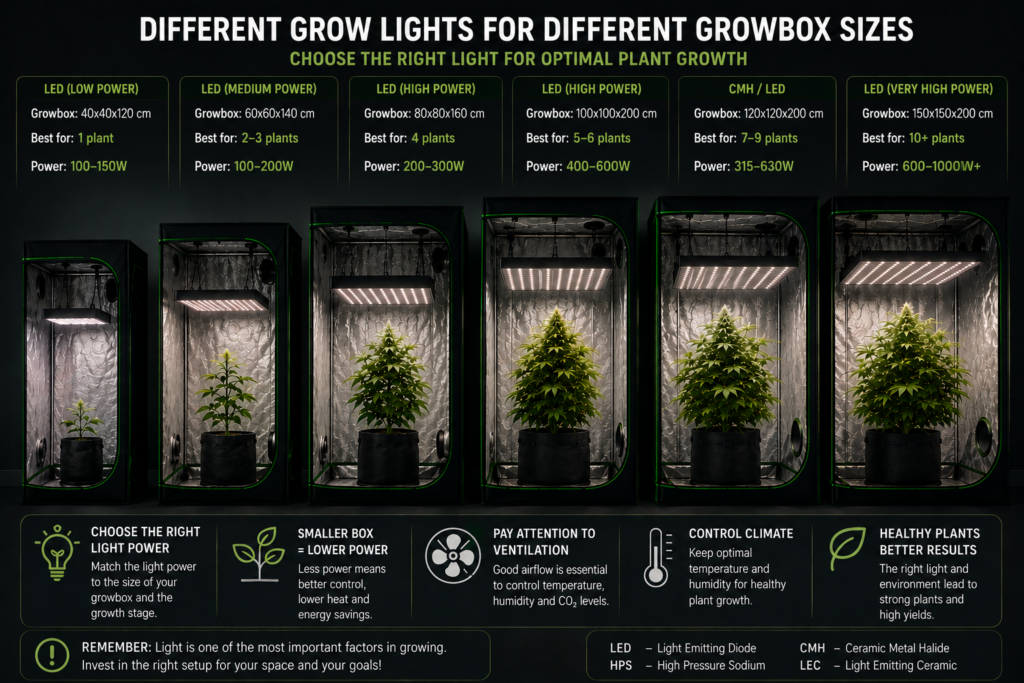
Lighting is the core of every grow tent setup. Without proper lighting, plants cannot develop healthy growth or produce strong yields.
LED Grow Lights — The Best Option for Beginners
Modern LED grow lights are energy-efficient, long-lasting, and produce less heat compared to older lighting technologies.
Advantages of LED Lighting:
Lower energy consumption
Reduced heat output
Full-spectrum lighting
Longer lifespan
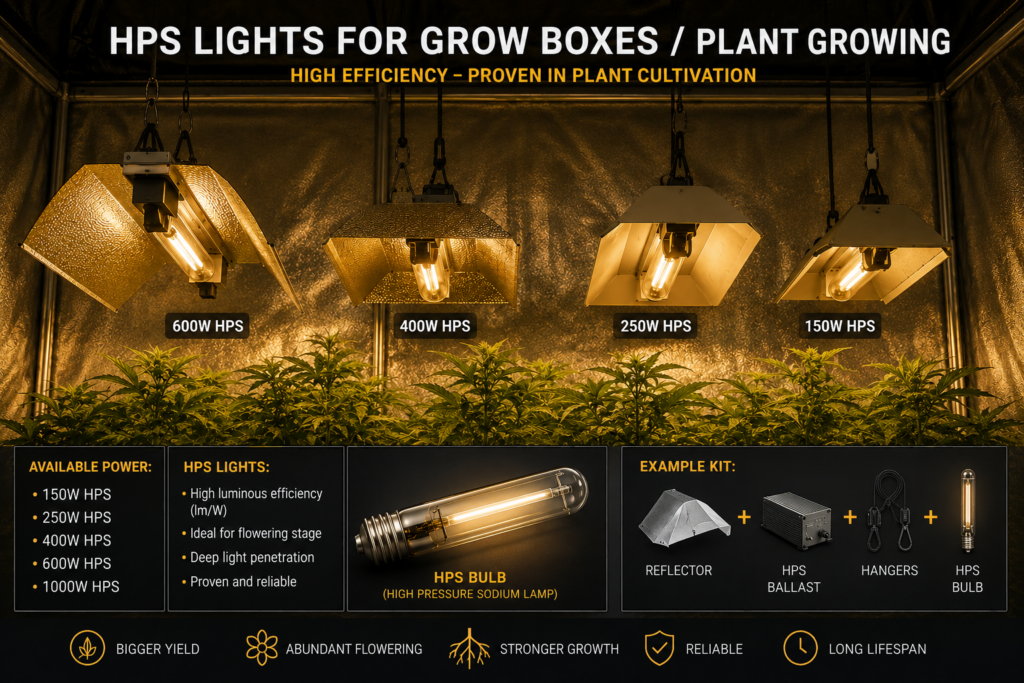
HPS Grow Lights — Traditional High-Power Lighting
HPS lights are still widely used in larger grow setups because of their strong light intensity. However, they generate more heat and usually require stronger ventilation systems.
Ventilation in a Grow Tent
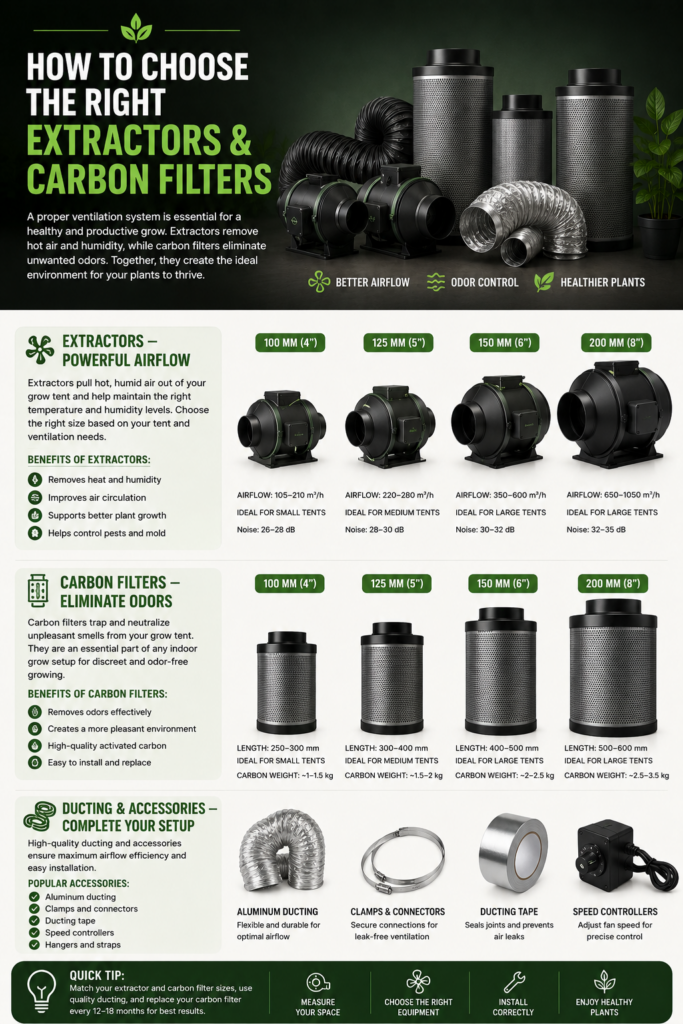
Proper ventilation helps maintain stable temperatures, fresh airflow, and balanced humidity levels inside the tent.
Essential Ventilation Components
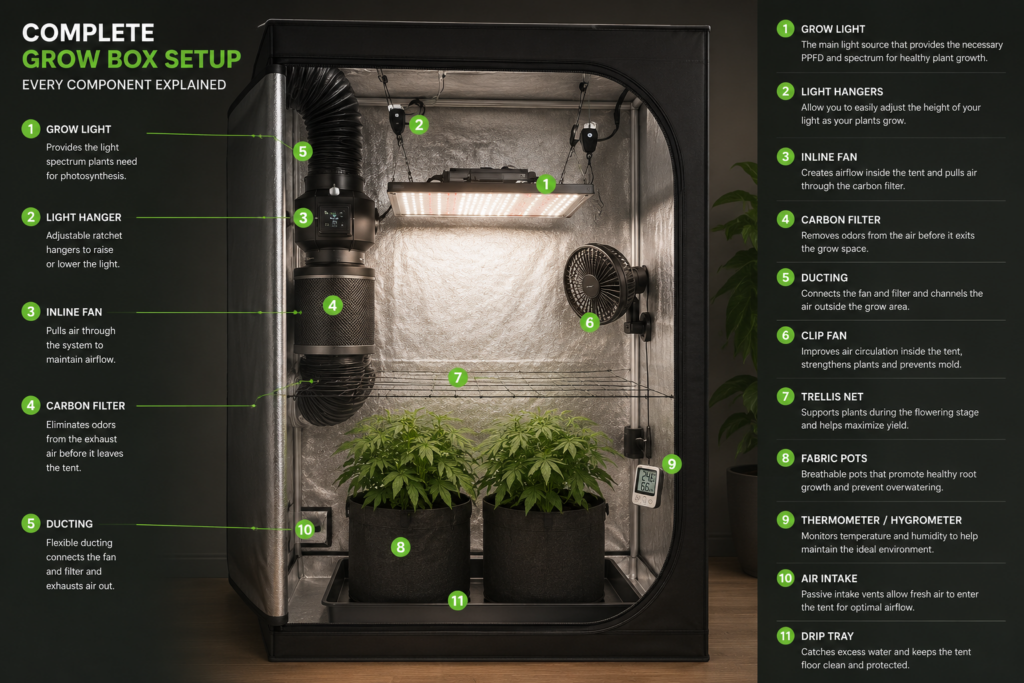
Inline Fan
Removes hot air from the grow tent and improves airflow.
Carbon Filter
Filters odors and cleans the air before it exits the tent.
Clip Fans
Improve air circulation inside the tent and help strengthen plant stems.
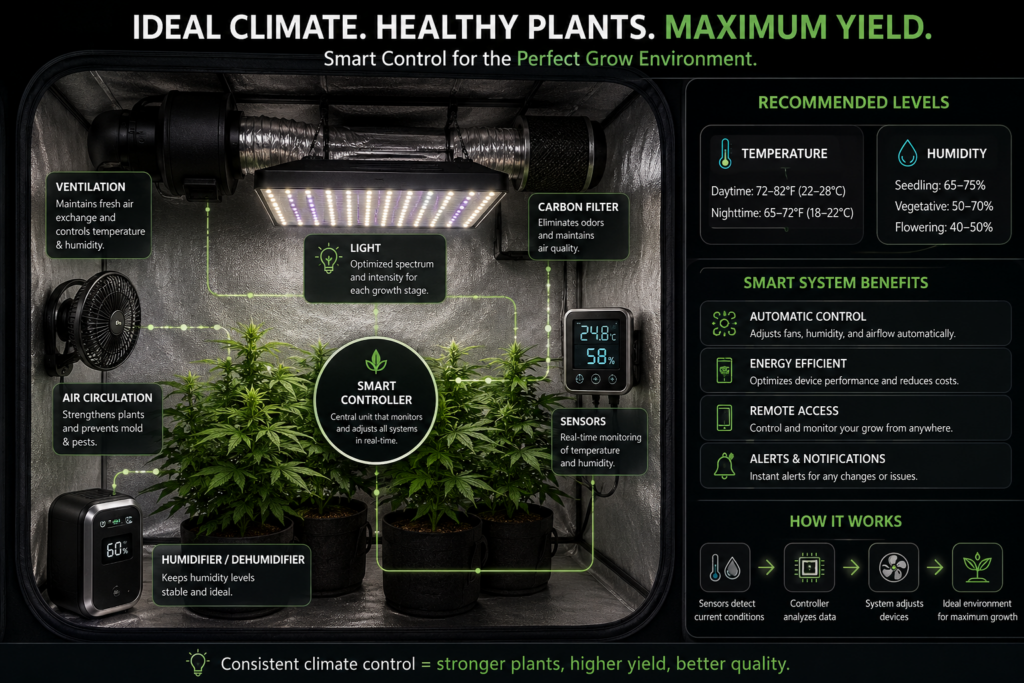
Ideal Temperature and Humidity Levels
Controlling the environment inside your grow tent is essential for healthy plant development.
Recommended Temperature:
Daytime: 72–82°F (22–28°C)
Nighttime: 65–72°F (18–22°C)
Recommended Humidity:
Seedling stage: 65–75%
Vegetative stage: 50–70%
Flowering stage: 40–50%
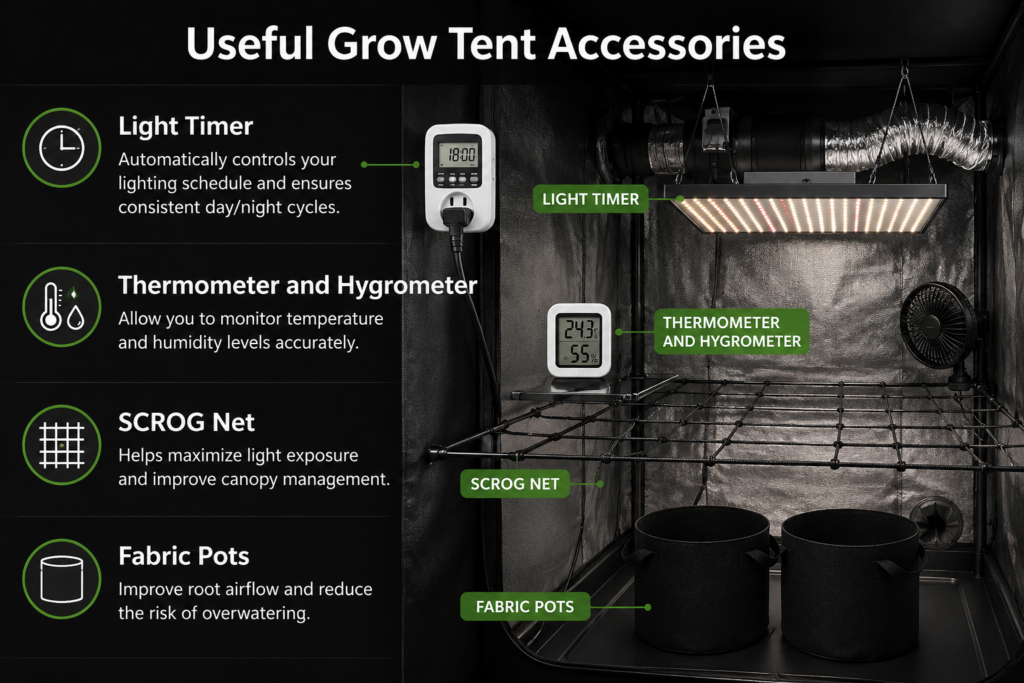
Useful Grow Tent Accessories
Light Timer
Automatically controls your lighting schedule and ensures consistent day/night cycles.
Thermometer and Hygrometer
Allow you to monitor temperature and humidity levels accurately.
SCROG Net
Helps maximize light exposure and improve canopy management.
Fabric Pots
Improve root airflow and reduce the risk of overwatering.
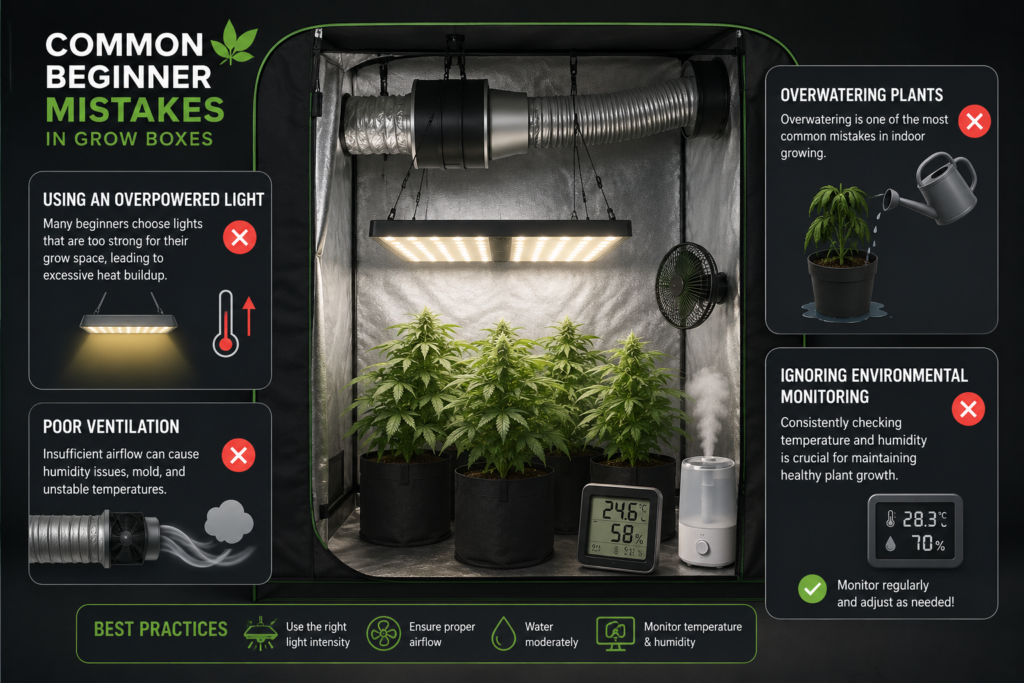
Common Beginner Mistakes
Using an Overpowered Light
Many beginners choose lights that are too strong for their grow space, leading to excessive heat buildup.
Poor Ventilation
Insufficient airflow can cause humidity issues, mold, and unstable temperatures.
Overwatering Plants
Overwatering is one of the most common mistakes in indoor growing.
Ignoring Environmental Monitoring
Consistently checking temperature and humidity is crucial for maintaining healthy plant growth.
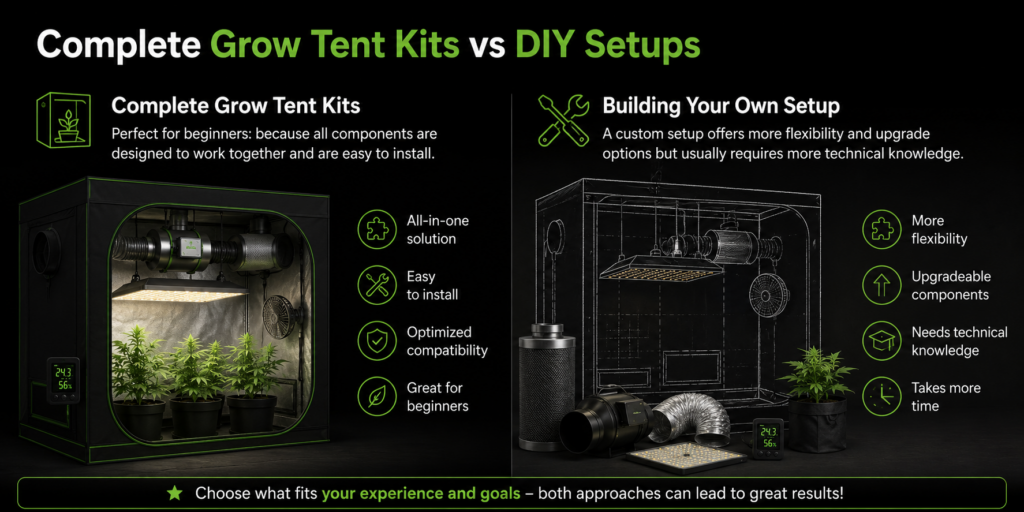
Complete Grow Tent Kits vs DIY Setups
Complete Grow Tent Kits
Perfect for beginners because all components are designed to work together and are easy to install.
Building Your Own Setup
A custom setup offers more flexibility and upgrade options but usually requires more technical knowledge.