Most Common Problems in a Grow Box – Temperature, Humidity, Mold and Ventilation
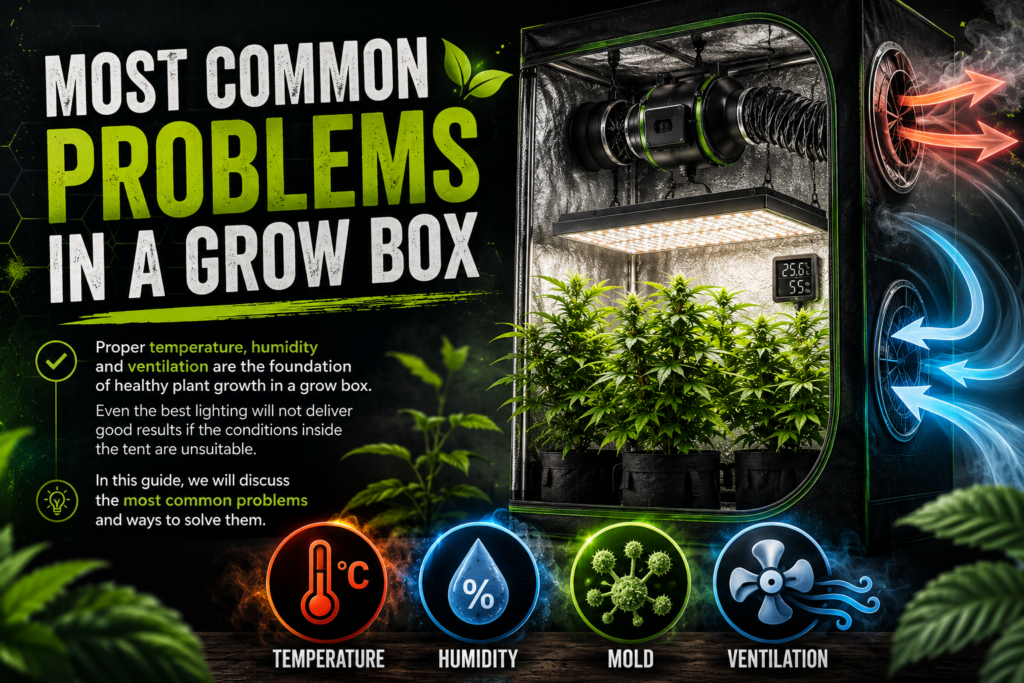
Proper temperature, humidity and ventilation are the foundation of healthy plant growth in a grow box. Even the best lighting will not deliver good results if the conditions inside the tent are unsuitable. In this guide, we will discuss the most common problems and ways to solve them.
Excessive Temperature in a Grow Box
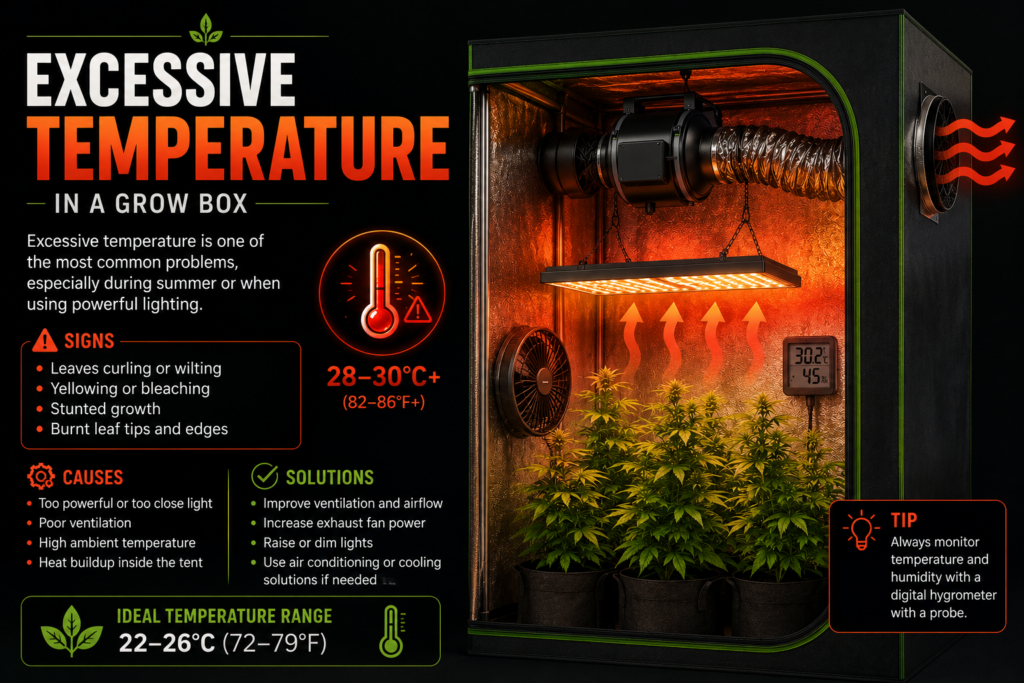
Excessive temperature is one of the most common problems, especially during summer or when using powerful lighting.
Symptoms of Excessive Temperature
Curling leaves.
Dry leaf tips.
Slower plant growth.
Excessive drying of the growing medium.
High readings on the thermometer.
Most Common Causes
A lamp that is too powerful for a small grow box.
An inefficient exhaust fan.
High room temperature.
Lack of proper air circulation.
How to Lower the Temperature in a Grow Box?
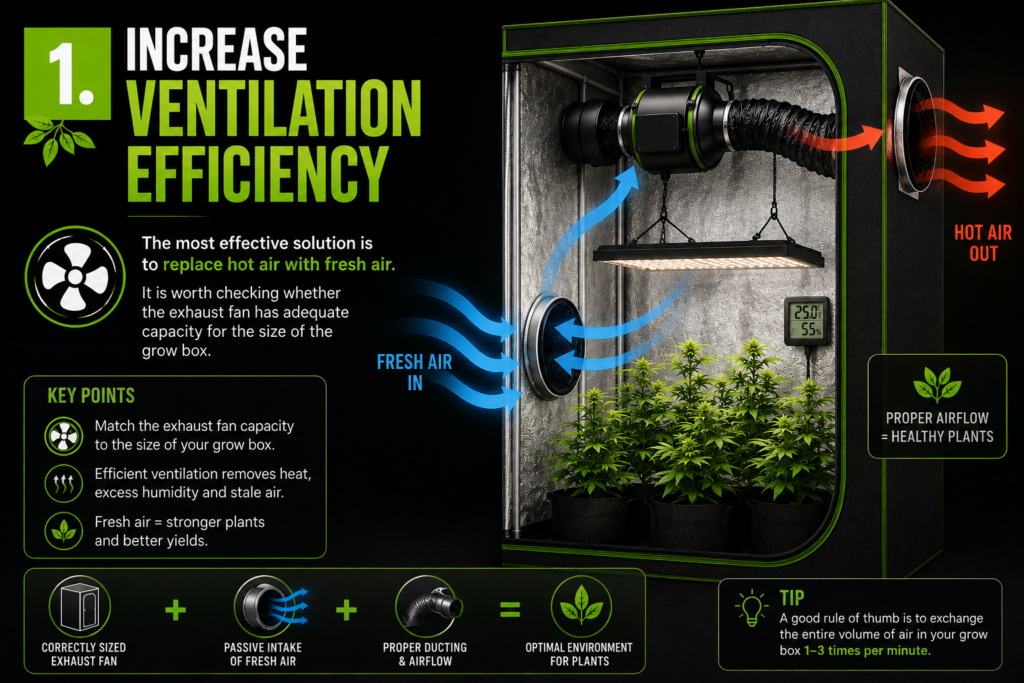
1. Increase Ventilation Efficiency
The most effective solution is to replace hot air with fresh air. It is worth checking whether the exhaust fan has adequate capacity for the size of the grow box.
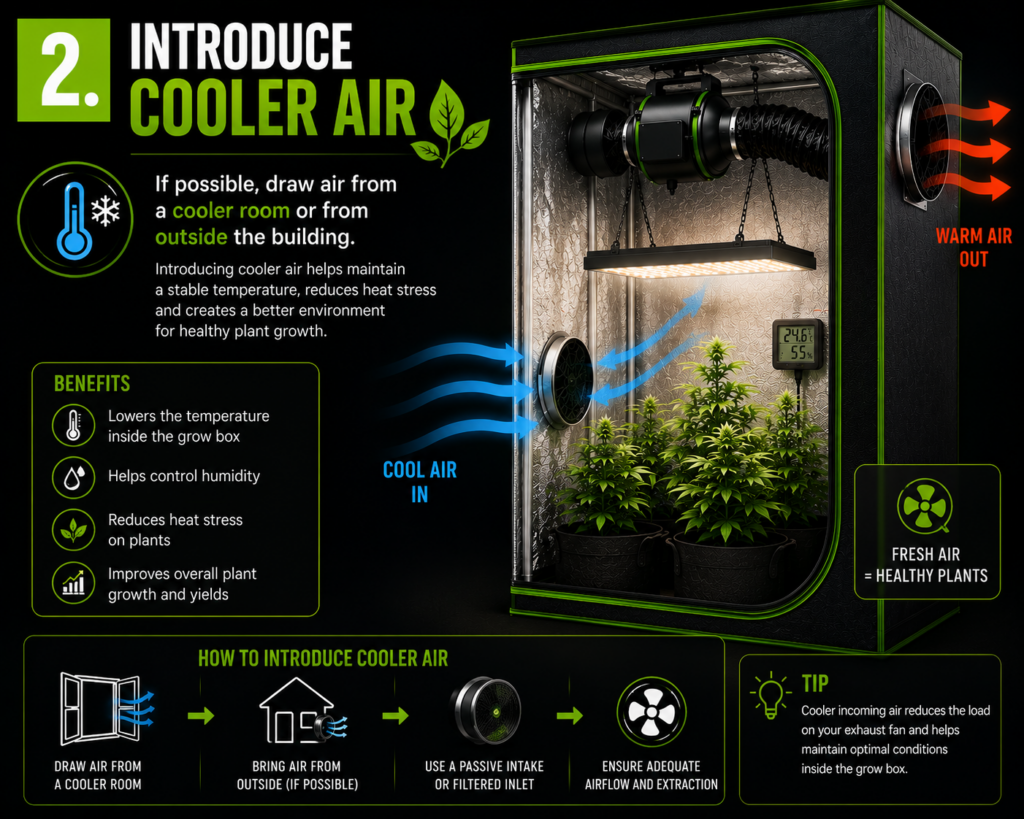
2. Introduce Cooler Air
If possible, draw air from a cooler room or from outside the building.
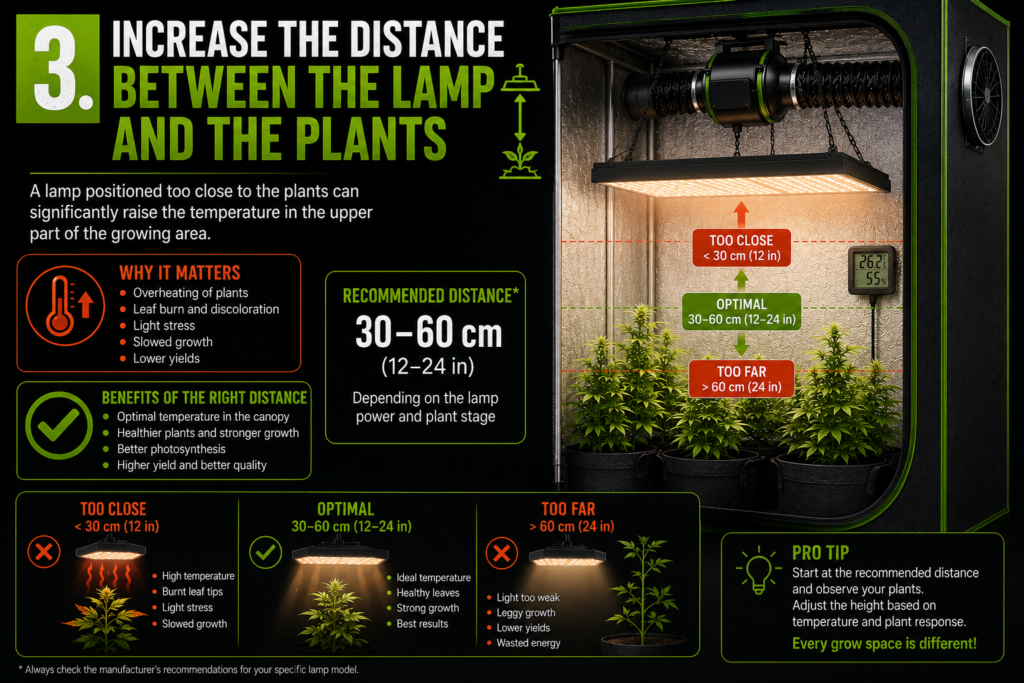
3. Increase the Distance Between the Lamp and the Plants
A lamp positioned too close to the plants can significantly raise the temperature in the upper part of the growing area.
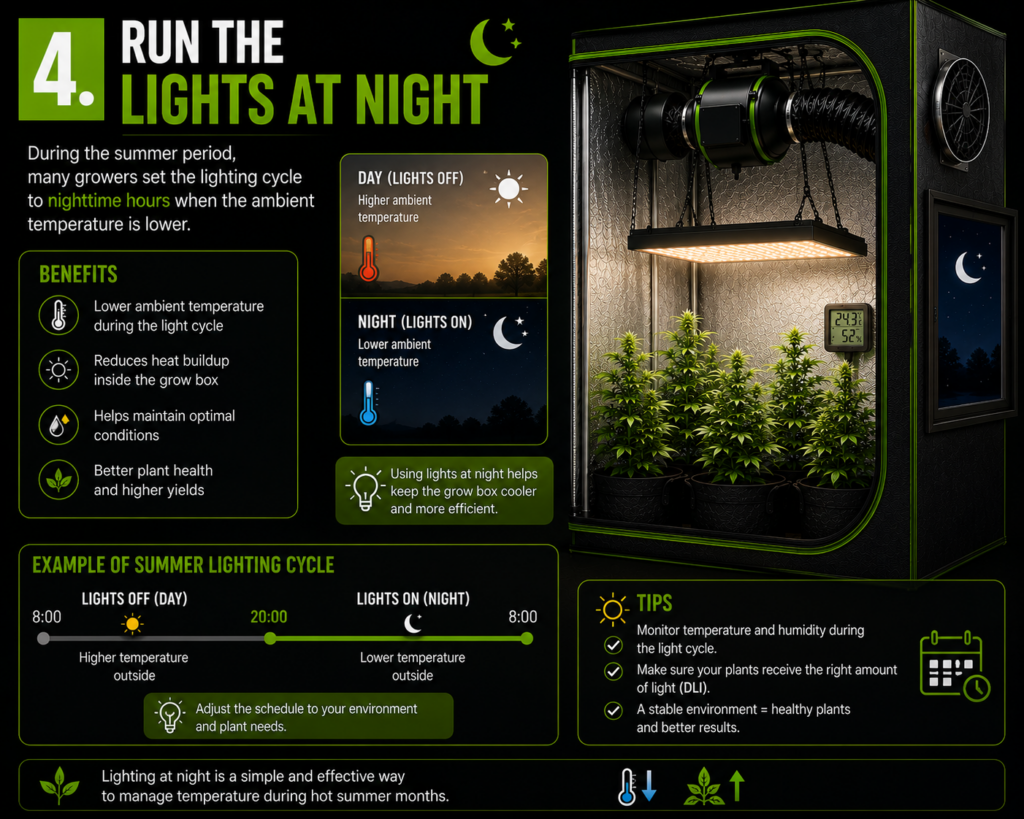
4. Run the Lights at Night
During the summer period, many growers set the lighting cycle to nighttime hours when the ambient temperature is lower.
Low Humidity in a Grow Box
Low humidity most commonly occurs during winter and when intensive ventilation is used.
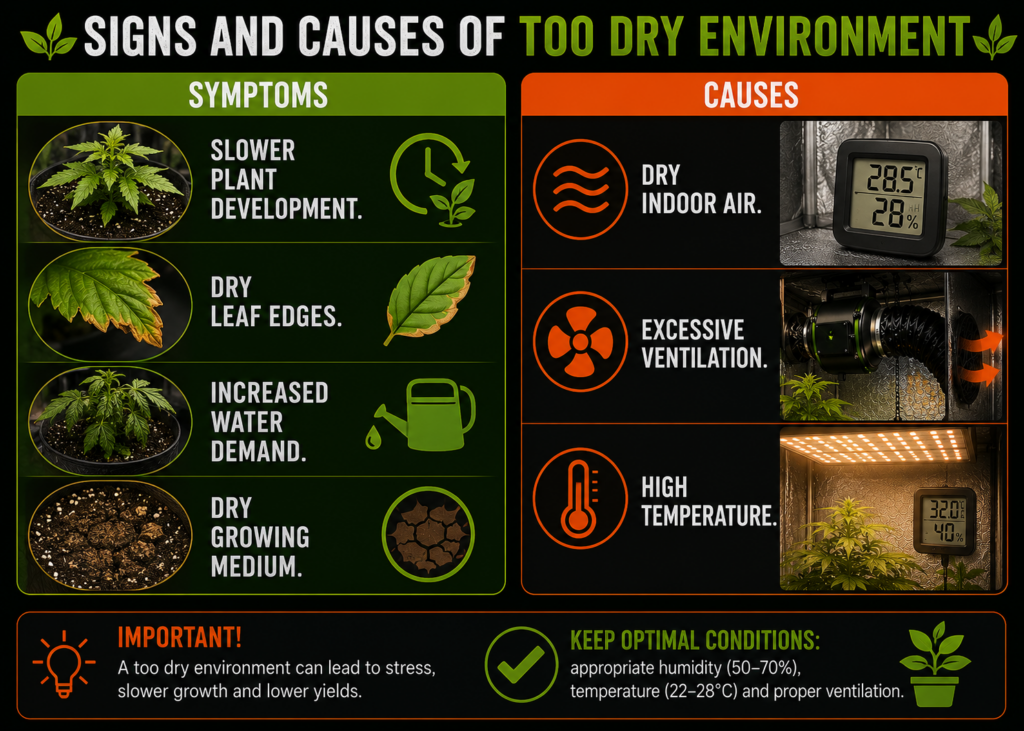
Symptoms
Slower plant development.
Dry leaf edges.
Increased water demand.
Dry growing medium.
Causes
Dry indoor air.
Excessive ventilation.
High temperature.
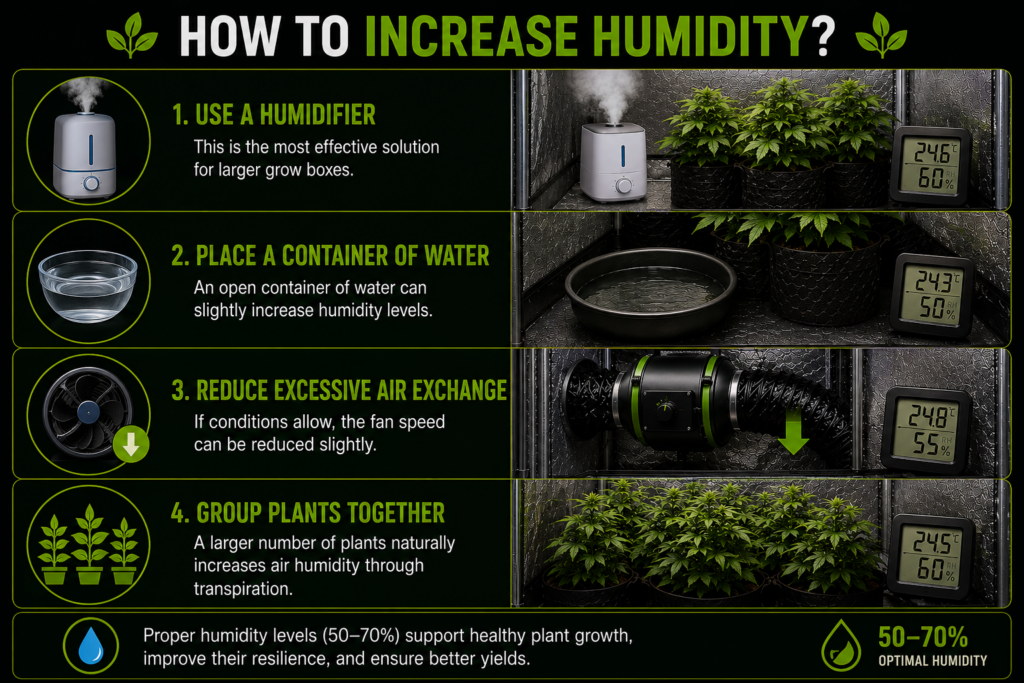
How to Increase Humidity?
Use a Humidifier
This is the most effective solution for larger grow boxes.
Place a Container of Water
An open container of water can slightly increase humidity levels.
Reduce Excessive Air Exchange
If conditions allow, the fan speed can be reduced slightly.
Group Plants Together
A larger number of plants naturally increases air humidity through transpiration.
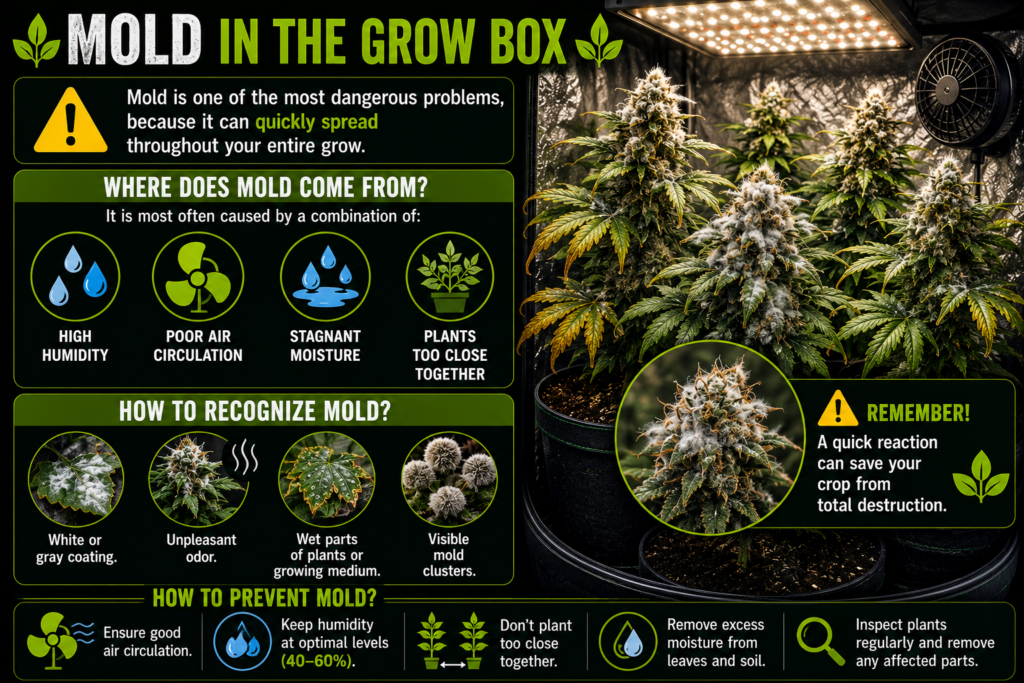
Mold in a Grow Box
Mold is one of the most serious problems because it can quickly spread throughout the entire grow.
What Causes Mold?
Mold is most often caused by a combination of:
high humidity,
poor air circulation,
standing moisture,
plants placed too closely together.
How to Identify Mold?
White or gray coating.
Unpleasant odor.
Wet areas on plants or growing medium.
Visible fungal growth.
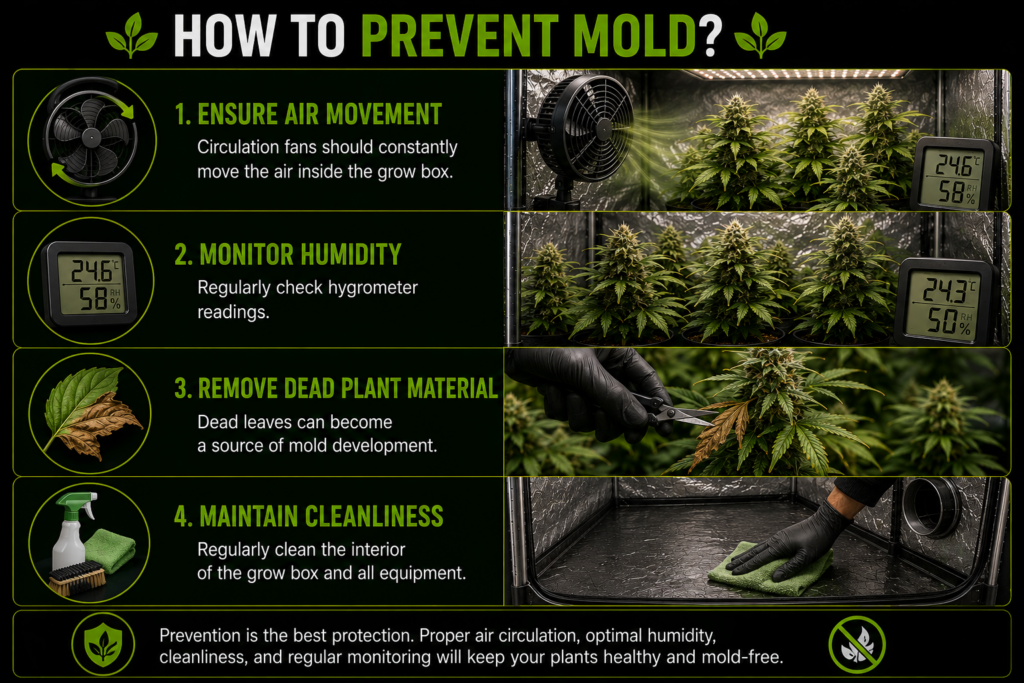
How to Prevent Mold?
Ensure Air Movement
Circulation fans should constantly move the air inside the grow box.
Monitor Humidity
Regularly check hygrometer readings.
Remove Dead Plant Material
Dead leaves can become a source of mold development.
Maintain Cleanliness
Regularly clean the interior of the grow box and all equipment.
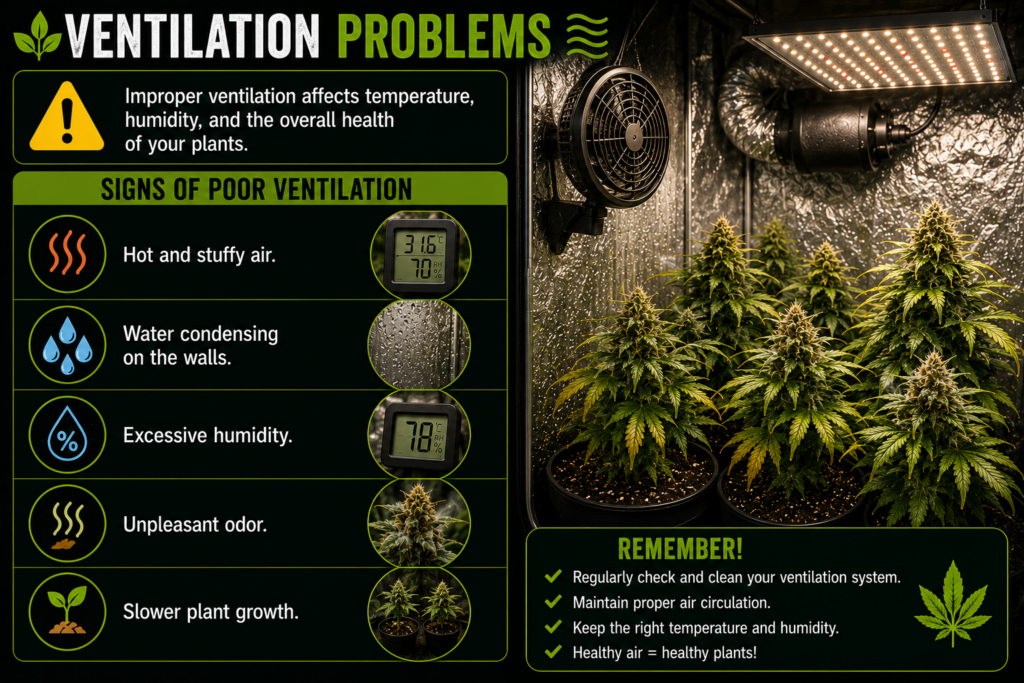
Ventilation Problems
Improperly functioning ventilation affects temperature, humidity and the overall condition of plants.
Symptoms of Poor Ventilation
Hot and stuffy air.
Water condensation on the walls.
Excessive humidity.
Unpleasant odor.
Slower plant growth.
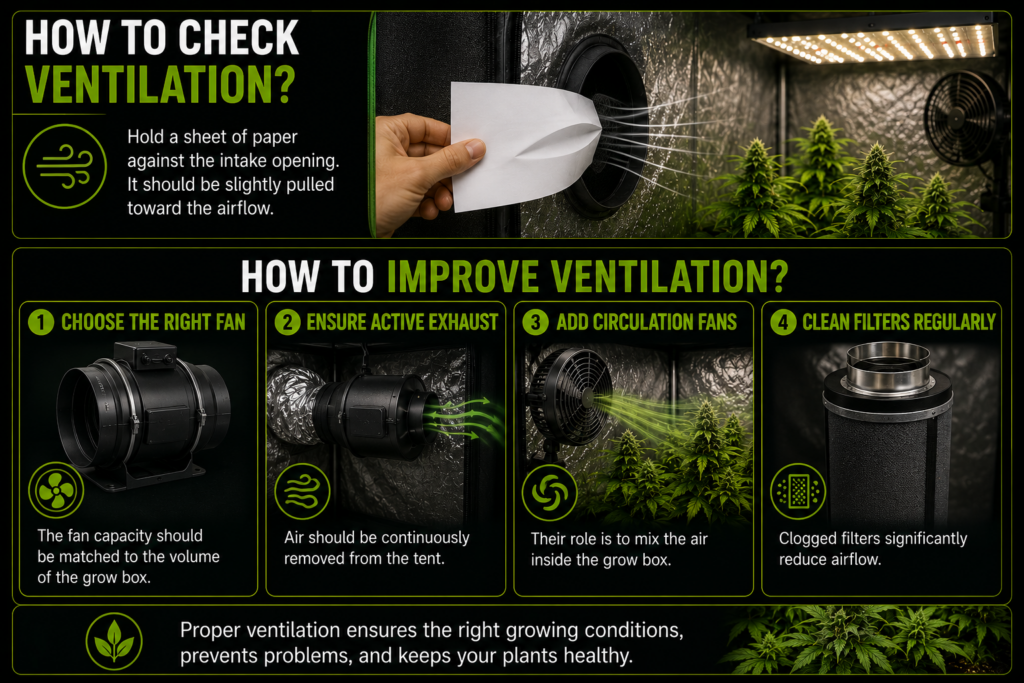
How to Check Ventilation?
Hold a sheet of paper against the intake opening. It should be slightly pulled toward the airflow.
How to Improve Ventilation?
Choose the Right Fan
The fan capacity should be matched to the volume of the grow box.
Ensure Active Exhaust
Air should be continuously removed from the tent.
Add Circulation Fans
Their role is to mix the air inside the grow box.
Clean Filters Regularly
Clogged filters significantly reduce airflow.
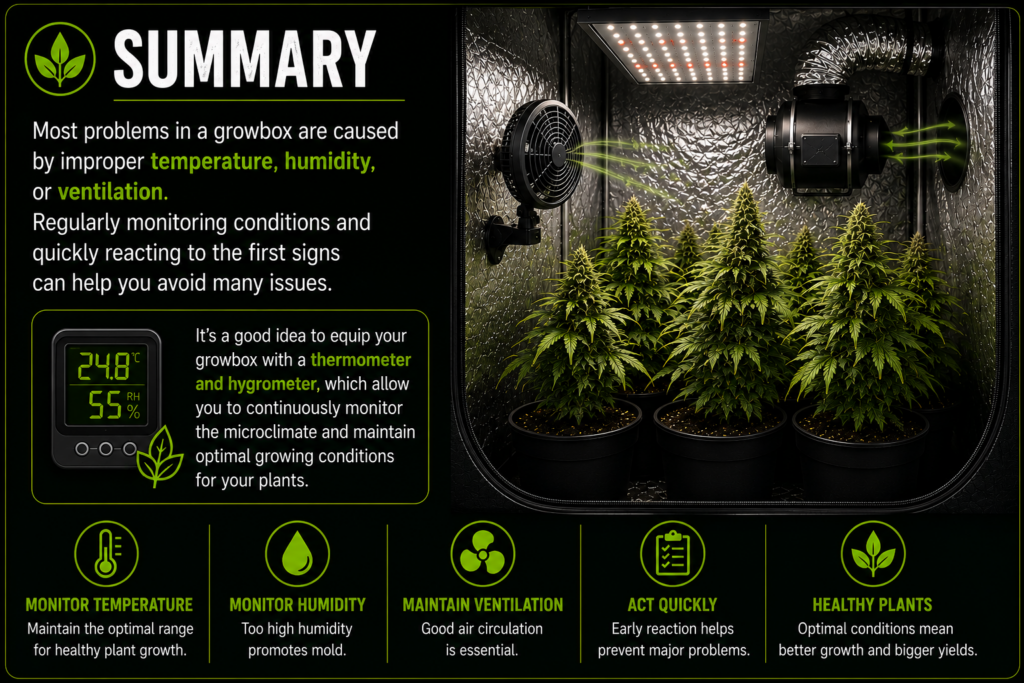
Summary
Most grow box problems result from improper temperature, humidity or ventilation. Regular monitoring of conditions and a quick response to the first signs of trouble help prevent many issues. It is worth equipping a grow box with a thermometer and hygrometer, allowing you to continuously monitor the microclimate and maintain optimal growing conditions.