How to Choose a Carbon Filter for a Grow Tent: Complete Guide
Why Is a Carbon Filter So Important?
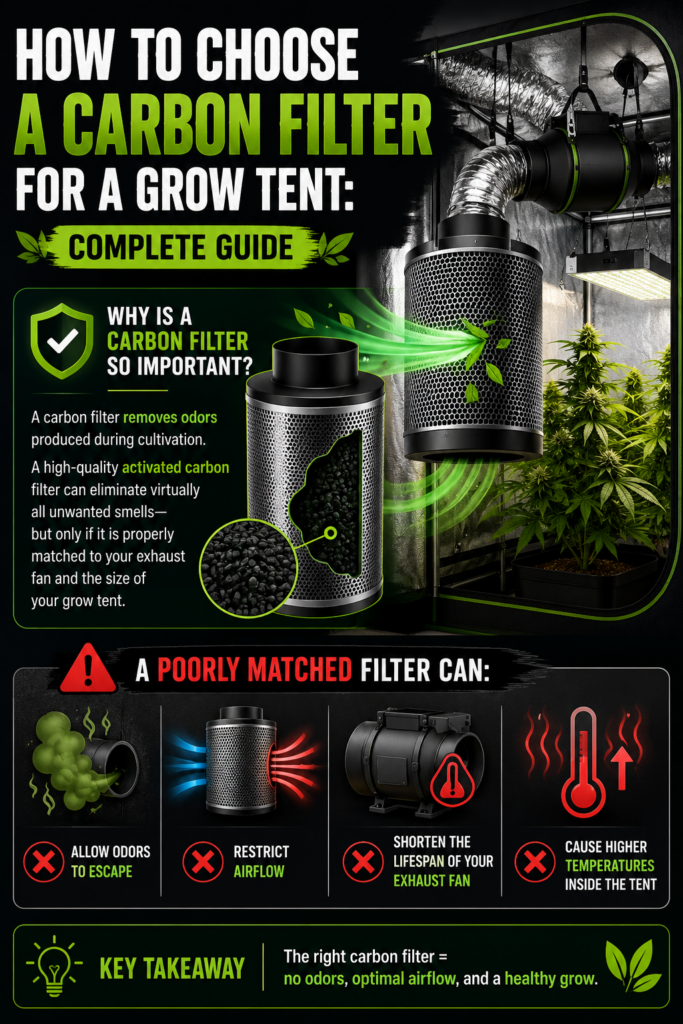
A carbon filter removes odors produced during cultivation. A high-quality activated carbon filter can eliminate virtually all unwanted smells—but only if it is properly matched to your exhaust fan and the size of your grow tent.
A poorly matched filter can:
allow odors to escape,
restrict airflow,
shorten the lifespan of your exhaust fan,
cause higher temperatures inside the tent.
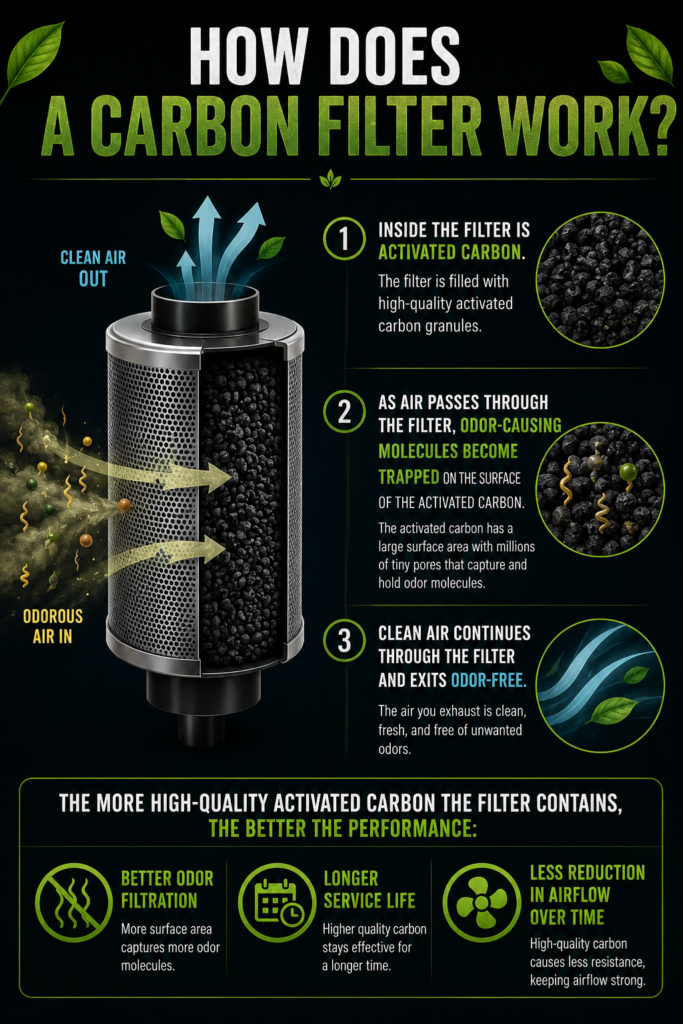
How Does a Carbon Filter Work?
Inside the filter is activated carbon.
As air passes through the filter, odor-causing molecules become trapped on the surface of the activated carbon.
The more high-quality activated carbon the filter contains, the better the performance:
better odor filtration,
longer service life,
less reduction in airflow over time.
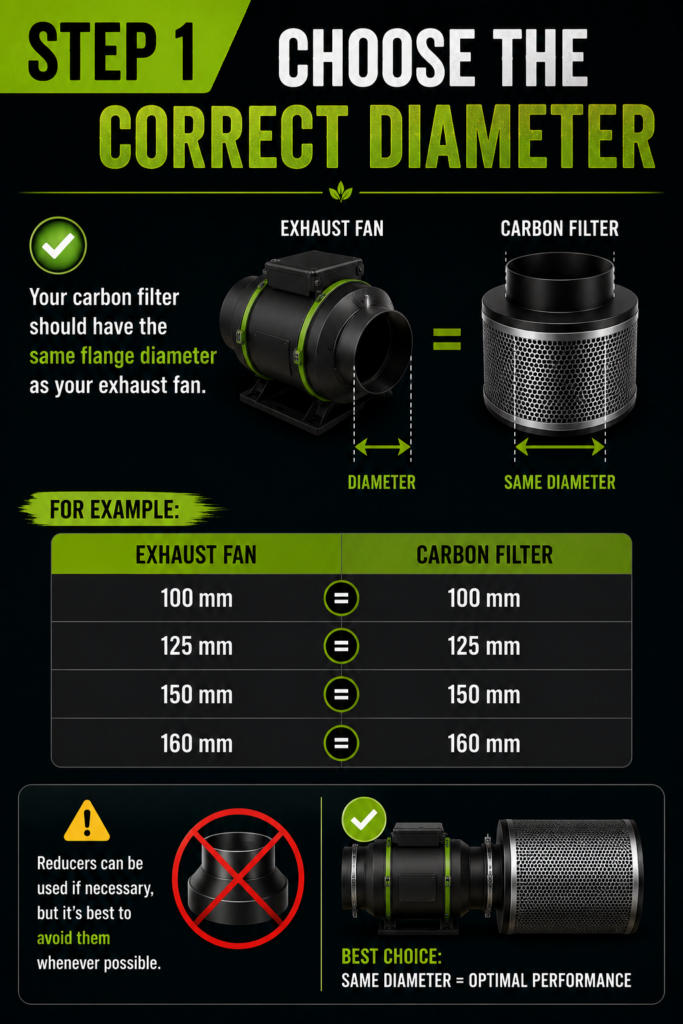
Step 1 – Choose the Correct Diameter
Your carbon filter should have the same flange diameter as your exhaust fan.
For example:
Exhaust Fan
Carbon Filter
100 mm
100 mm
125 mm
125 mm
150 mm
150 mm
160 mm
160 mm
Reducers can be used if necessary, but it’s best to avoid them whenever possible.
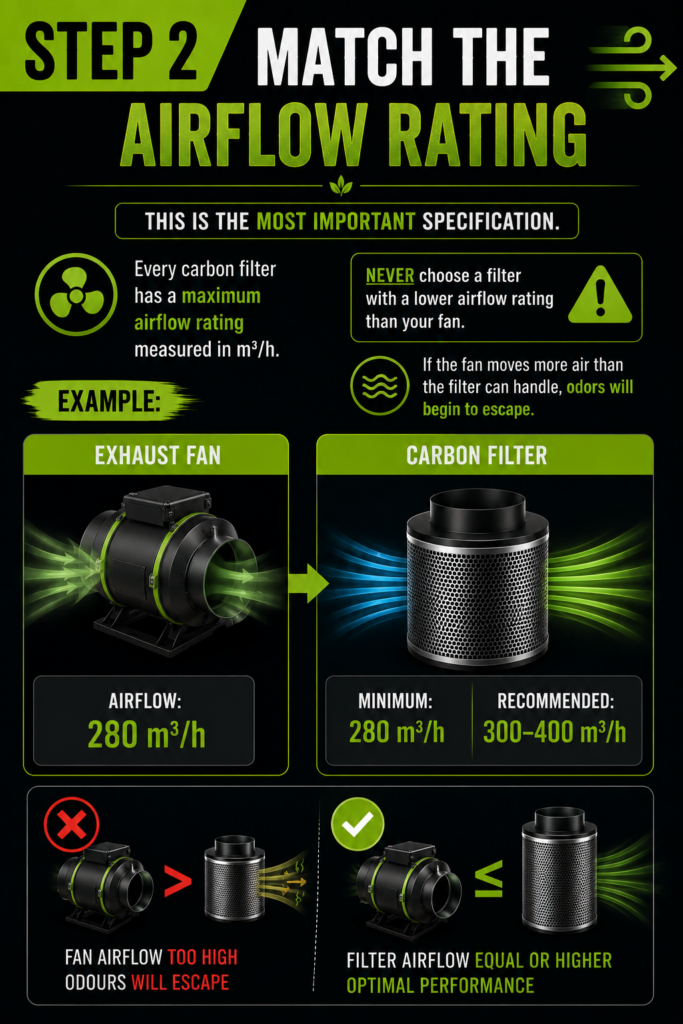
Step 2 – Match the Airflow Rating
This is the most important specification.
Every carbon filter has a maximum airflow rating measured in m³/h.
Example:
Exhaust fan:
280 m³/h
Carbon filter:
Minimum: 280 m³/h
Recommended:
300–400 m³/h
Never choose a filter with a lower airflow rating than your fan.
If the fan moves more air than the filter can handle, odors will begin to escape.
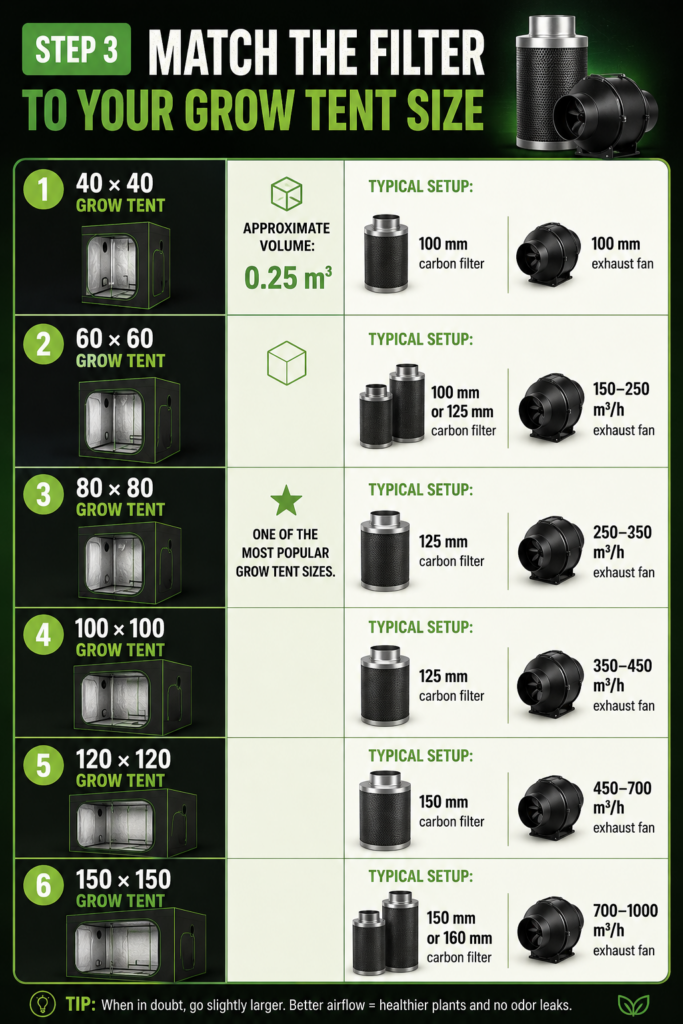
Step 3 – Match the Filter to Your Grow Tent Size
40 × 40 Grow Tent
Approximate volume:
0.25 m³
Typical setup:
100 mm carbon filter
100 mm exhaust fan
60 × 60 Grow Tent
Typical setup:
100 mm or 125 mm carbon filter
150–250 m³/h exhaust fan
80 × 80 Grow Tent
One of the most popular grow tent sizes.
Typical setup:
125 mm carbon filter
250–350 m³/h exhaust fan
100 × 100 Grow Tent
Typical setup:
125 mm carbon filter
350–450 m³/h exhaust fan
120 × 120 Grow Tent
Typical setup:
150 mm carbon filter
450–700 m³/h exhaust fan
150 × 150 Grow Tent
Typical setup:
150 mm or 160 mm carbon filter
700–1000 m³/h exhaust fan
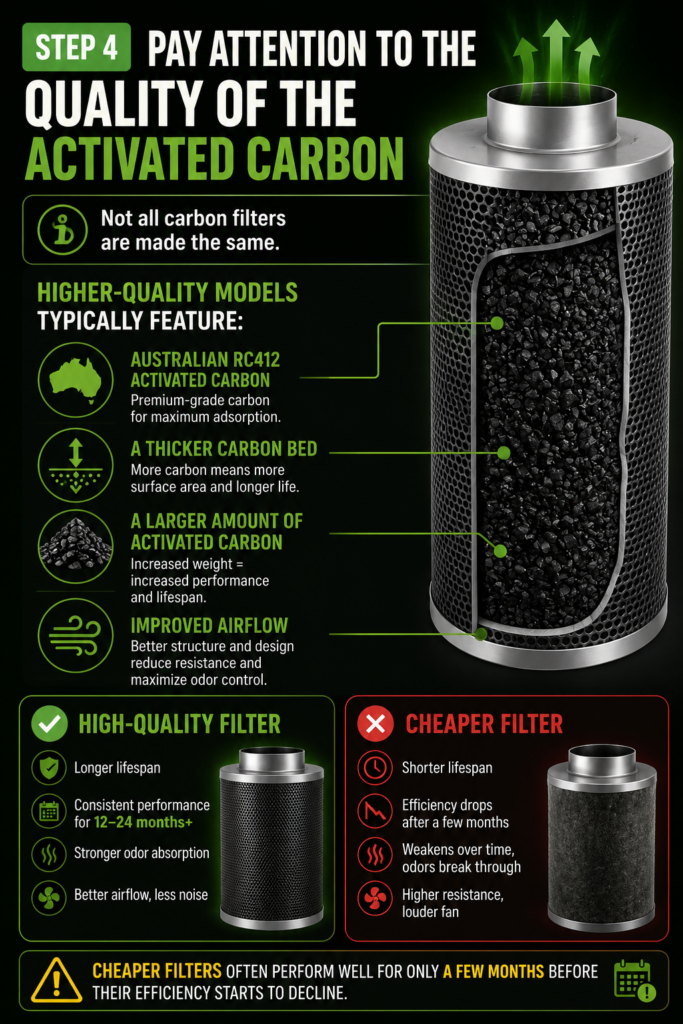
Step 4 – Pay Attention to the Quality of the Activated Carbon
Not all carbon filters are made the same.
Higher-quality models typically feature:
Australian RC412 activated carbon,
a thicker carbon bed,
a larger amount of activated carbon,
improved airflow.
Cheaper filters often perform well for only a few months before their efficiency starts to decline.
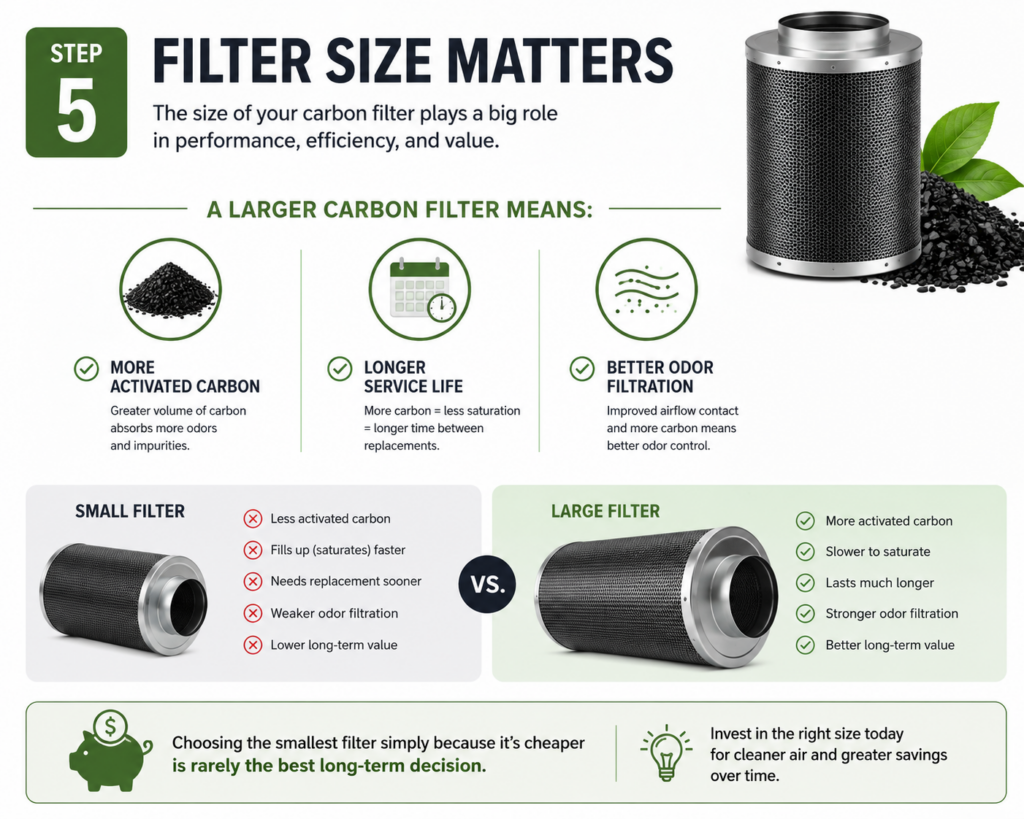
Step 5 – Filter Size Matters
A larger carbon filter means:
✅ more activated carbon
✅ longer service life
✅ better odor filtration
Choosing the smallest filter simply because it’s cheaper is rarely the best long-term decision.
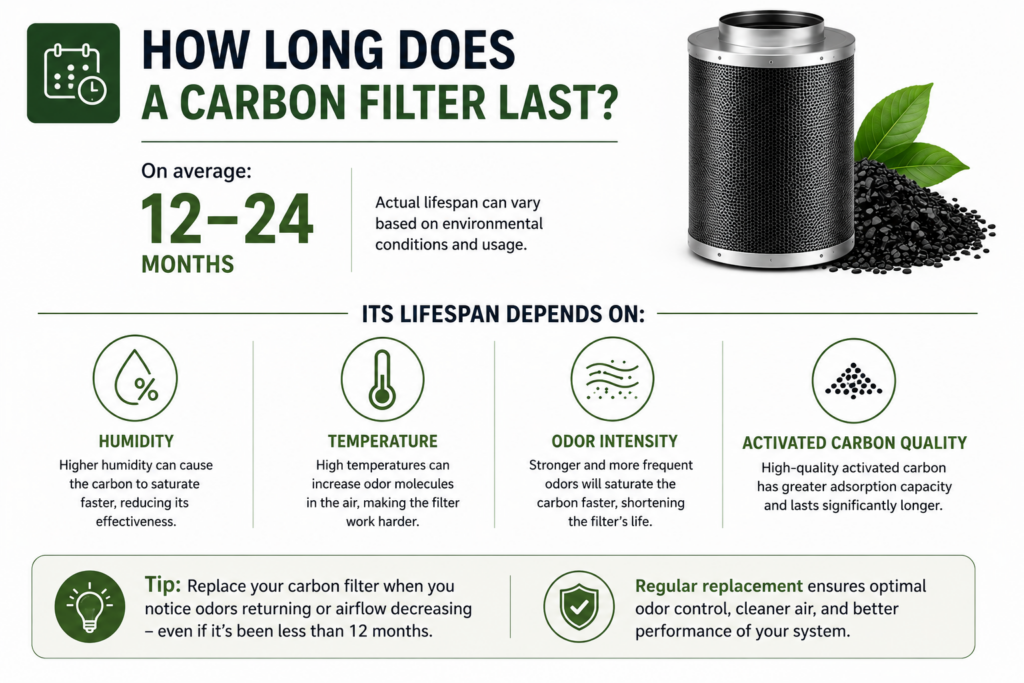
How Long Does a Carbon Filter Last?
On average:
12–24 months
Its lifespan depends on:
humidity,
temperature,
odor intensity,
activated carbon quality.
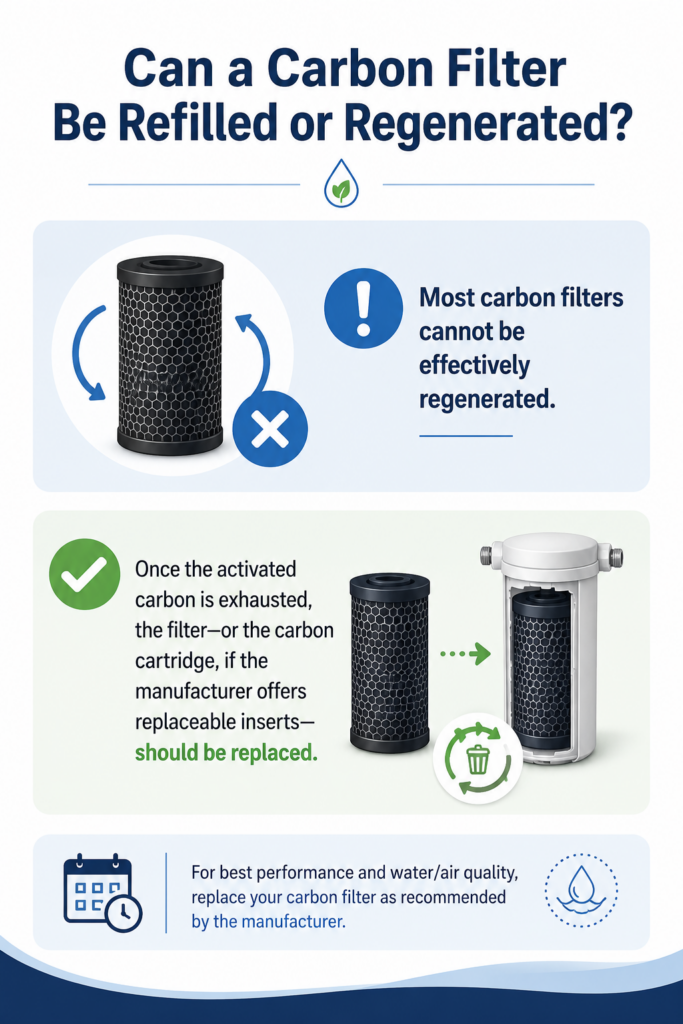
Can a Carbon Filter Be Refilled or Regenerated?
Most carbon filters cannot be effectively regenerated.
Once the activated carbon is exhausted, the filter—or the carbon cartridge, if the manufacturer offers replaceable inserts—should be replaced.
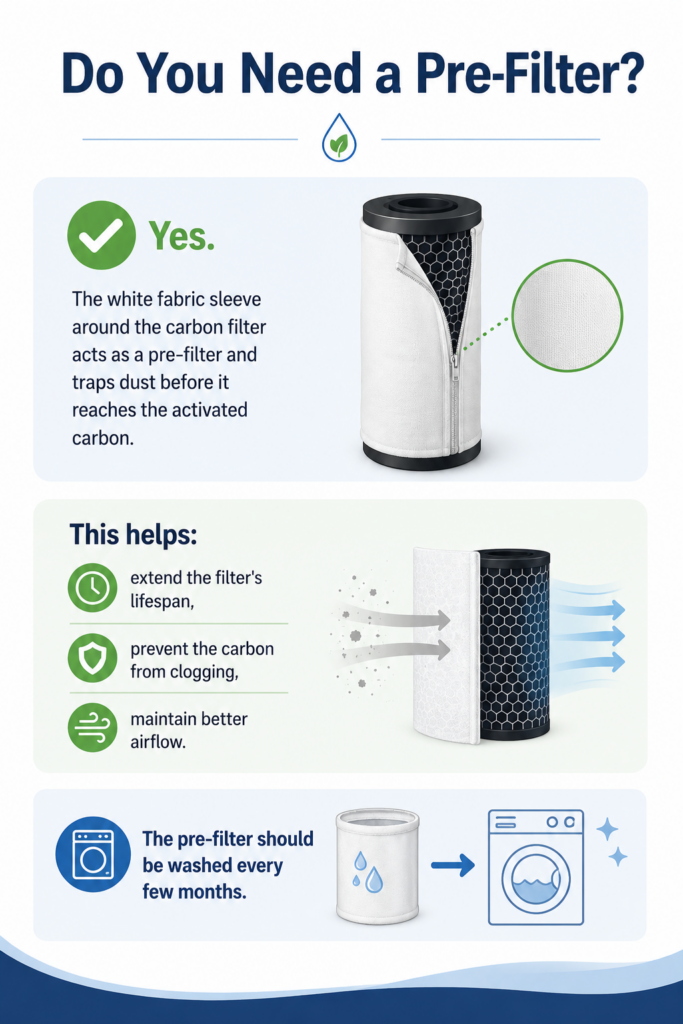
Do You Need a Pre-Filter?
Yes.
The white fabric sleeve around the carbon filter acts as a pre-filter and traps dust before it reaches the activated carbon.
This helps:
extend the filter’s lifespan,
prevent the carbon from clogging,
maintain better airflow.
The pre-filter should be washed every few months.
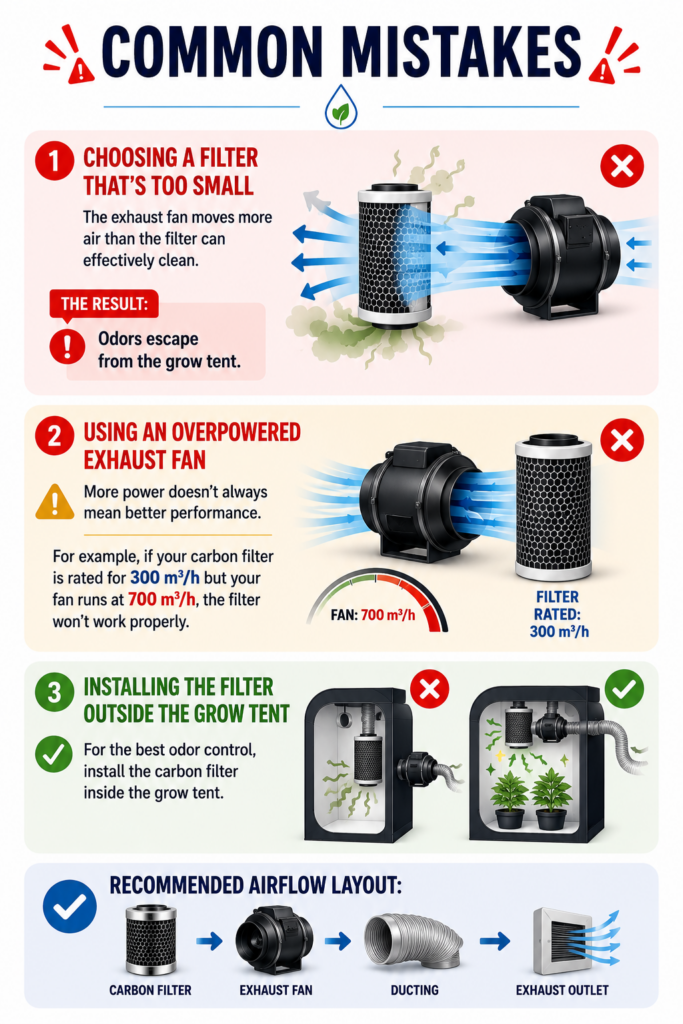
Common Mistakes
Choosing a Filter That’s Too Small
The exhaust fan moves more air than the filter can effectively clean.
The result:
Odors escape from the grow tent.
Using an Overpowered Exhaust Fan
More power doesn’t always mean better performance.
For example, if your carbon filter is rated for 300 m³/h but your fan runs at 700 m³/h, the filter won’t work properly.
Installing the Filter Outside the Grow Tent
For the best odor control, install the carbon filter inside the grow tent.
Recommended airflow layout:
Carbon Filter → Exhaust Fan → Ducting → Exhaust Outlet
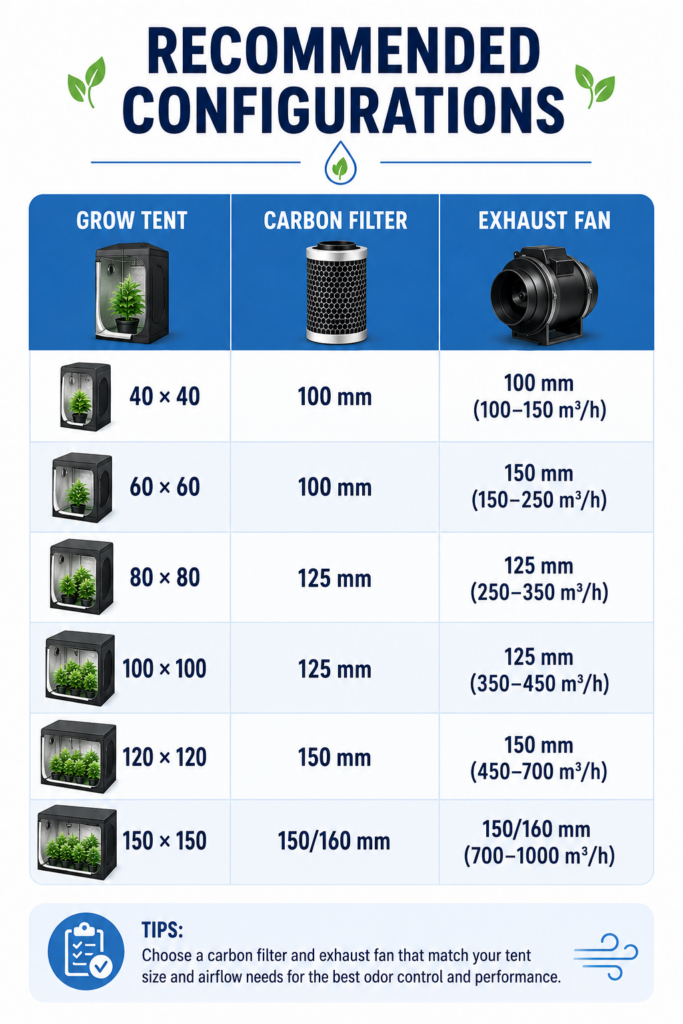
Recommended Configurations
Grow Tent
Carbon Filter
Exhaust Fan
40 × 40
100 mm
100 mm (100–150 m³/h)
60 × 60
100 mm
150–250 m³/h
80 × 80
125 mm
250–350 m³/h
100 × 100
125 mm
350–450 m³/h
120 × 120
150 mm
450–700 m³/h
150 × 150
150/160 mm
700–1000 m³/h
Summary
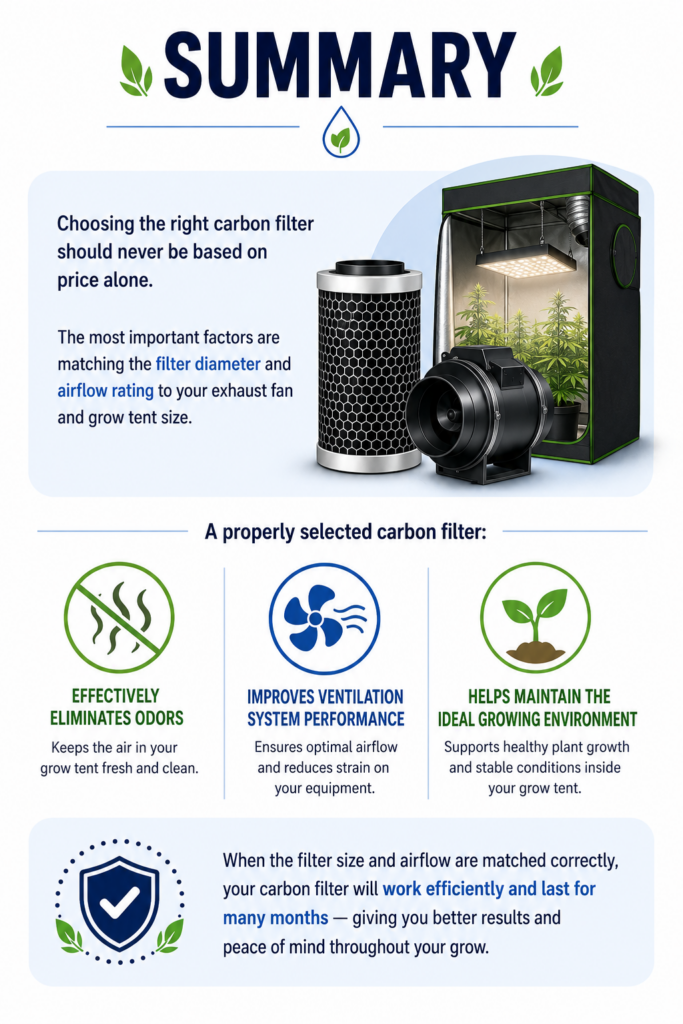
Choosing the right carbon filter should never be based on price alone. The most important factors are matching the filter diameter and airflow rating to your exhaust fan and grow tent size. A properly selected carbon filter effectively eliminates odors, improves ventilation system performance, and helps maintain the ideal growing environment inside your grow tent for many months.
Check Out Our Other Guides
If you are still setting up your grow tent or looking to improve your growing conditions, be sure to explore our other guides as well: