How to Control Temperature and Humidity in a Grow Tent: A Complete Beginner’s Guide
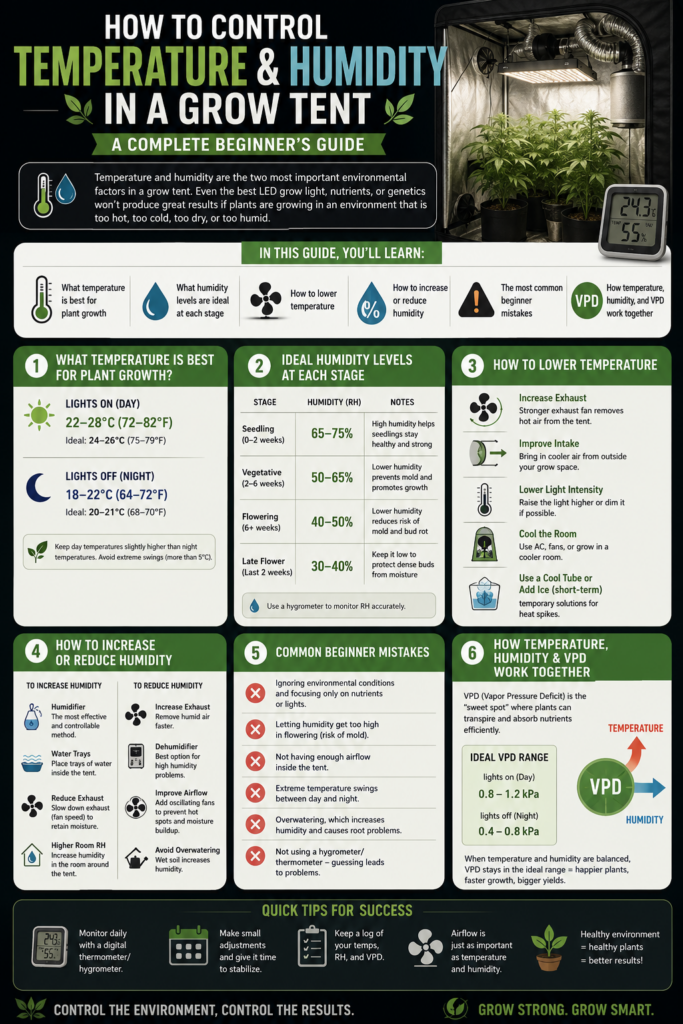
Temperature and humidity are the two most important environmental factors in a grow tent. Even the best LED grow light, nutrients, or genetics won’t produce great results if plants are growing in an environment that is too hot, too cold, too dry, or too humid.
In this guide, you’ll learn:
What temperature is best for plant growth
What humidity levels are ideal at each stage
How to lower temperature
How to increase or reduce humidity
The most common beginner mistakes
How temperature, humidity, and VPD work together
Why Are Temperature and Humidity So Important?
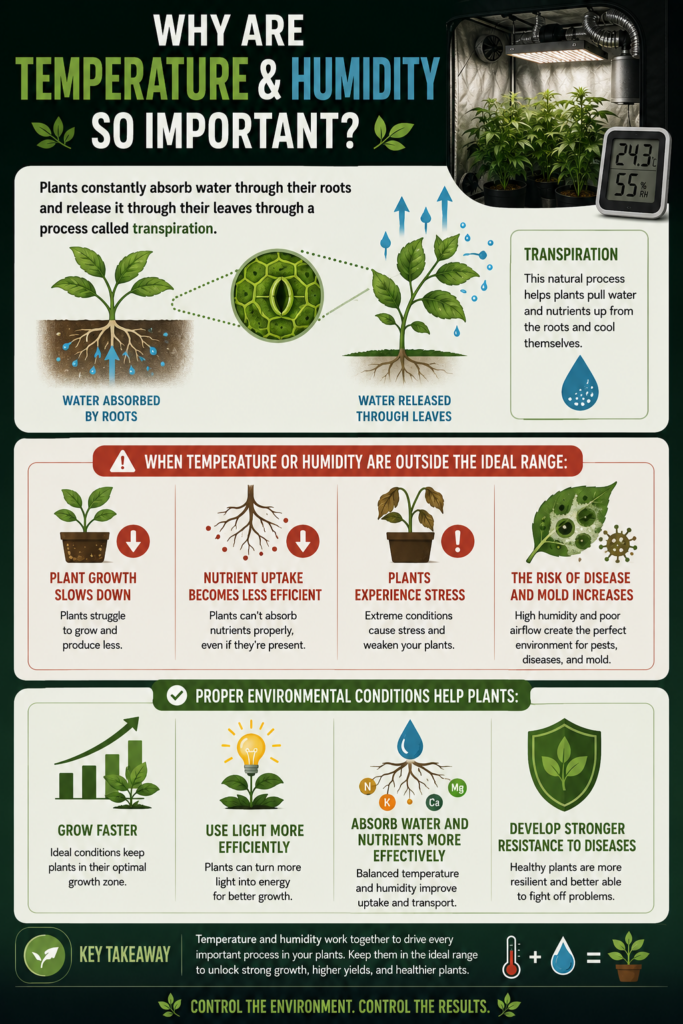
Plants constantly absorb water through their roots and release it through their leaves through a process called transpiration.
When temperature or humidity are outside the ideal range:
Plant growth slows down
Nutrient uptake becomes less efficient
Plants experience stress
The risk of disease and mold increases
Proper environmental conditions help plants:
✅ Grow faster
✅ Use light more efficiently
✅ Absorb water and nutrients more effectively
✅ Develop stronger resistance to diseases
What Temperature Is Best?
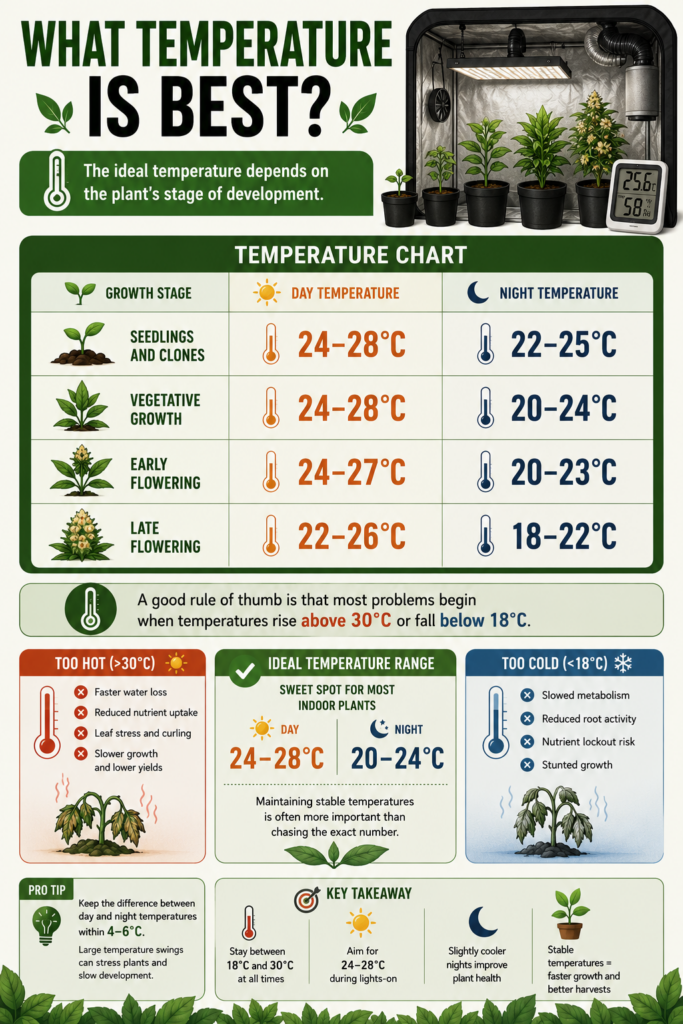
The ideal temperature depends on the plant’s stage of development.
Temperature Chart
Growth Stage
Day Temperature
Night Temperature
Seedlings and Clones
24–28°C
22–25°C
Vegetative Growth
24–28°C
20–24°C
Early Flowering
24–27°C
20–23°C
Late Flowering
22–26°C
18–22°C
A good rule of thumb is that most problems begin when temperatures rise above 30°C or fall below 18°C.
What Humidity Is Best?
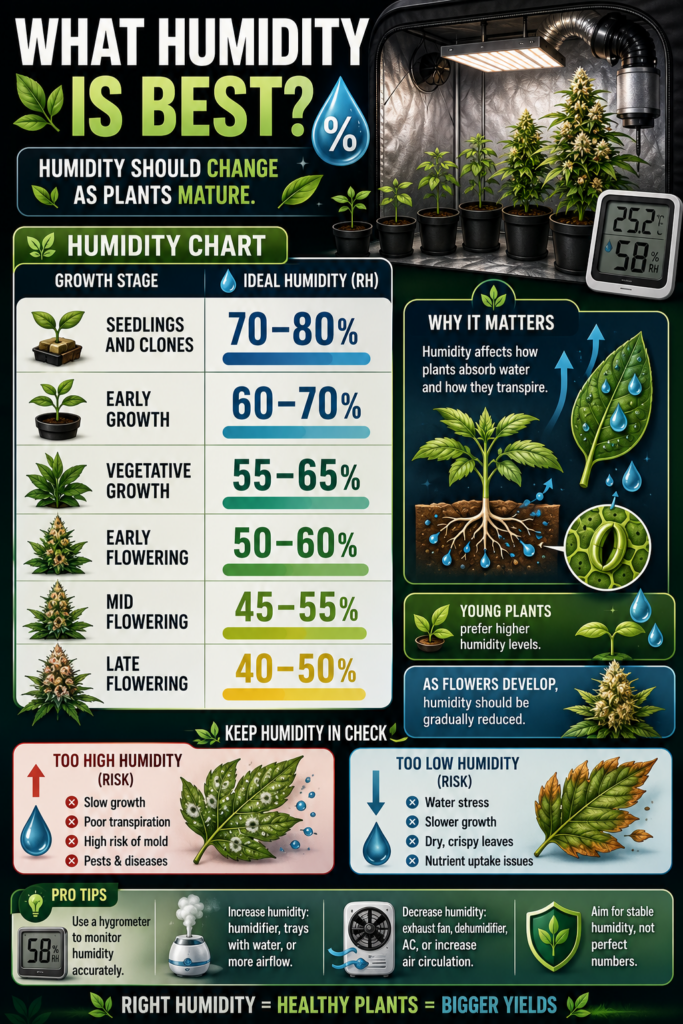
Humidity should change as plants mature.
Humidity Chart
Growth Stage
Relative Humidity (RH)
Seedlings and Clones
70–80%
Early Growth
60–70%
Vegetative Growth
55–65%
Early Flowering
50–60%
Mid Flowering
45–55%
Late Flowering
40–50%
Young plants prefer higher humidity levels.
As flowers develop, humidity should be gradually reduced.
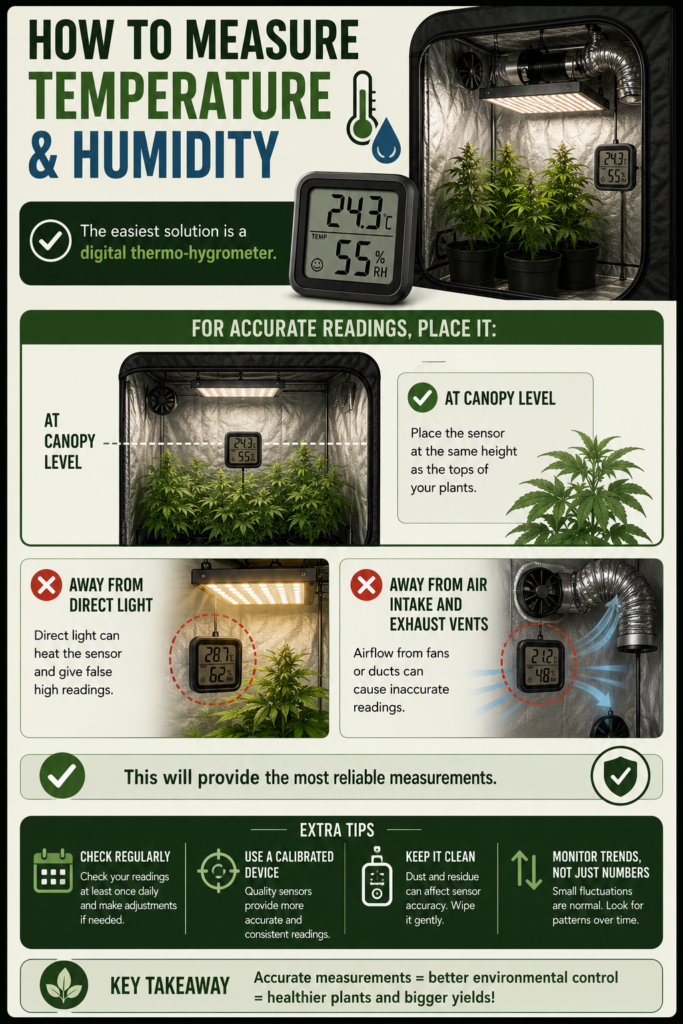
How to Measure Temperature and Humidity
The easiest solution is a digital thermo-hygrometer.
For accurate readings, place it:
At canopy level
Away from direct light
Away from air intake and exhaust vents
This will provide the most reliable measurements.
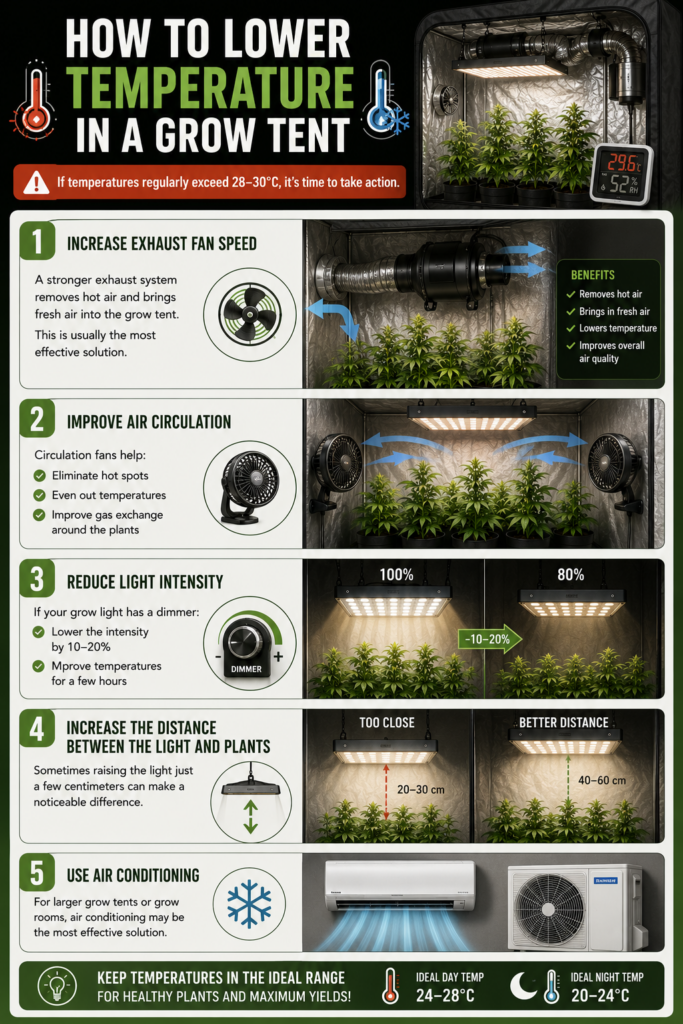
How to Lower Temperature in a Grow Tent
If temperatures regularly exceed 28–30°C, it’s time to take action.
Increase Exhaust Fan Speed
A stronger exhaust system removes hot air and brings fresh air into the grow tent.
This is usually the most effective solution.
Improve Air Circulation
Circulation fans help:
Eliminate hot spots
Even out temperatures
Improve gas exchange around the plants
Reduce Light Intensity
If your grow light has a dimmer:
Lower the intensity by 10–20%
Monitor temperatures for a few hours
Increase the Distance Between the Light and Plants
Sometimes raising the light just a few centimeters can make a noticeable difference.
Use Air Conditioning
For larger grow tents or grow rooms, air conditioning may be the most effective solution.
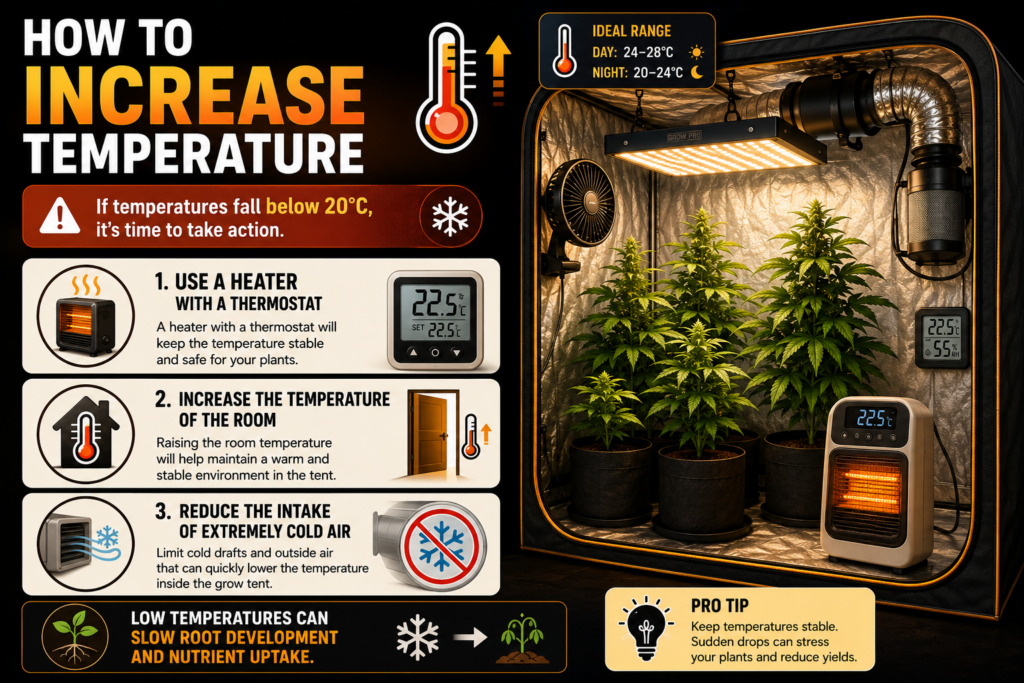
How to Increase Temperature
If temperatures fall below 20°C:
Use a heater with a thermostat
Increase the temperature of the room where the grow tent is located
Reduce the intake of extremely cold air
Low temperatures can slow root development and nutrient uptake.
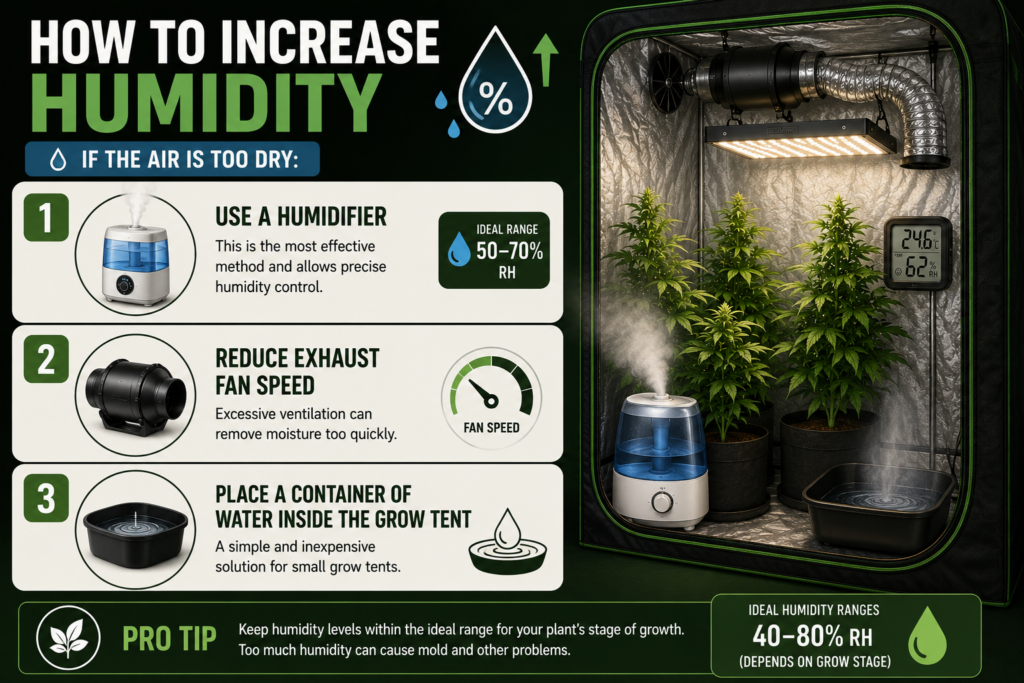
How to Increase Humidity
If the air is too dry:
Use a Humidifier
This is the most effective method and allows precise humidity control.
Reduce Exhaust Fan Speed
Excessive ventilation can remove moisture too quickly.
Place a Container of Water Inside the Grow Tent
A simple and inexpensive solution for small grow tents.
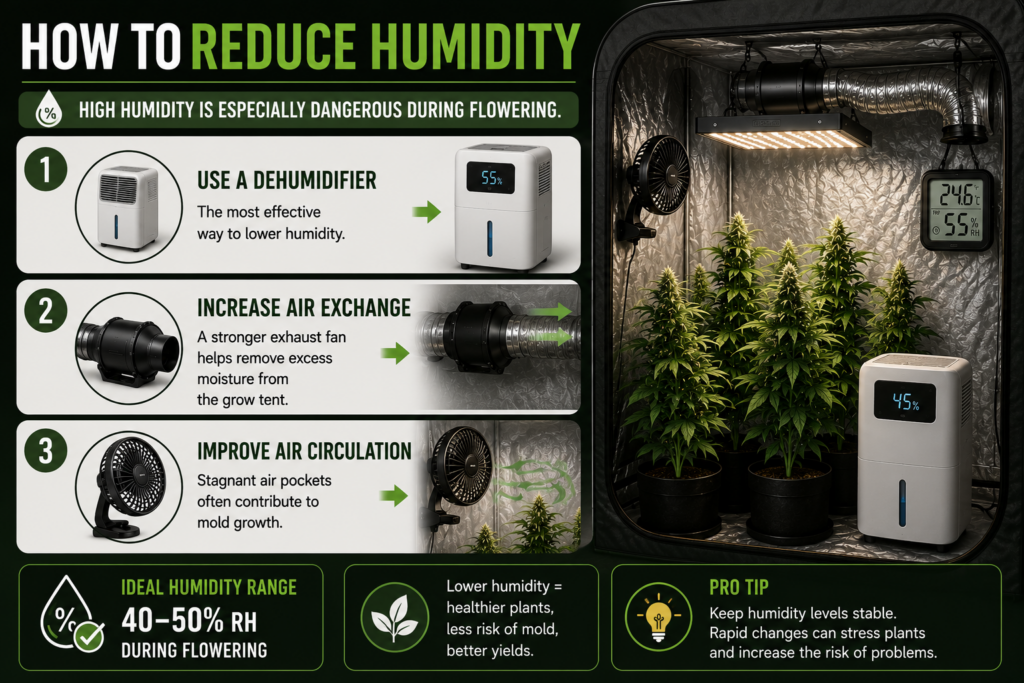
How to Reduce Humidity
High humidity is especially dangerous during flowering.
Use a Dehumidifier
The most effective way to lower humidity.
Increase Air Exchange
A stronger exhaust fan helps remove excess moisture from the grow tent.
Improve Air Circulation
Stagnant air pockets often contribute to mold growth.
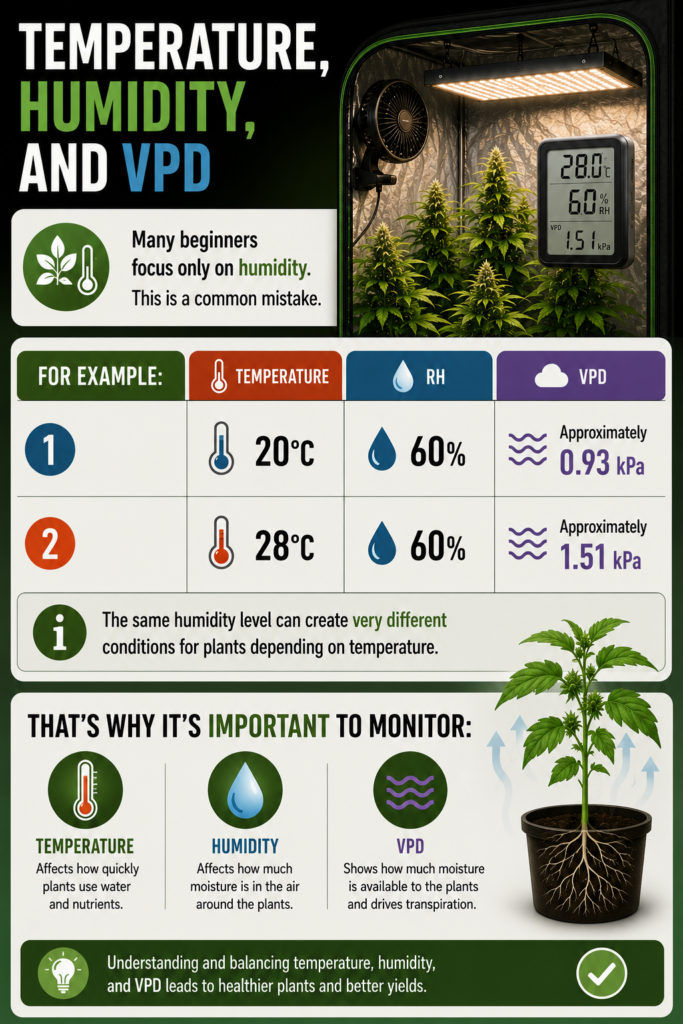
Temperature, Humidity, and VPD
Many beginners focus only on humidity.
This is a common mistake.
For example:
Temperature
RH
VPD
20°C
60%
Approximately 0.93 kPa
28°C
60%
Approximately 1.51 kPa
The same humidity level can create very different conditions for plants depending on temperature.
That’s why it’s important to monitor:
Temperature
Humidity
VPD
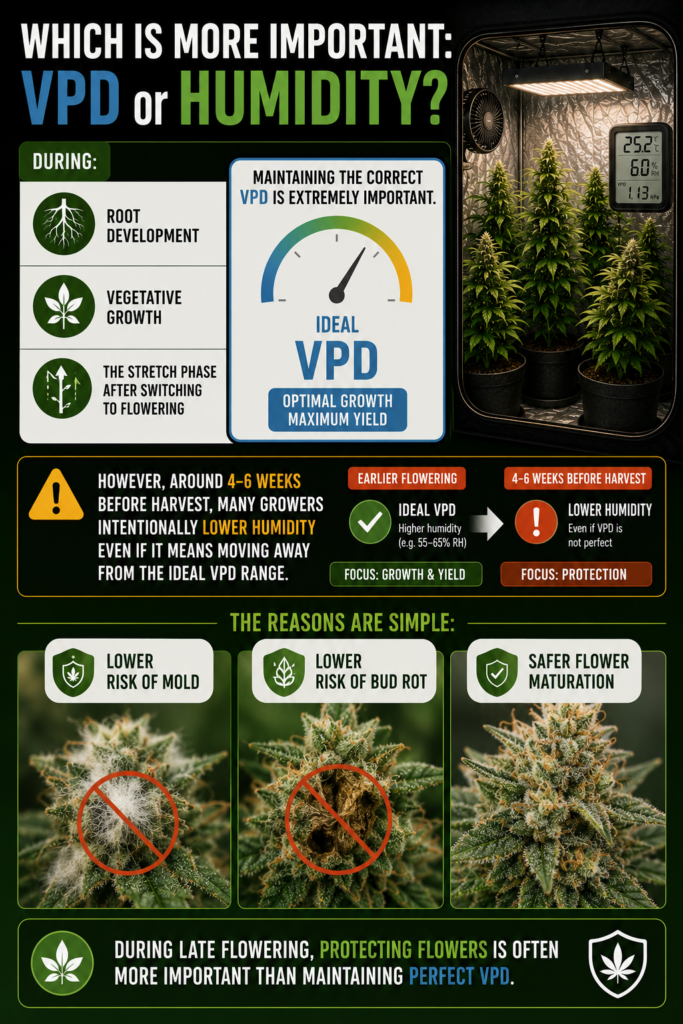
Which Is More Important: VPD or Humidity?
During:
Root development
Vegetative growth
The stretch phase after switching to flowering
Maintaining the correct VPD is extremely important.
However, around 4–6 weeks before harvest, many growers intentionally lower humidity even if it means moving away from the ideal VPD range.
The reasons are simple:
Lower risk of mold
Lower risk of bud rot
Safer flower maturation
During late flowering, protecting flowers is often more important than maintaining perfect VPD.
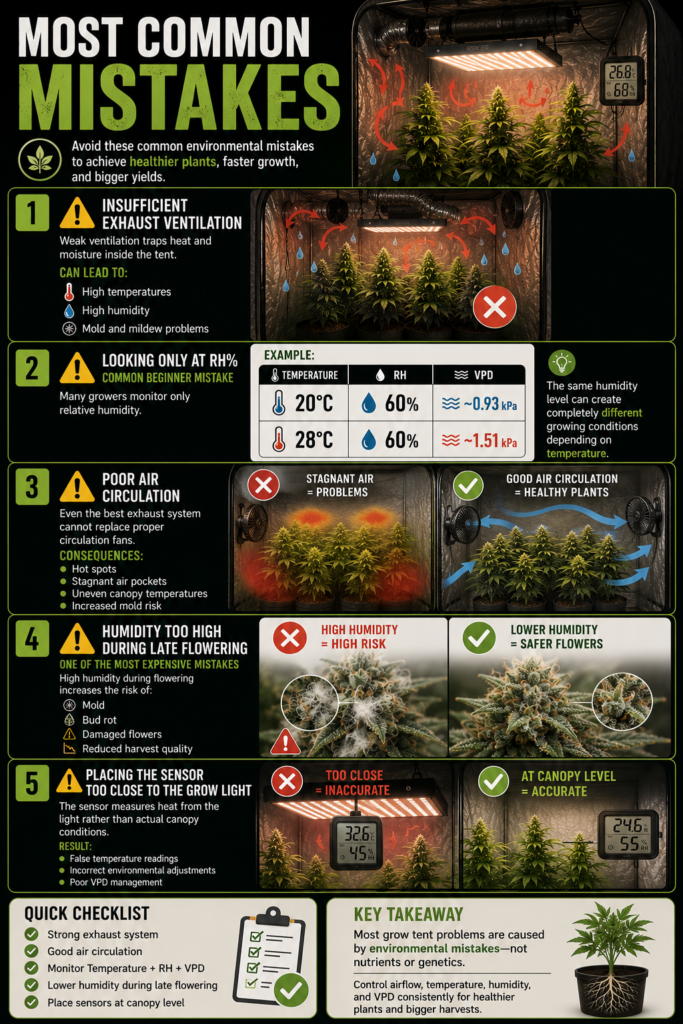
Most Common Mistakes
1. Insufficient Exhaust Ventilation
Weak ventilation often leads to:
High temperatures
High humidity
Mold problems
2. Looking Only at RH%
60% RH at 20°C is not the same as 60% RH at 28°C.
3. Poor Air Circulation
Even the best exhaust system cannot replace proper circulation fans.
4. Humidity That Is Too High During Late Flowering
This is one of the most common causes of mold and bud rot.
5. Placing the Sensor Too Close to the Grow Light
This can result in inaccurate temperature readings.
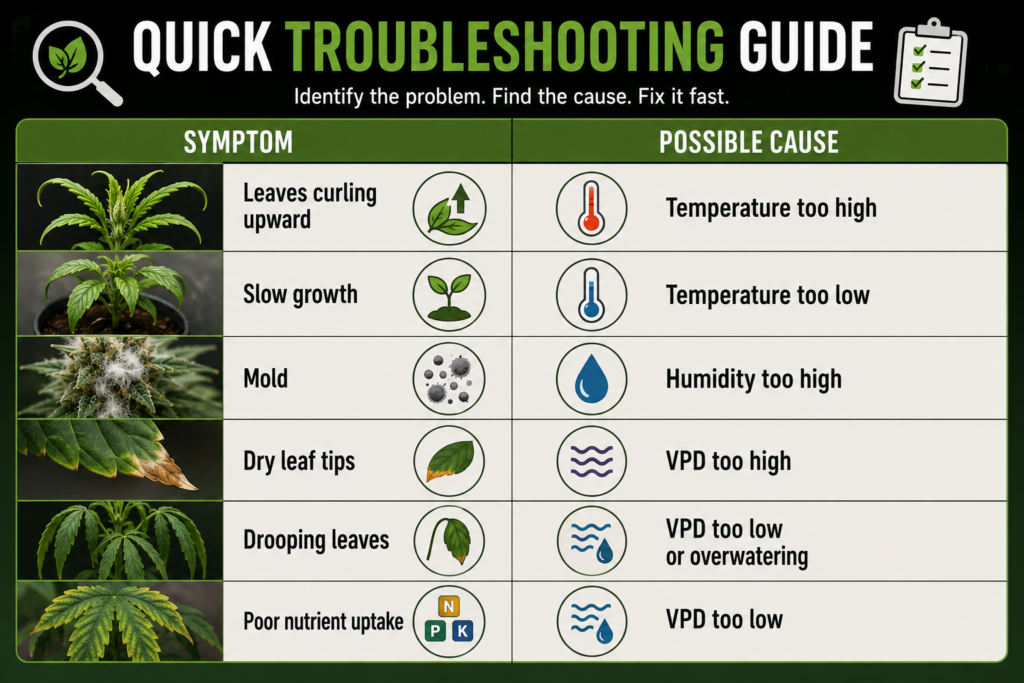
Quick Troubleshooting Guide
Symptom
Possible Cause
Leaves curling upward
Temperature too high
Slow growth
Temperature too low
Mold
Humidity too high
Dry leaf tips
VPD too high
Drooping leaves
VPD too low or overwatering
Poor nutrient uptake
VPD too low
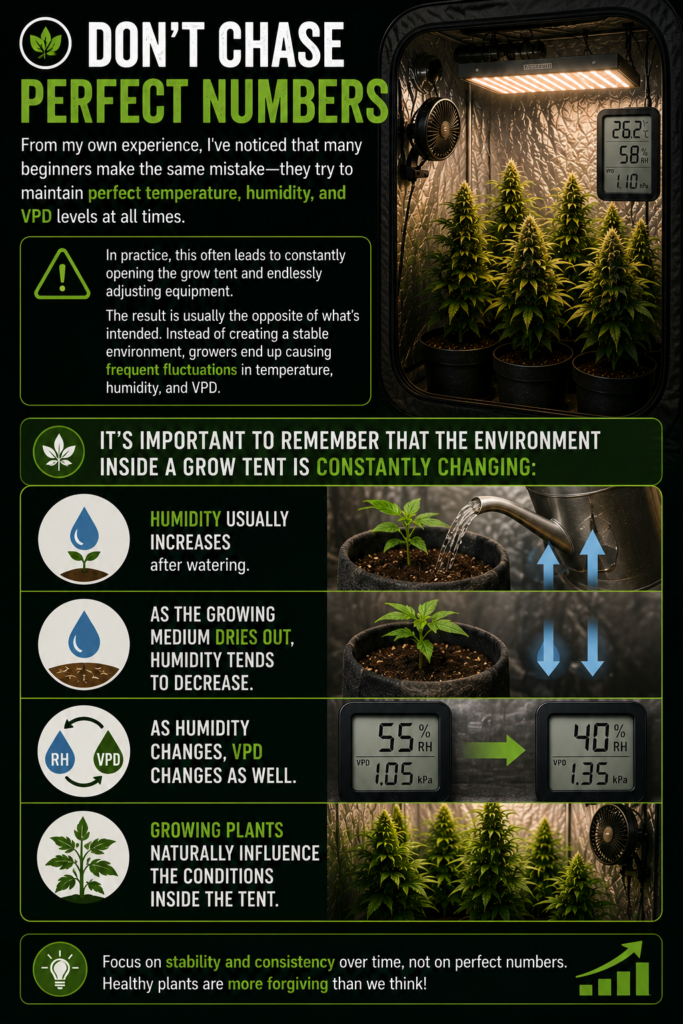
Don't Chase Perfect Numbers
From my own experience, I’ve noticed that many beginners make the same mistake—they try to maintain perfect temperature, humidity, and VPD levels at all times.
In practice, this often leads to constantly opening the grow tent and endlessly adjusting equipment. The result is usually the opposite of what’s intended. Instead of creating a stable environment, growers end up causing frequent fluctuations in temperature, humidity, and VPD.
It’s important to remember that the environment inside a grow tent is constantly changing:
Humidity usually increases after watering.
As the growing medium dries out, humidity tends to decrease.
As humidity changes, VPD changes as well.
Growing plants naturally influence the conditions inside the tent.
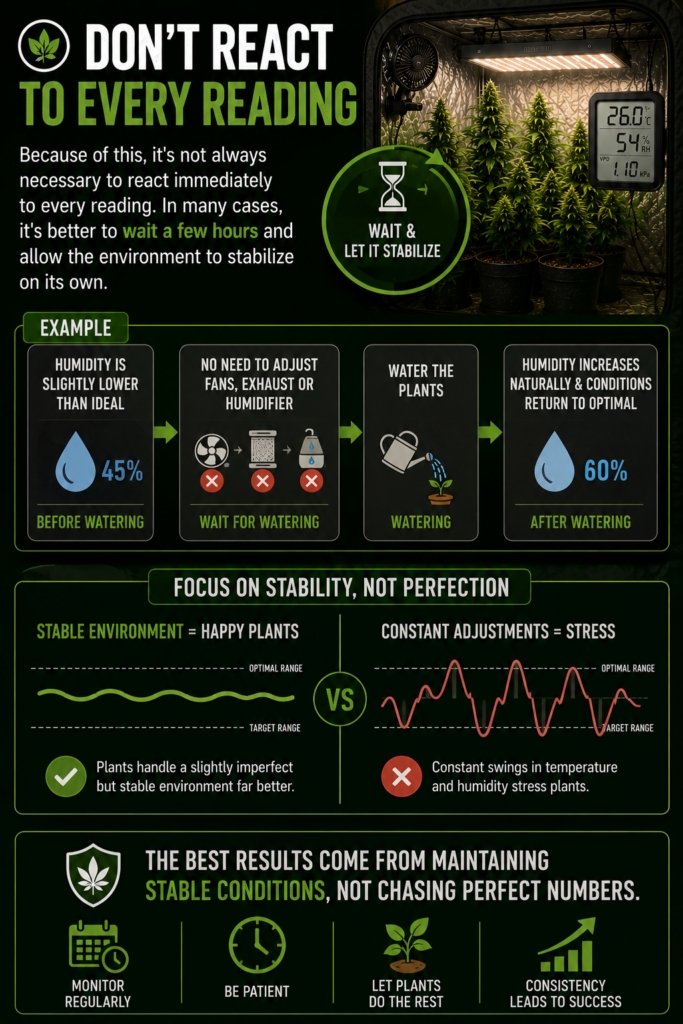
Because of this, it’s not always necessary to react immediately to every reading. In many cases, it’s better to wait a few hours and allow the environment to stabilize on its own.
For example, if humidity is slightly lower than ideal just before a scheduled watering, there’s usually no reason to immediately adjust fans, exhaust settings, or a humidifier. Once the plants are watered, humidity will likely increase naturally and conditions may return closer to the optimal range.
The best results are often achieved by growers who focus on maintaining stable conditions rather than constantly correcting every minor fluctuation. Plants generally handle a slightly imperfect but stable environment far better than they handle constant swings in temperature and humidity.
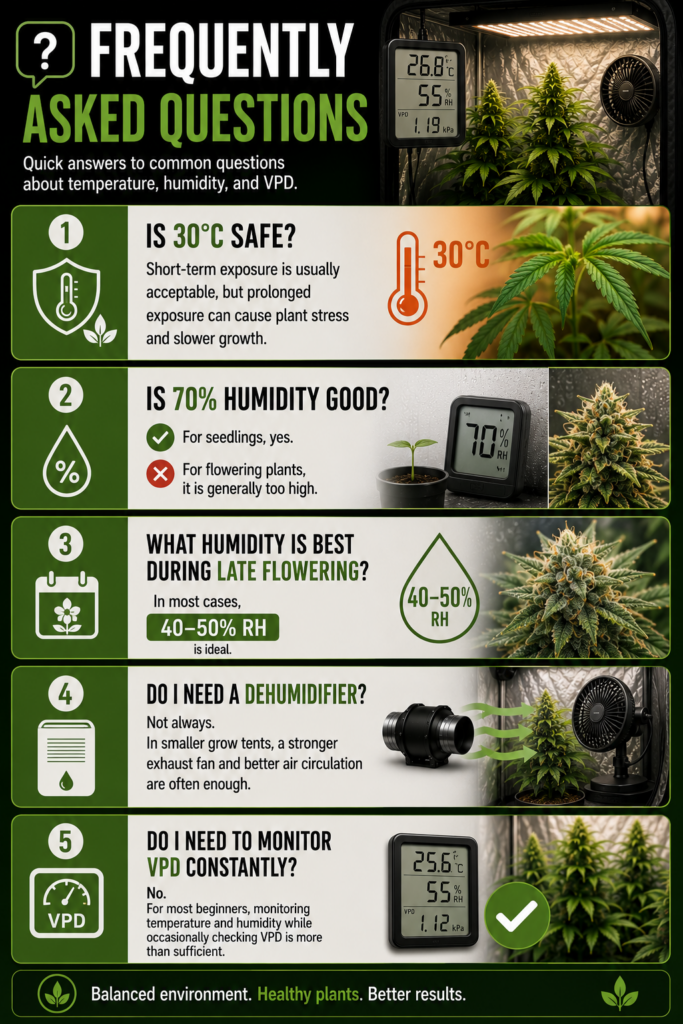
Frequently Asked Questions
Is 30°C Safe?
Short-term exposure is usually acceptable, but prolonged exposure can cause plant stress and slower growth.
Is 70% Humidity Good?
For seedlings, yes.
For flowering plants, it is generally too high.
What Humidity Is Best During Late Flowering?
In most cases, 40–50% RH is ideal.
Do I Need a Dehumidifier?
Not always.
In smaller grow tents, a stronger exhaust fan and better air circulation are often enough.
Do I Need to Monitor VPD Constantly?
No.
For most beginners, monitoring temperature and humidity while occasionally checking VPD is more than sufficient.
Conclusion
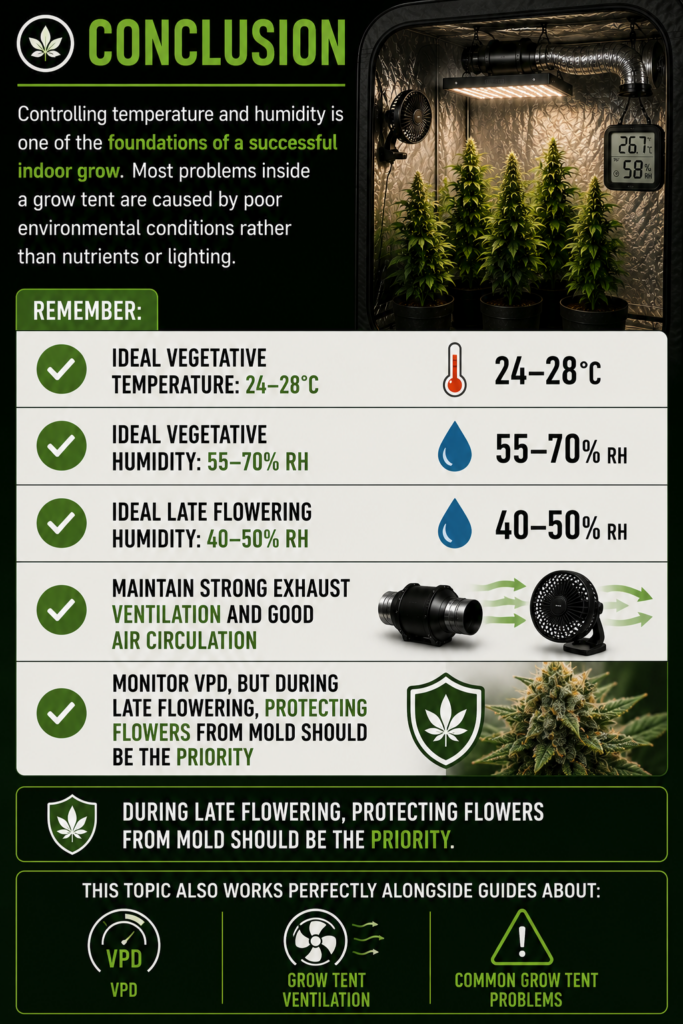
Controlling temperature and humidity is one of the foundations of a successful indoor grow. Most problems inside a grow tent are caused by poor environmental conditions rather than nutrients or lighting.
Remember:
✅ Ideal vegetative temperature: 24–28°C
✅ Ideal vegetative humidity: 55–70% RH
✅ Ideal late flowering humidity: 40–50% RH
✅ Maintain strong exhaust ventilation and good air circulation
✅ Monitor VPD, but during late flowering, protecting flowers from mold should be the priority
Check Out Our Other Guides
If you are still setting up your grow tent or looking to improve your growing conditions, be sure to explore our other guides as well: