
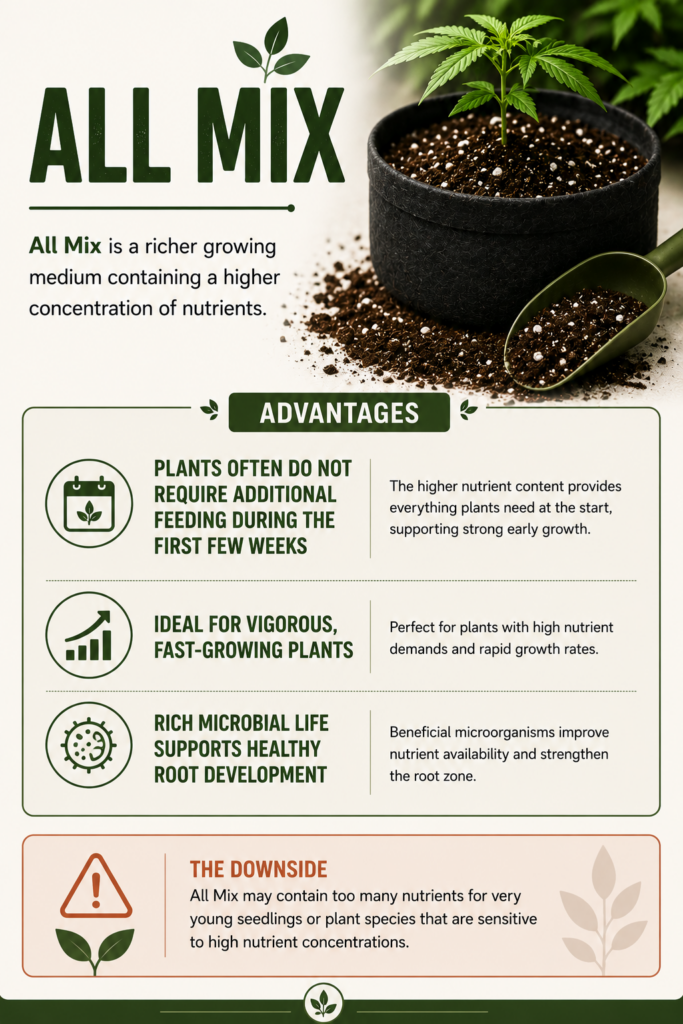
What Soil Should You Choose for a Grow Box?
Choosing the right soil is one of the most important decisions when setting up a grow box. Even the best lighting and an efficient ventilation system won’t ensure healthy plant growth if the growing medium is too heavy, poorly aerated, or unsuitable for the stage of cultivation.
In this guide, you’ll learn what characteristics good grow box soil should have, what types of growing media are available, and which option is best for beginners and more experienced growers.
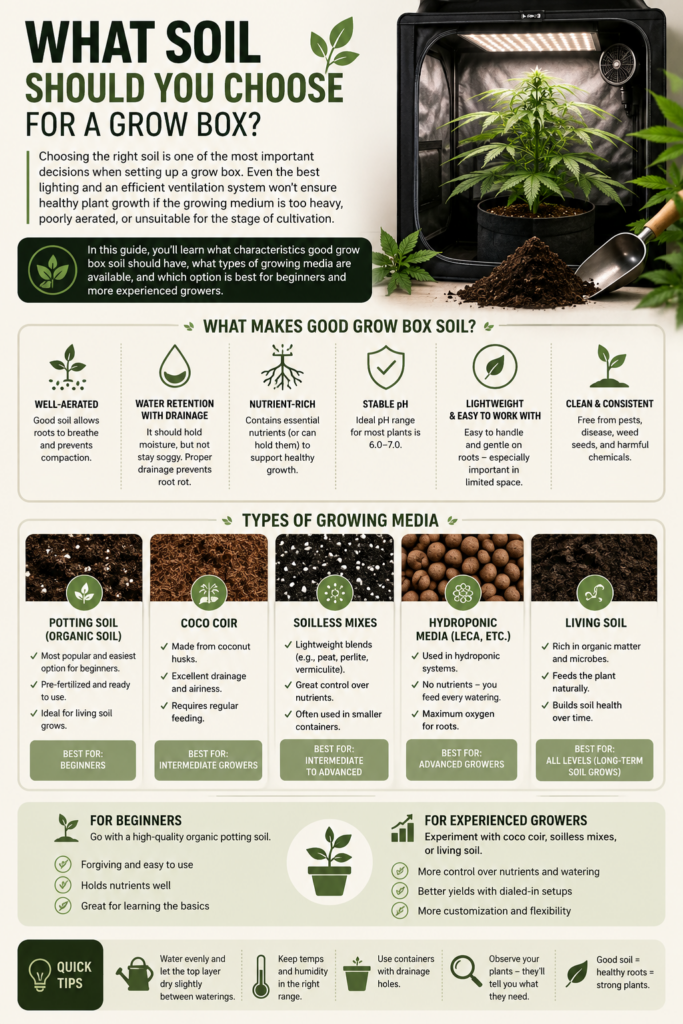
What Characteristics Should Good Soil Have?
A growing medium for indoor cultivation should:
- be light and well-aerated,
- retain moisture while allowing excess water to drain,
- provide the roots with access to oxygen,
- maintain a stable pH (typically 6.0–6.8),
- be free from diseases, pests, and weed seeds.
The best soil mixes contain peat along with structure-improving additives such as perlite, coco coir, or compost.
Types of Soil for Grow Boxes
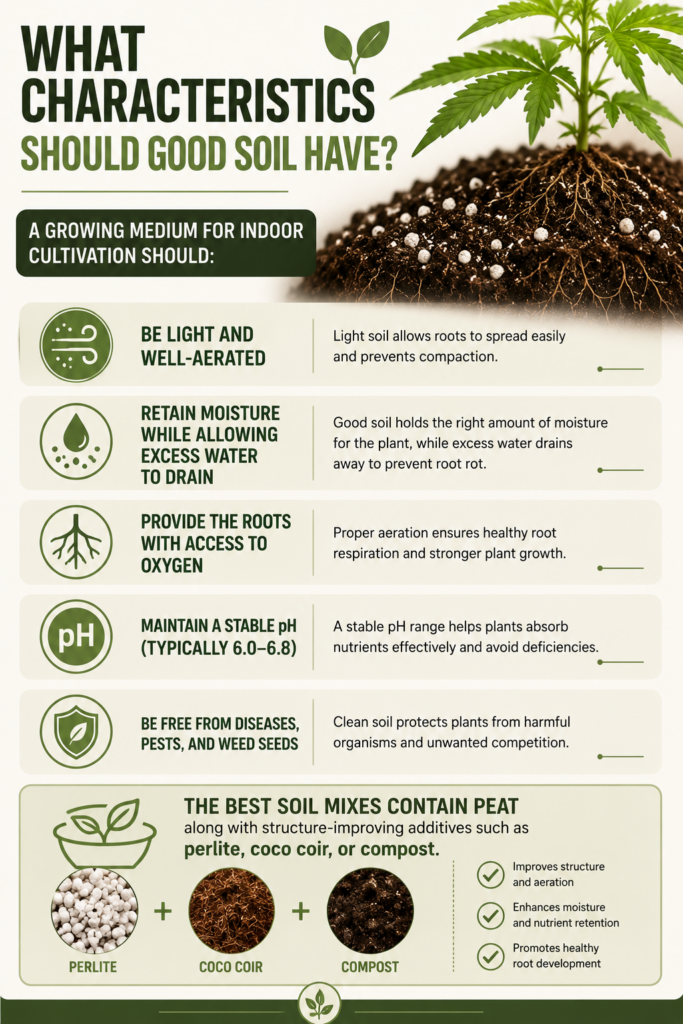
Light Mix
Light Mix is a lightly fertilized growing medium designed primarily for beginners and growers who prefer to control their own feeding schedule.
Advantages:
- low level of starter nutrients,
- easier control of nutrient levels,
- lower risk of overfertilization,
- suitable for most plant species.
It is the most commonly recommended choice for people starting their indoor growing journey.
All Mix
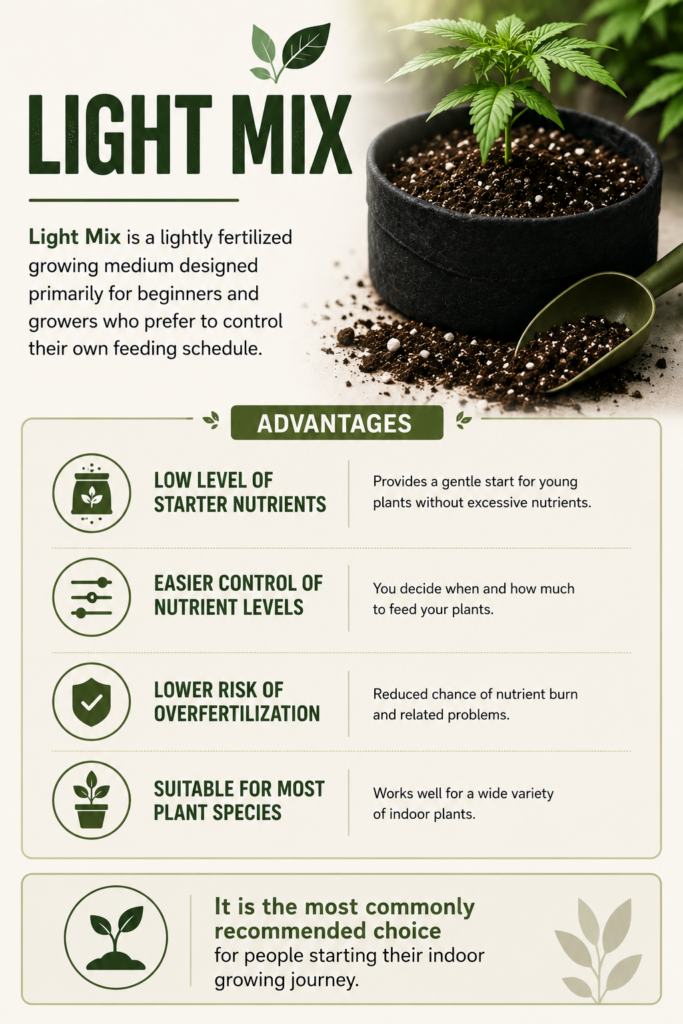
All Mix is a richer growing medium containing a higher concentration of nutrients.
Advantages:
- plants often do not require additional feeding during the first few weeks,
- ideal for vigorous, fast-growing plants,
- rich microbial life supports healthy root development.
The downside is that it may contain too many nutrients for very young seedlings or plant species that are sensitive to high nutrient concentrations.
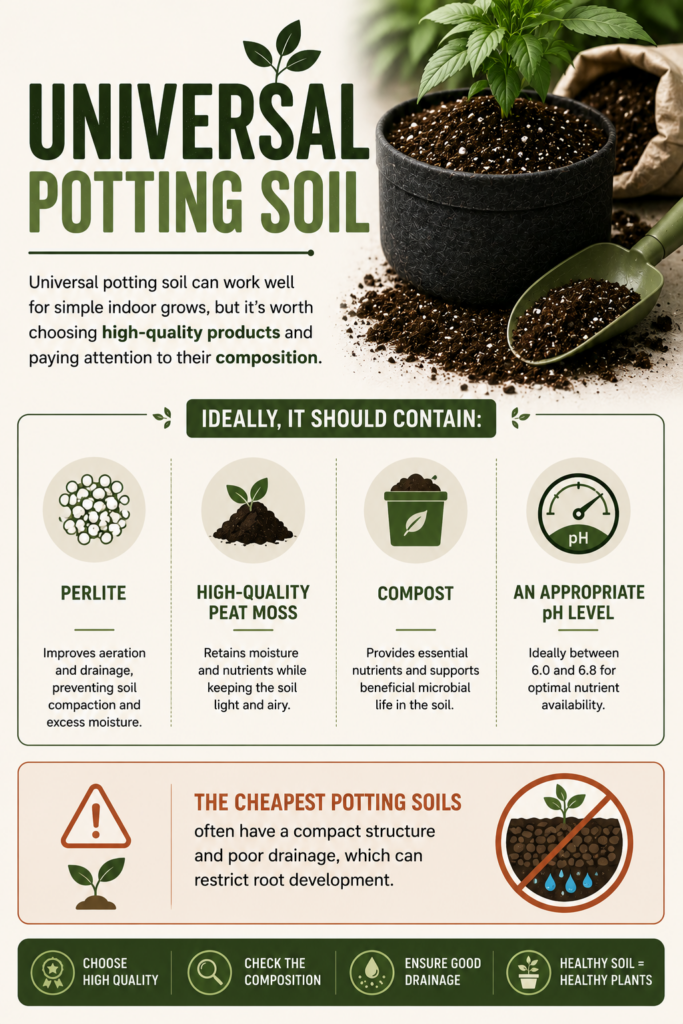
Universal Potting Soil
Universal potting soil can work well for simple indoor grows, but it’s worth choosing high-quality products and paying attention to their composition.
Ideally, it should contain:
- perlite,
- high-quality peat moss,
- compost,
- an appropriate pH level.
The cheapest potting soils often have a compact structure and poor drainage, which can restrict root development.
Is It Worth Adding Perlite?
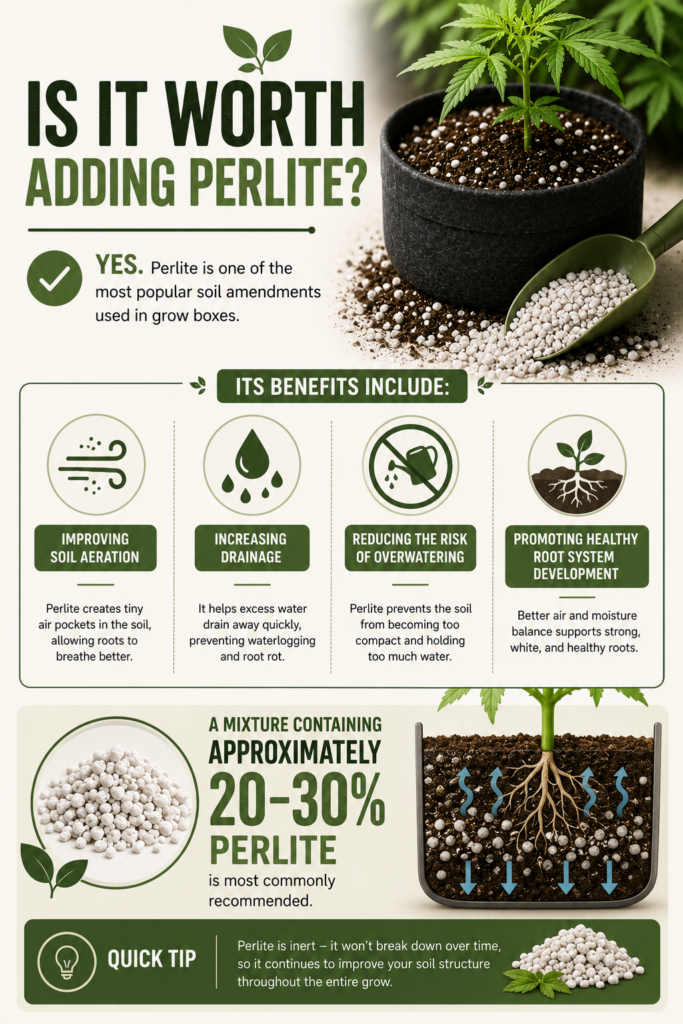
Yes. Perlite is one of the most popular soil amendments used in grow boxes.
Its benefits include:
- improving soil aeration,
- increasing drainage,
- reducing the risk of overwatering,
- promoting healthy root system development.
A mixture containing approximately 20–30% perlite is most commonly recommended.
What pH Should the Soil Have?
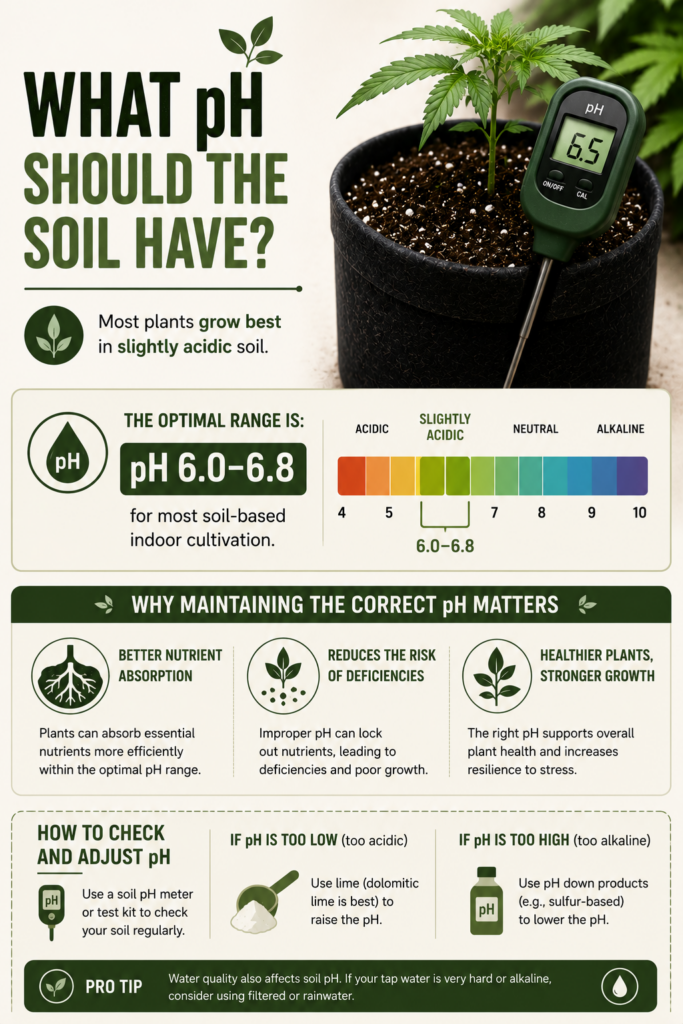
Most plants grow best in slightly acidic soil.
The optimal range is:
- pH 6.0–6.8 for most soil-based indoor cultivation.
Maintaining the correct pH allows plants to absorb nutrients more efficiently and reduces the risk of nutrient deficiencies.
Soil or Coco Coir?
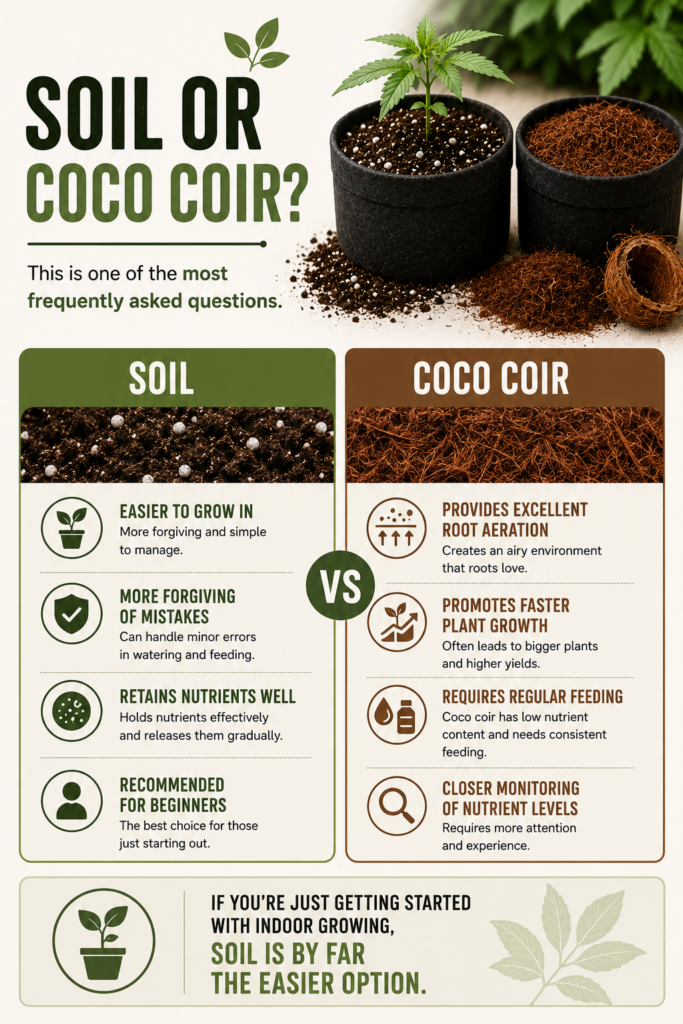
This is one of the most frequently asked questions.
Soil
- easier to grow in,
- more forgiving of mistakes,
- retains nutrients well,
- recommended for beginners.
Coco Coir
- provides excellent root aeration,
- promotes faster plant growth,
- requires regular feeding and closer monitoring of nutrient levels.
If you’re just getting started with indoor growing, soil is by far the easier option.
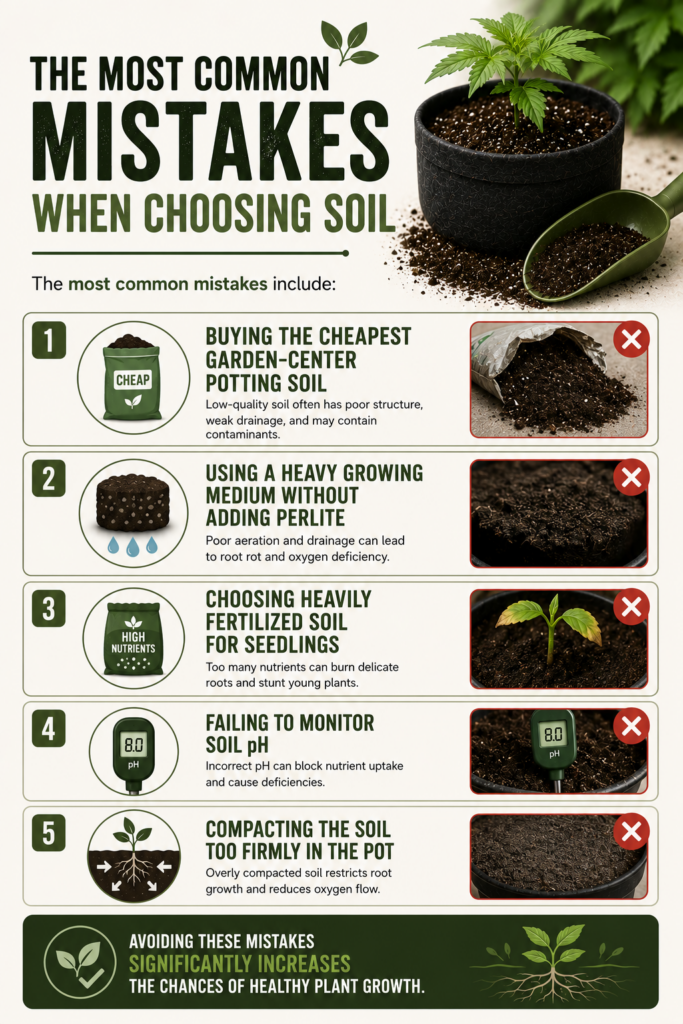
The Most Common Mistakes When Choosing Soil
The most common mistakes include:
- buying the cheapest garden-center potting soil,
- using a heavy growing medium without adding perlite,
- choosing heavily fertilized soil for seedlings,
- failing to monitor soil pH,
- compacting the soil too firmly in the pot.
Avoiding these mistakes significantly increases the chances of healthy plant growth.
Ranking of the Most Popular Grow Box Soils
| Rank | Soil | Best For | Advantages | Rating |
|---|---|---|---|---|
| 🥇 1 | Biobizz Light Mix | Beginners and Intermediate Growers | Excellent soil structure, easy nutrient management, low risk of overfertilization | ⭐⭐⭐⭐⭐ (10/10) |
| 🥈 2 | Plagron Lightmix | Beginners and Experienced Growers | Consistent quality, excellent aeration, works perfectly with both mineral and organic fertilizers | ⭐⭐⭐⭐⭐ (9.8/10) |
| 🥉 3 | Canna Terra Professional | Intermediate Growers | Premium-quality peat, excellent moisture retention, promotes rapid root development | ⭐⭐⭐⭐⭐ (9.6/10) |
| 4 | Biobizz All Mix | Experienced Growers | Nutrient-rich growing medium that reduces the need for fertilization during the early stages of growth | ⭐⭐⭐⭐☆ (9.3/10) |
| 5 | Plagron Allmix | Experienced Growers | Living soil with a high level of starter nutrients, ideal for larger and fast-growing plants | ⭐⭐⭐⭐☆ (9.1/10) |
My Recommendation
If you’re just getting started, I would choose Biobizz Light Mix or Plagron Lightmix. Both growing media are highly reliable and make it easy to control nutrient feeding from the very beginning of the grow.
Personally, I use Plagron Lightmix most of the time. It allows me to follow the manufacturer’s feeding schedule from day one while maintaining full control over the amount of nutrients my plants receive. In my experience, this approach has worked exceptionally well and has virtually eliminated problems with overfertilizing young plants.
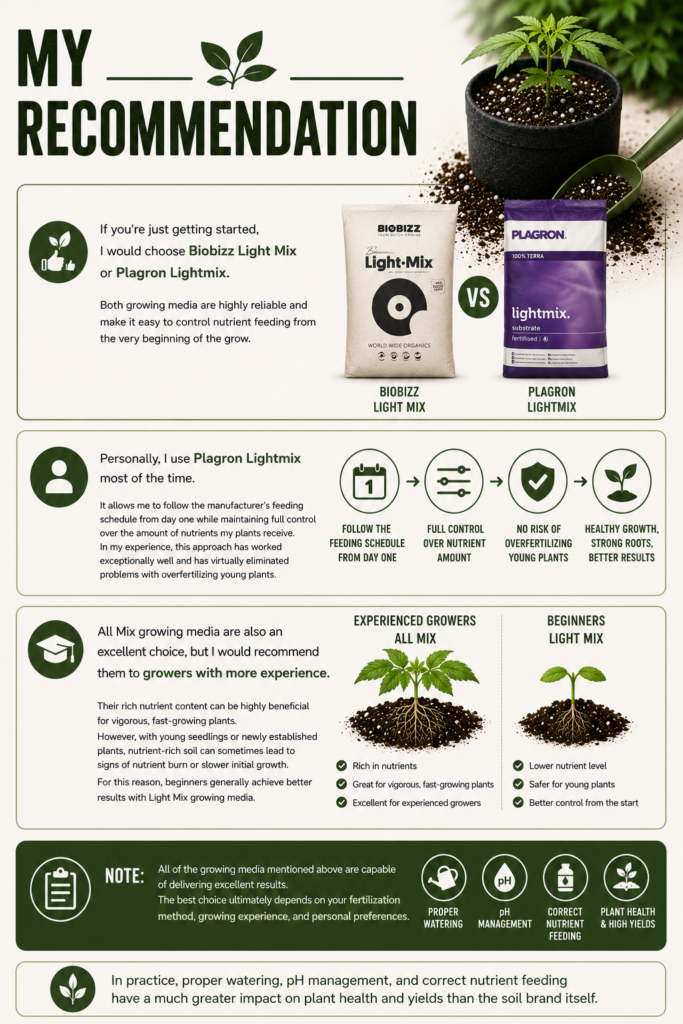
All Mix growing media are also an excellent choice, but I would recommend them to growers with more experience. Their rich nutrient content can be highly beneficial for vigorous, fast-growing plants. However, with young seedlings or newly established plants, nutrient-rich soil can sometimes lead to signs of nutrient burn or slower initial growth. For this reason, beginners generally achieve better results with Light Mix growing media.
Note: All of the growing media mentioned above are capable of delivering excellent results. The best choice ultimately depends on your fertilization method, growing experience, and personal preferences. In practice, proper watering, pH management, and correct nutrient feeding have a much greater impact on plant health and yields than the soil brand itself.
Is It Worth Mixing Soil with Amendments?
Yes. Many growers choose to prepare their own soil mix instead of relying solely on ready-made potting soil. This allows them to improve the structure of the growing medium, increase aeration, and better control moisture levels.
The most commonly used amendments include:
Perlite – improves aeration and drainage, allowing roots to access oxygen more efficiently.
Coco Coir – increases the soil’s water-holding capacity while maintaining excellent airflow.
Vermiculite – helps retain moisture and nutrients, making it a good choice for plants that require more consistent hydration.
Compost or Vermicompost – enriches the growing medium with organic matter and supports the development of beneficial microorganisms.
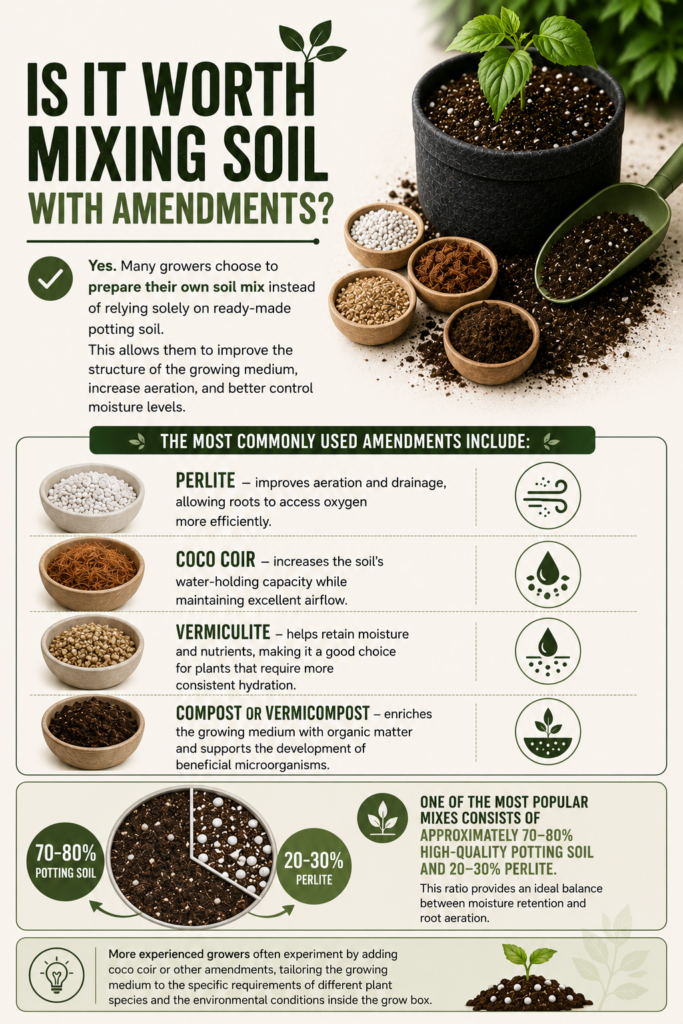
One of the most popular mixes consists of approximately 70–80% high-quality potting soil and 20–30% perlite. This ratio provides an ideal balance between moisture retention and root aeration.
More experienced growers often experiment by adding coco coir or other amendments, tailoring the growing medium to the specific requirements of different plant species and the environmental conditions inside the grow box.
My Experience Choosing Soil
After testing different types of growing media, I most often choose Light Mix. For me, it’s the most convenient option because it gives me complete control over fertilization from the very beginning. By simply following the fertilizer manufacturer’s recommendations and feeding schedule, it’s much easier to avoid overfertilization and respond quickly to the plants’ nutritional needs.
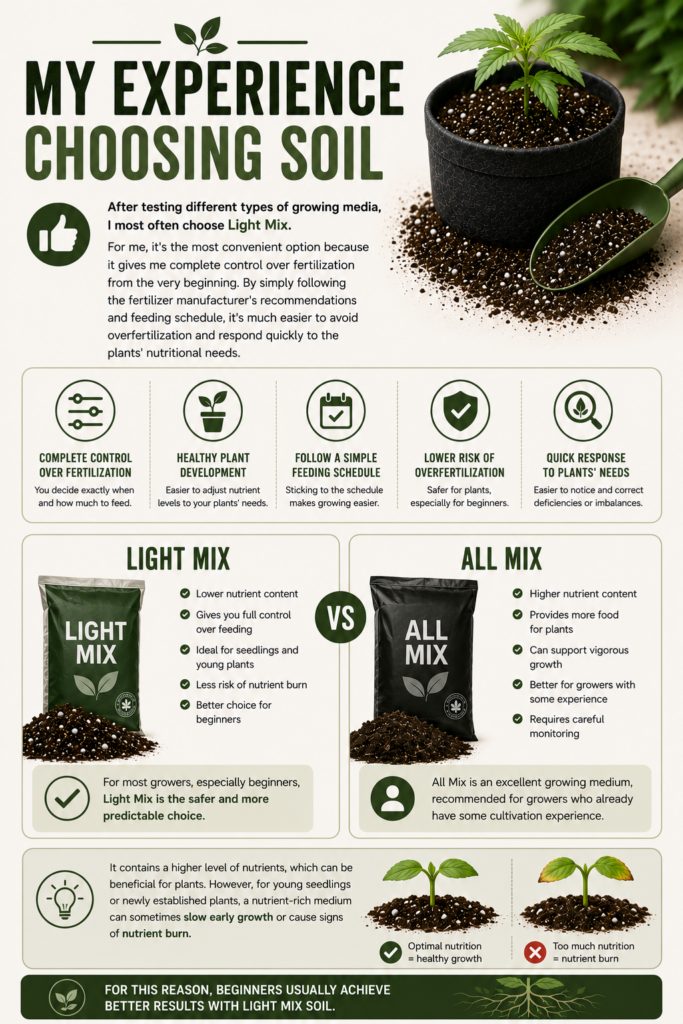
All Mix is also an excellent growing medium, but I would recommend it to growers who already have some cultivation experience. It contains a higher level of nutrients, which can be beneficial for plants. However, for young seedlings or newly established plants, a nutrient-rich medium can sometimes slow early growth or cause signs of nutrient burn. For this reason, beginners usually achieve better results with Light Mix soil.
Summary
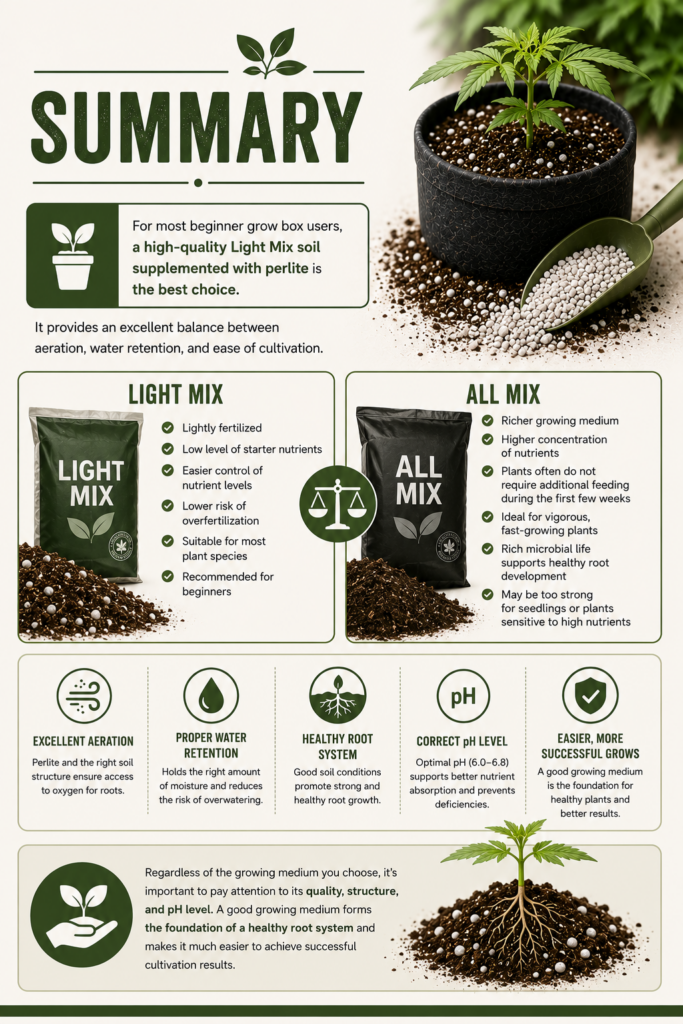
For most beginner grow box users, a high-quality Light Mix soil supplemented with perlite is the best choice. It provides an excellent balance between aeration, water retention, and ease of cultivation. More experienced growers may prefer nutrient-rich All Mix blends, which provide plants with most of the essential nutrients during the first few weeks of growth.
Regardless of the growing medium you choose, it’s important to pay attention to its quality, structure, and pH level. A good growing medium forms the foundation of a healthy root system and makes it much easier to achieve successful cultivation results.
Frequently Asked Questions (FAQ)
What is the best soil for a grow box?
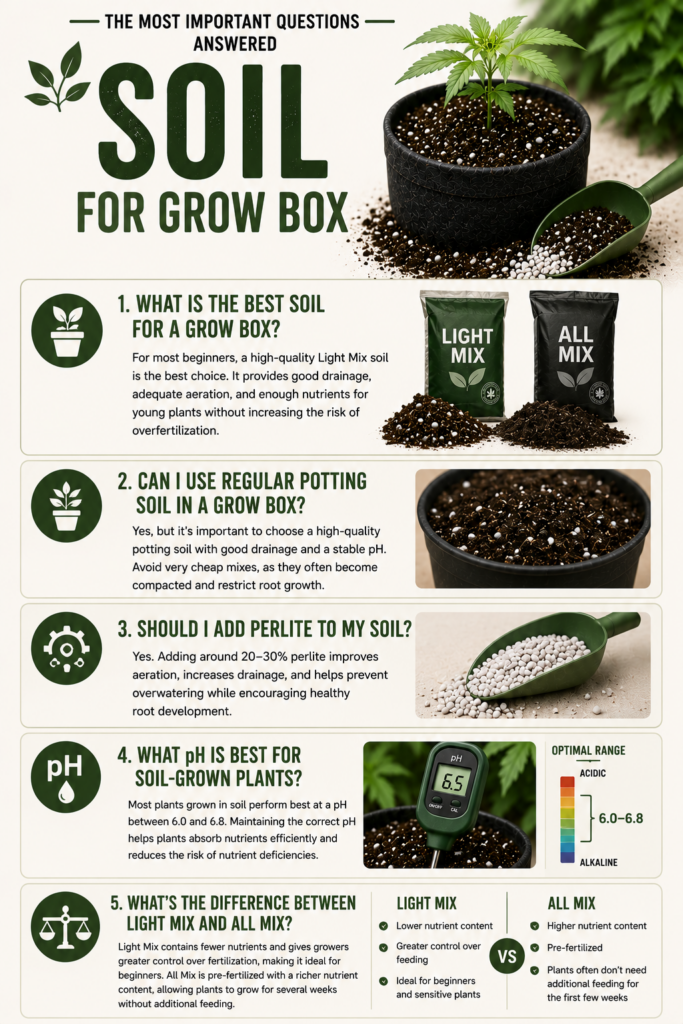
For most beginners, a high-quality Light Mix soil is the best choice. It provides good drainage, adequate aeration, and enough nutrients for young plants without increasing the risk of overfertilization.
Can I use regular potting soil in a grow box?
Yes, but it’s important to choose a high-quality potting soil with good drainage and a stable pH. Avoid very cheap mixes, as they often become compacted and restrict root growth.
Should I add perlite to my soil?
Yes. Adding around 20–30% perlite improves aeration, increases drainage, and helps prevent overwatering while encouraging healthy root development.
What pH is best for soil-grown plants?
Most plants grown in soil perform best at a pH between 6.0 and 6.8. Maintaining the correct pH helps plants absorb nutrients efficiently and reduces the risk of nutrient deficiencies.
What’s the difference between Light Mix and All Mix?
Light Mix contains fewer nutrients and gives growers greater control over fertilization, making it ideal for beginners. All Mix is pre-fertilized with a richer nutrient content, allowing plants to grow for several weeks without additional feeding.
Is coco coir better than soil?
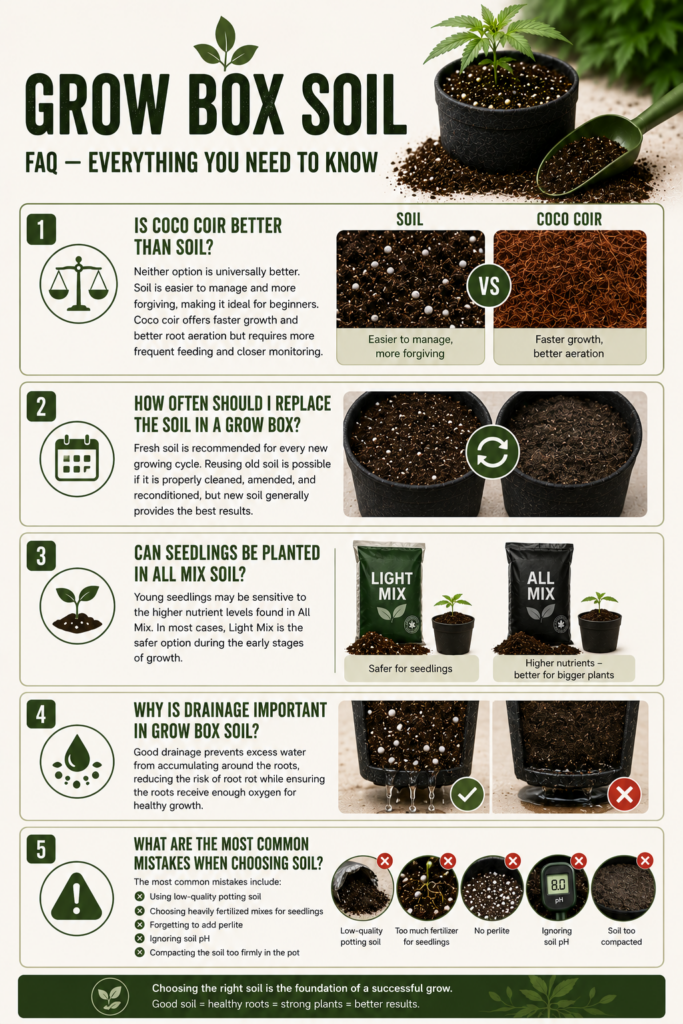
Neither option is universally better. Soil is easier to manage and more forgiving, making it ideal for beginners. Coco coir offers faster growth and better root aeration but requires more frequent feeding and closer monitoring.
How often should I replace the soil in a grow box?
Fresh soil is recommended for every new growing cycle. Reusing old soil is possible if it is properly cleaned, amended, and reconditioned, but new soil generally provides the best results.
Can seedlings be planted in All Mix soil?
Young seedlings may be sensitive to the higher nutrient levels found in All Mix. In most cases, Light Mix is the safer option during the early stages of growth.
Why is drainage important in grow box soil?
Good drainage prevents excess water from accumulating around the roots, reducing the risk of root rot while ensuring the roots receive enough oxygen for healthy growth.
What are the most common mistakes when choosing soil?
The most common mistakes include using low-quality potting soil, choosing heavily fertilized mixes for seedlings, forgetting to add perlite, ignoring soil pH, and compacting the soil too firmly in the pot.
Check Out Our Other Guides
If you are still setting up your grow tent or looking to improve your growing conditions, be sure to explore our other guides as well: