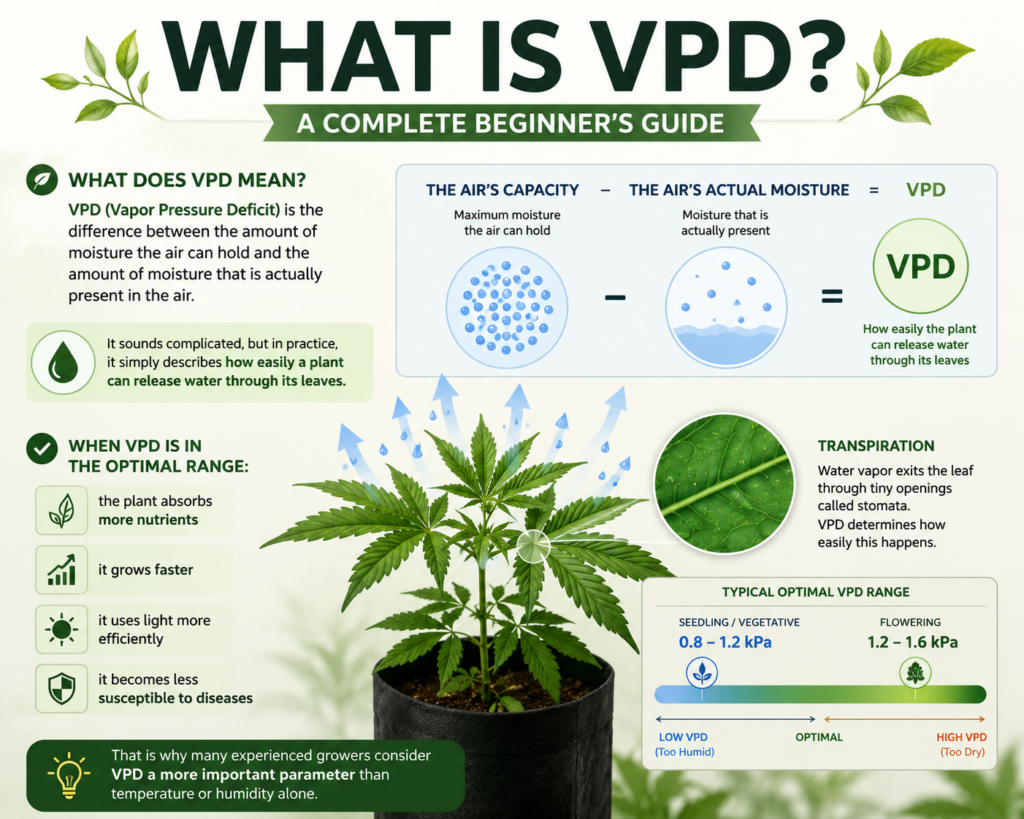
VPD (Vapor Pressure Deficit) is the difference between the amount of moisture the air can hold and the amount of moisture that is actually present in the air.
It sounds complicated, but in practice, it simply describes how easily a plant can release water through its leaves.
When VPD is in the optimal range:
the plant absorbs more nutrients,
it grows faster,
it uses light more efficiently,
it becomes less susceptible to diseases.
That is why many experienced growers consider VPD a more important parameter than temperature or humidity alone.
Why Is VPD So Important?
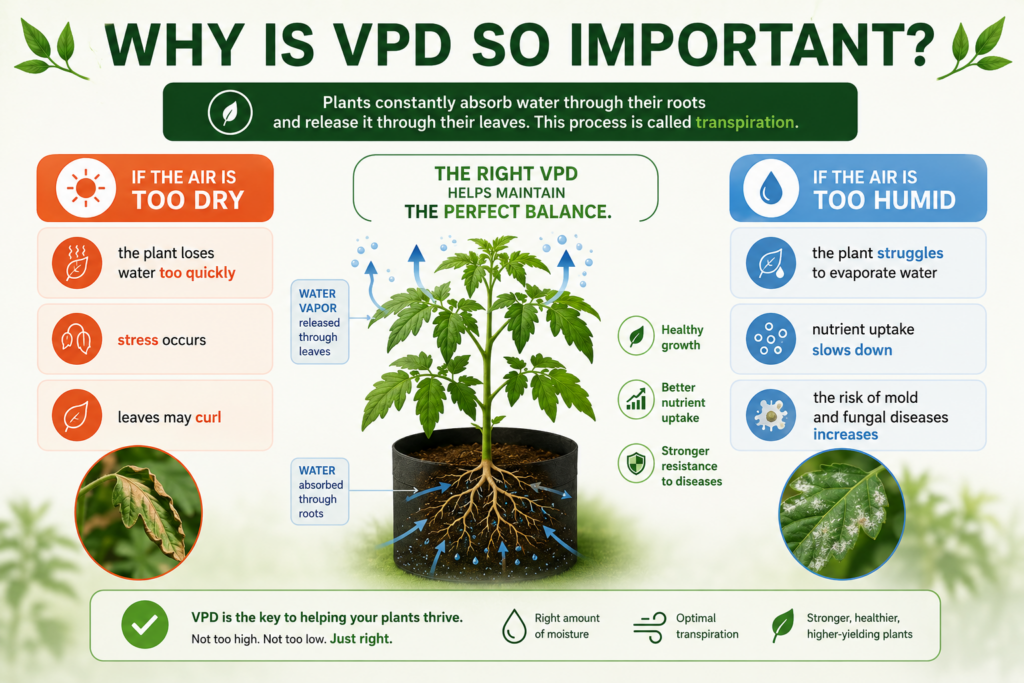
Plants constantly absorb water through their roots and release it through their leaves.
This process is called transpiration.
If the air is too dry:
the plant loses water too quickly,
stress occurs,
leaves may curl.
If the air is too humid:
the plant struggles to evaporate water,
nutrient uptake slows down,
the risk of mold and fungal diseases increases.
The right VPD helps maintain the perfect balance.
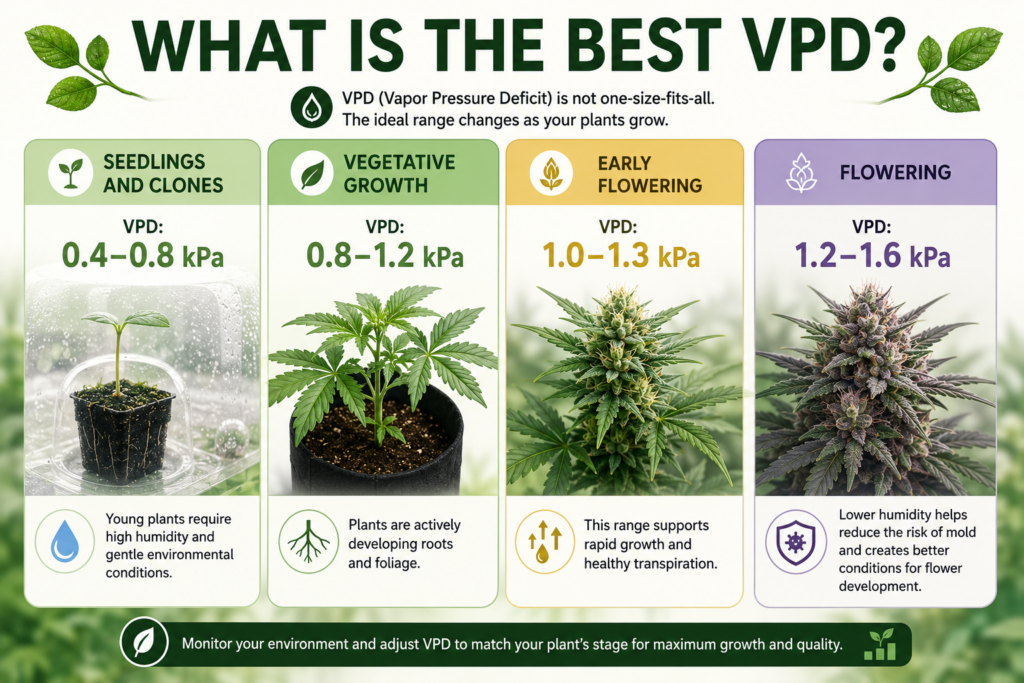
What Is the Best VPD?
Seedlings and Clones
VPD: 0.4–0.8 kPa
Young plants require high humidity and gentle environmental conditions.
Vegetative Growth
VPD: 0.8–1.2 kPa
Plants are actively developing roots and foliage.
Early Flowering
VPD: 1.0–1.3 kPa
This range supports rapid growth and healthy transpiration.
Flowering
VPD: 1.2–1.6 kPa
Lower humidity helps reduce the risk of mold and creates better conditions for flower development.
VPD Table
Temperature
Humidity 70%
Humidity 60%
Humidity 50%
Humidity 40%
16°C
0,54 kPa
0,72 kPa
0,90 kPa
1,08 kPa
18°C
0,62 kPa
0,82 kPa
1,03 kPa
1,24 kPa
20°C
0,70 kPa
0,93 kPa
1,17 kPa
1,40 kPa
22°C
0,79 kPa
1,05 kPa
1,32 kPa
1,58 kPa
24°C
0,89 kPa
1,19 kPa
1,48 kPa
1,78 kPa
26°C
1,00 kPa
1,33 kPa
1,66 kPa
1,99 kPa
28°C
1,13 kPa
1,51 kPa
1,89 kPa
2,27 kPa
30°C
1,27 kPa
1,69 kPa
2,12 kPa
2,54 kPa
32°C
1,43 kPa
1,91 kPa
2,38 kPa
2,86 kPa
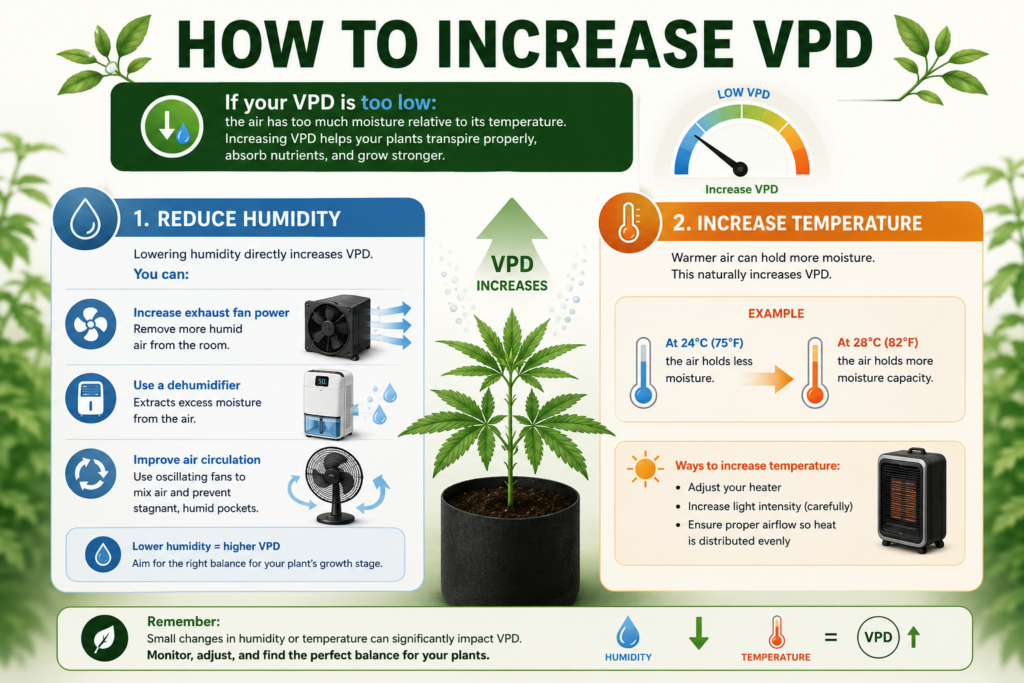
How to Increase VPD
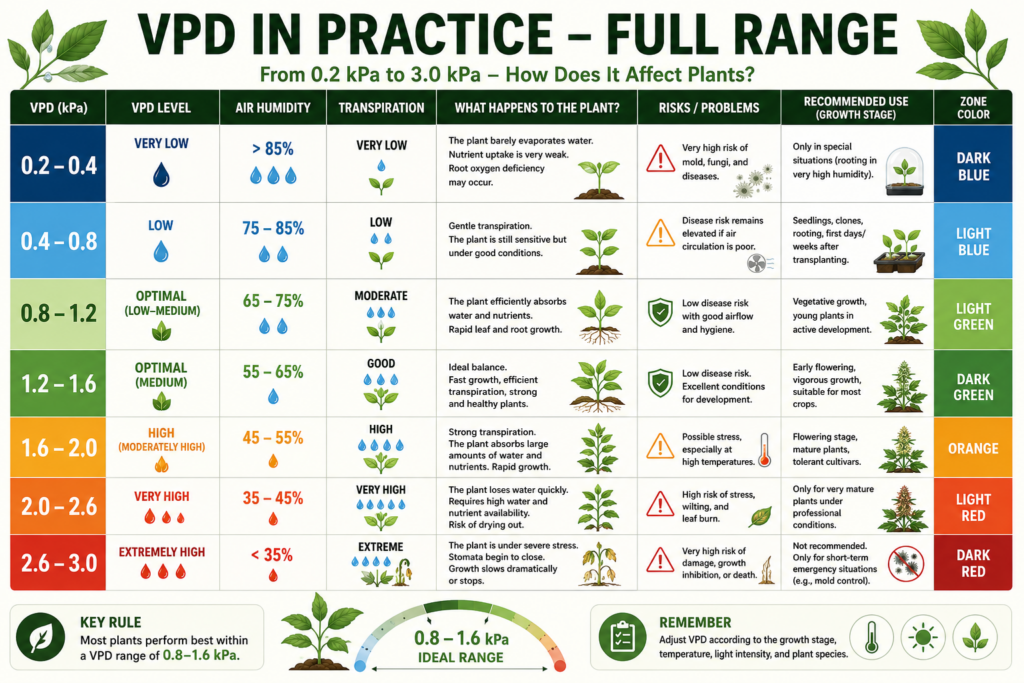
If your VPD is too low:
Reduce Humidity
You can:
increase exhaust fan power,
use a dehumidifier,
improve air circulation.
Increase Temperature
Higher temperatures increase the air’s capacity to hold moisture.
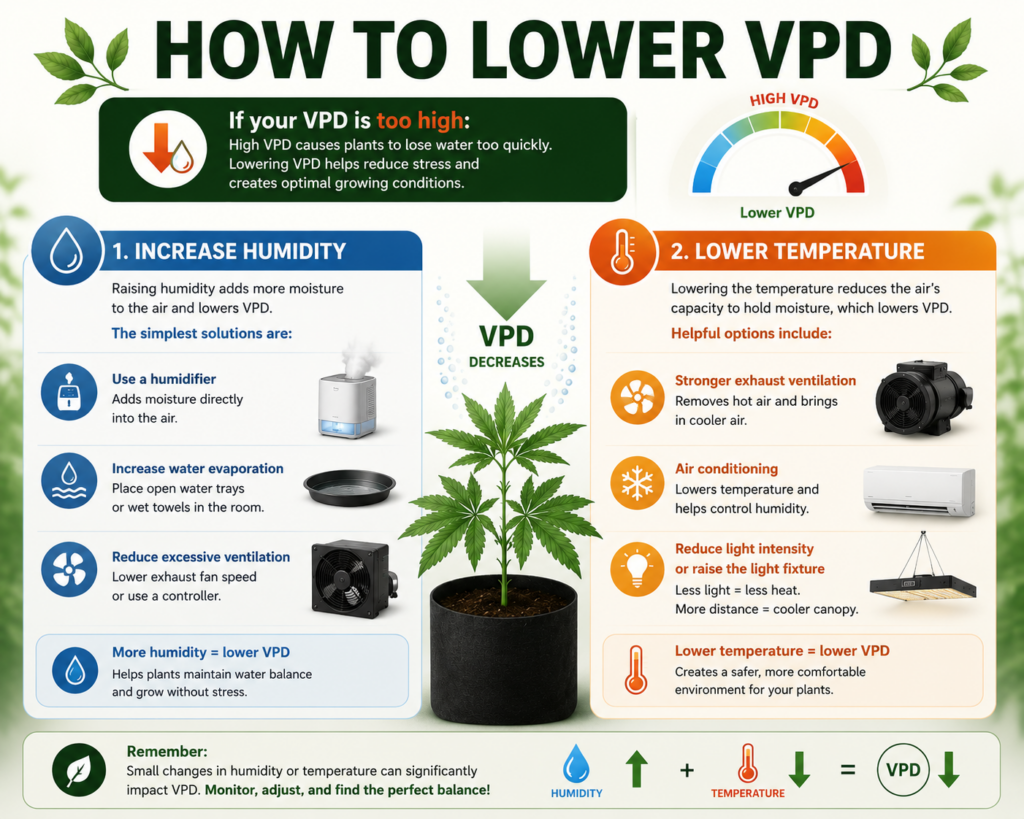
How to Lower VPD
If your VPD is too high:
Increase Humidity
The simplest solutions are:
using a humidifier,
increasing water evaporation,
reducing excessive ventilation.
Lower Temperature
Helpful options include:
stronger exhaust ventilation,
air conditioning,
reducing light intensity or raising the light fixture.
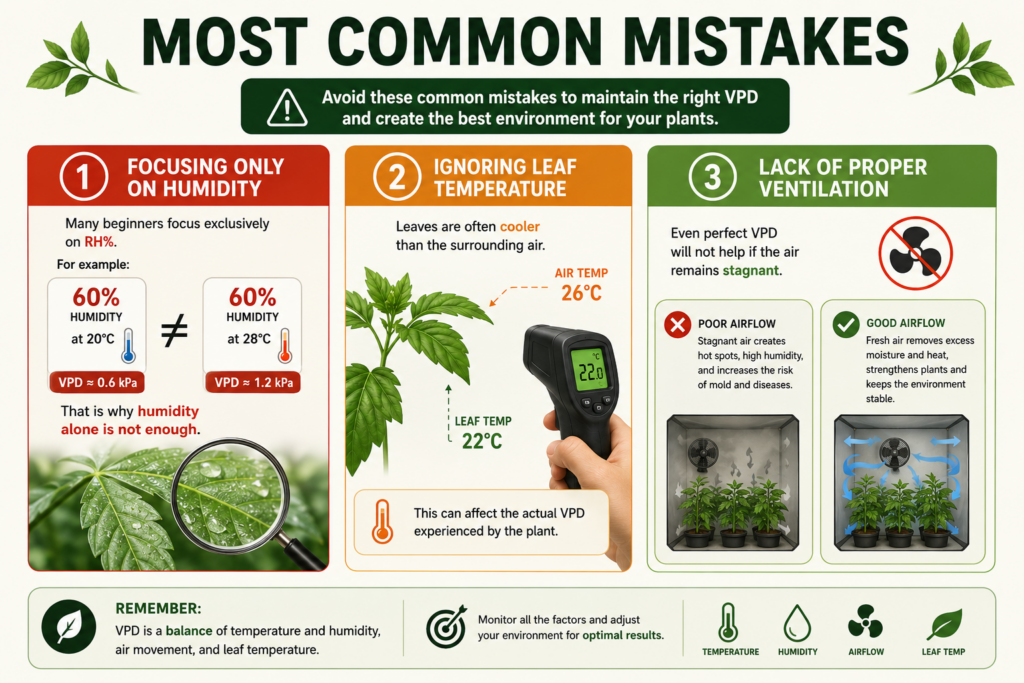
Most Common Mistakes
Focusing Only on Humidity
Many beginners focus exclusively on RH%.
For example:
60% humidity at 20°C results in a different VPD than
60% humidity at 28°C.
That is why humidity alone is not enough.
Ignoring Leaf Temperature
Leaves are often cooler than the surrounding air.
This can affect the actual VPD experienced by the plant.
Lack of Proper Ventilation
Even perfect VPD will not help if the air remains stagnant.
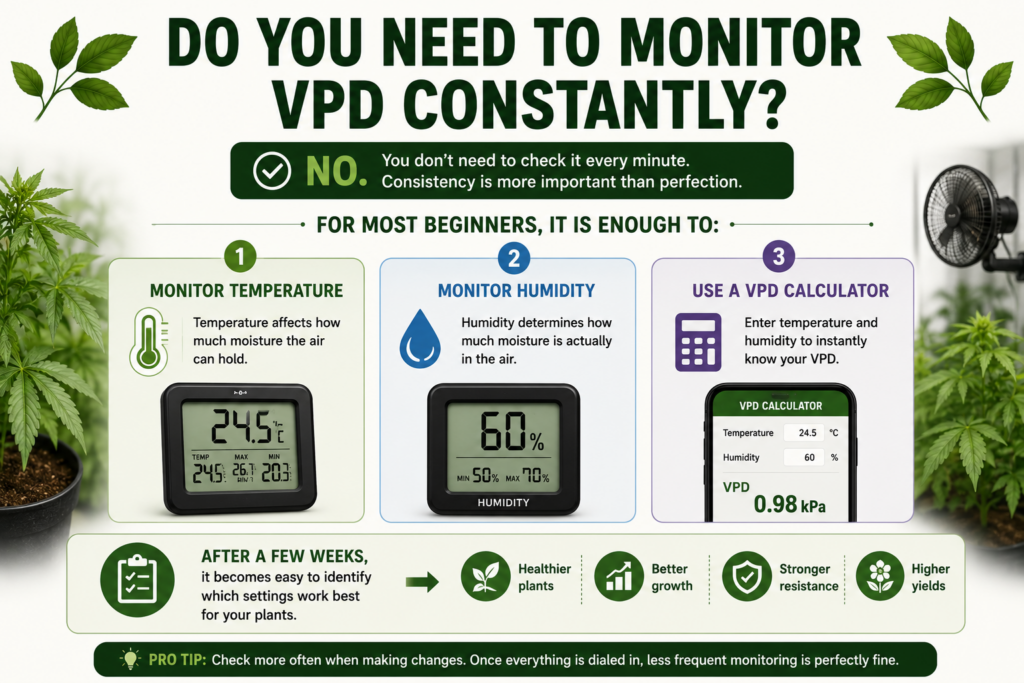
Do You Need to Monitor VPD Constantly?
No.
For most beginners, it is enough to:
monitor temperature,
monitor humidity,
use a VPD calculator.
After a few weeks, it becomes easy to identify which settings work best.
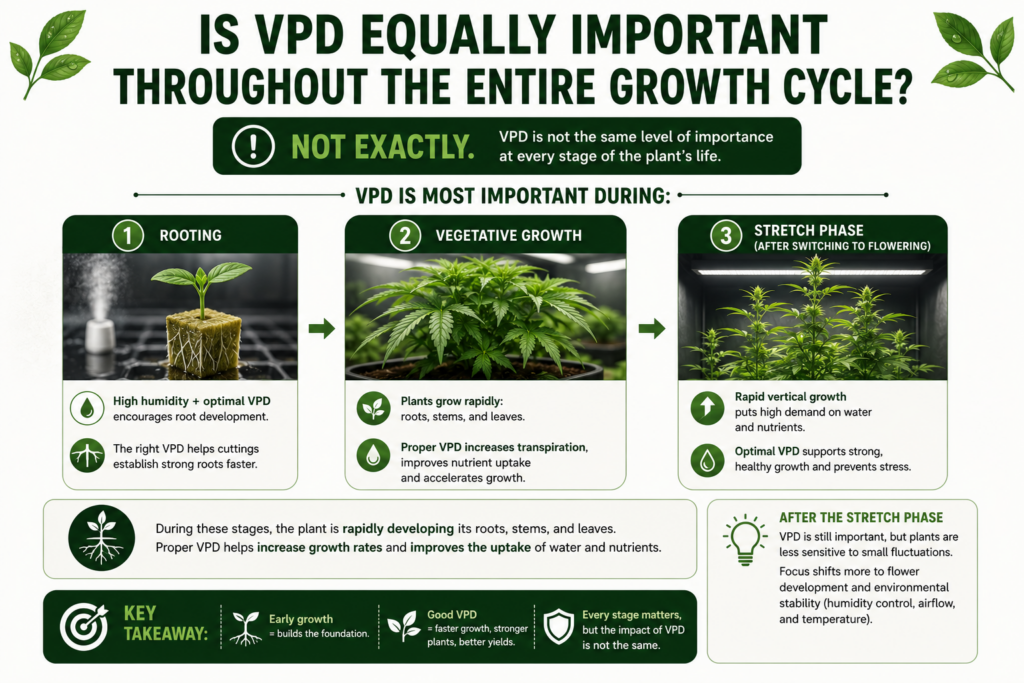
Is VPD Equally Important Throughout the Entire Growth Cycle?
Not exactly.
VPD is most important during:
rooting,
vegetative growth,
the stretch phase after switching to flowering.
During this period, the plant is rapidly developing its roots, stems, and leaves. Proper VPD helps increase growth rates and improves the uptake of water and nutrients.
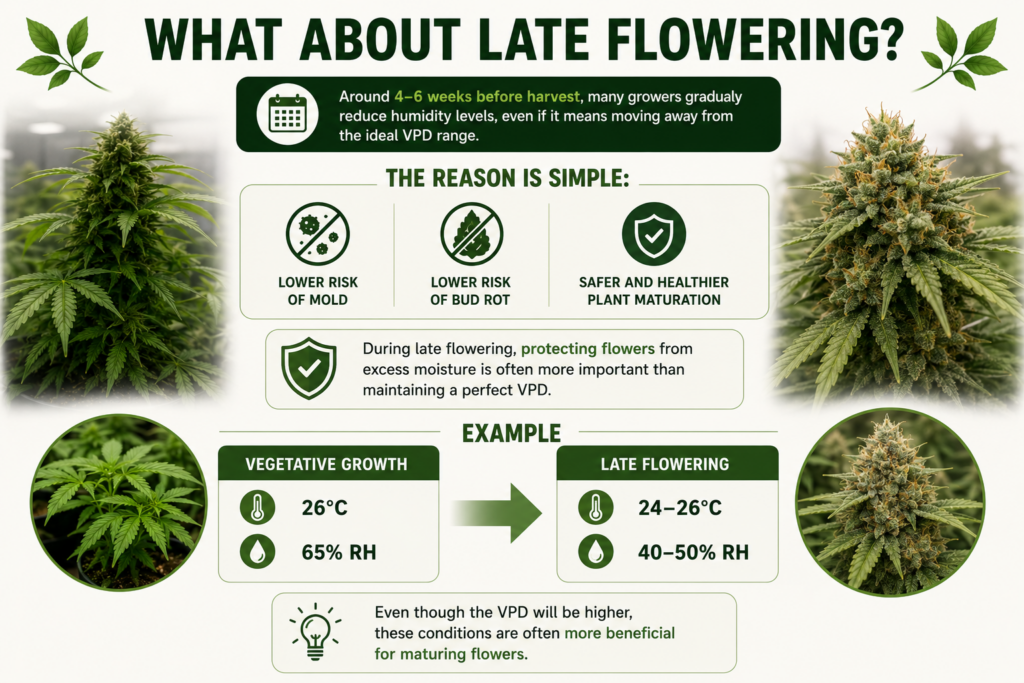
What About Late Flowering?
Around 4–6 weeks before harvest, many growers gradually reduce humidity levels, even if it means moving away from the ideal VPD range.
The reason is simple:
lower risk of mold,
lower risk of bud rot,
safer and healthier plant maturation.
During late flowering, protecting flowers from excess moisture is often more important than maintaining a perfect VPD.
Example
Vegetative Growth
26°C
65% RH
Late Flowering
24–26°C
40–50% RH
Even though the VPD will be higher, these conditions are often more beneficial for maturing flowers.
Summary
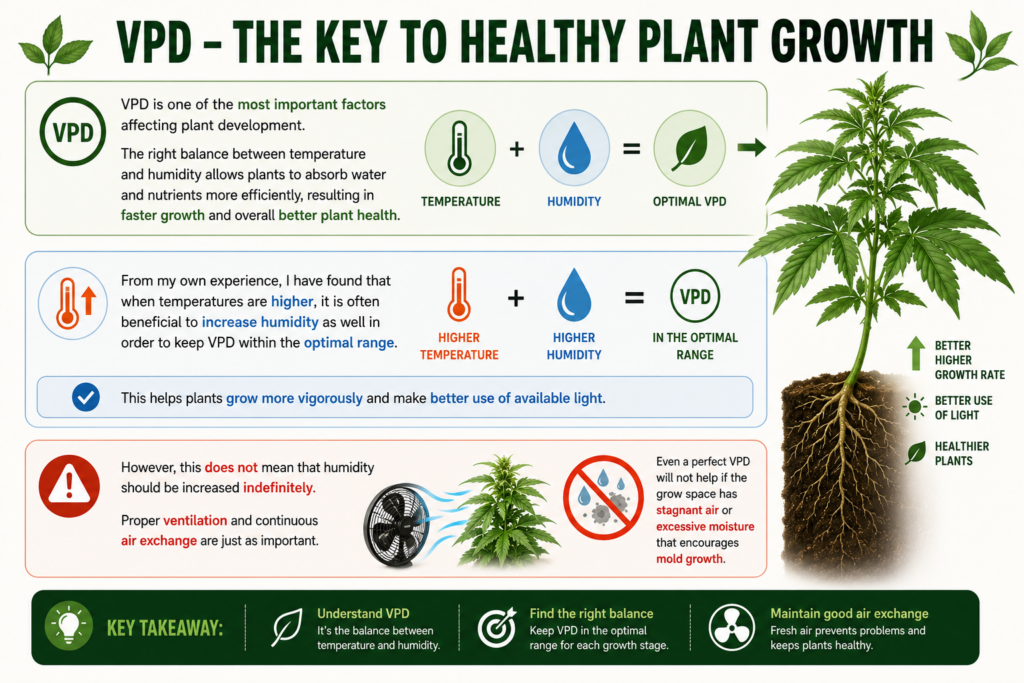
VPD is one of the most important factors affecting plant development. The right balance between temperature and humidity allows plants to absorb water and nutrients more efficiently, resulting in faster growth and overall better plant health.
From my own experience, I have found that when temperatures are higher, it is often beneficial to increase humidity as well in order to keep VPD within the optimal range. This helps plants grow more vigorously and make better use of available light.
However, this does not mean that humidity should be increased indefinitely. Proper ventilation and continuous air exchange are just as important. Even a perfect VPD will not help if the grow space has stagnant air or excessive moisture that encourages mold growth.
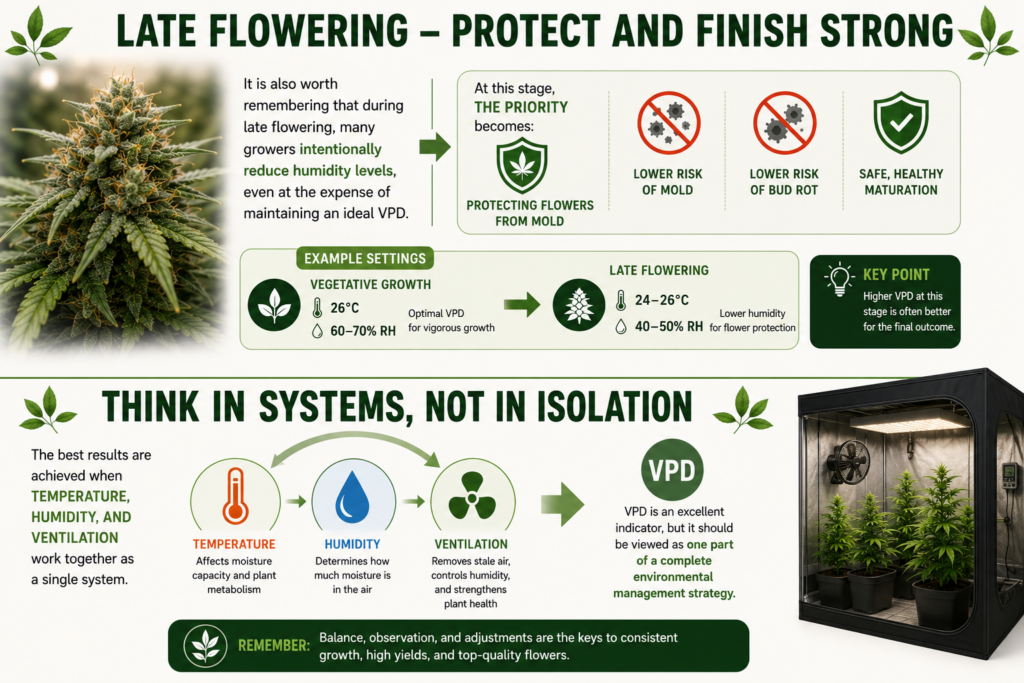
It is also worth remembering that during late flowering, many growers intentionally reduce humidity levels, even at the expense of maintaining an ideal VPD. At this stage, the priority becomes protecting flowers from mold and ensuring safe, healthy maturation.
The best results are achieved when temperature, humidity, and ventilation work together as a single system. VPD is an excellent indicator, but it should be viewed as one part of a complete environmental management strategy.
Check Out Our Other Guides
If you are still setting up your grow tent or looking to improve your growing conditions, be sure to explore our other guides as well: