How to Choose the Right Pot for a Grow Box? A Complete Guide
How to Choose the Right Pot for a Grow Box? A Complete Guide
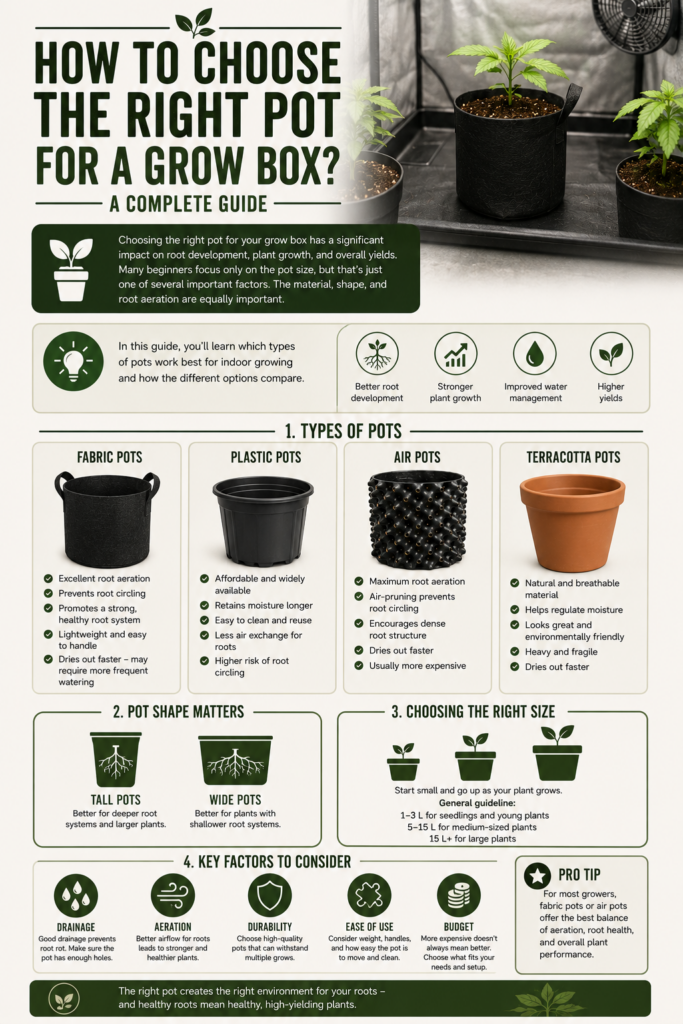
Choosing the right pot for your grow box has a significant impact on root development, plant growth, and overall yields. Many beginners focus only on the pot size, but that’s just one of several important factors. The material, shape, and root aeration are equally important.
In this guide, you’ll learn which types of pots work best for indoor growing and how the different options compare.
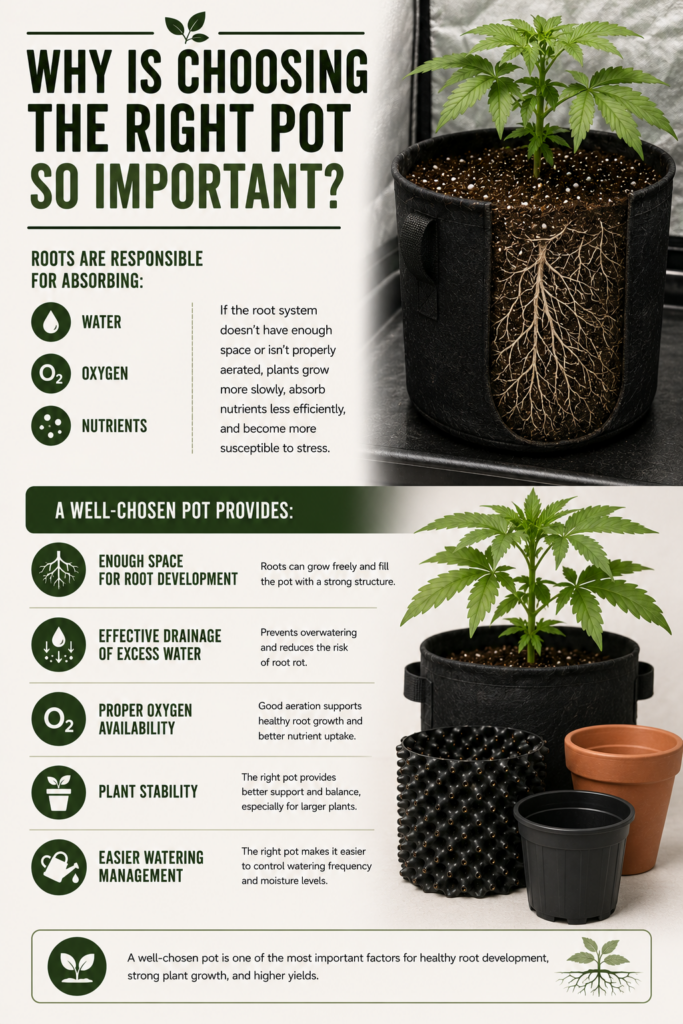
Why Is Choosing the Right Pot So Important
Roots are responsible for absorbing:
water,
oxygen,
nutrients.
If the root system doesn’t have enough space or isn’t properly aerated, plants grow more slowly, absorb nutrients less efficiently, and become more susceptible to stress.
A well-chosen pot provides:
enough space for root development,
effective drainage of excess water,
proper oxygen availability,
plant stability,
easier watering management.
Pot Size Is Only the Beginning
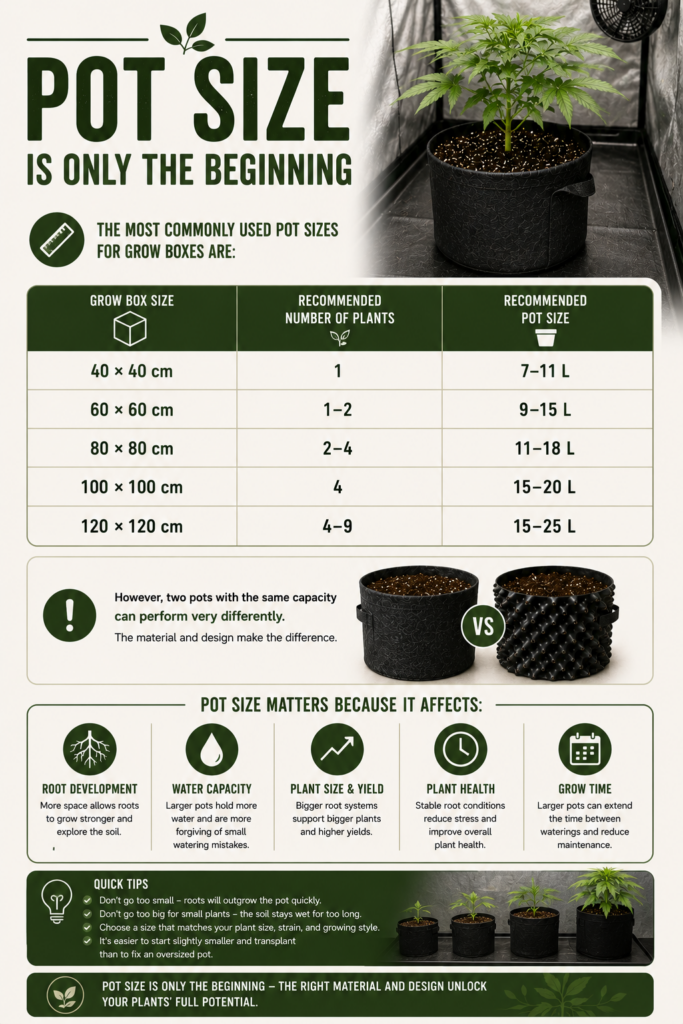
The most commonly used pot sizes for grow boxes are:
Grow Box Size
Recommended Number of Plants
Recommended Pot Size
40 × 40 cm
1
7–11 L
60 × 60 cm
1–2
9–15 L
80 × 80 cm
2–4
11–18 L
100 × 100 cm
4
15–20 L
120 × 120 cm
4–9
15–25 L
However, two pots with the same capacity can perform very differently. The material and design make the difference.
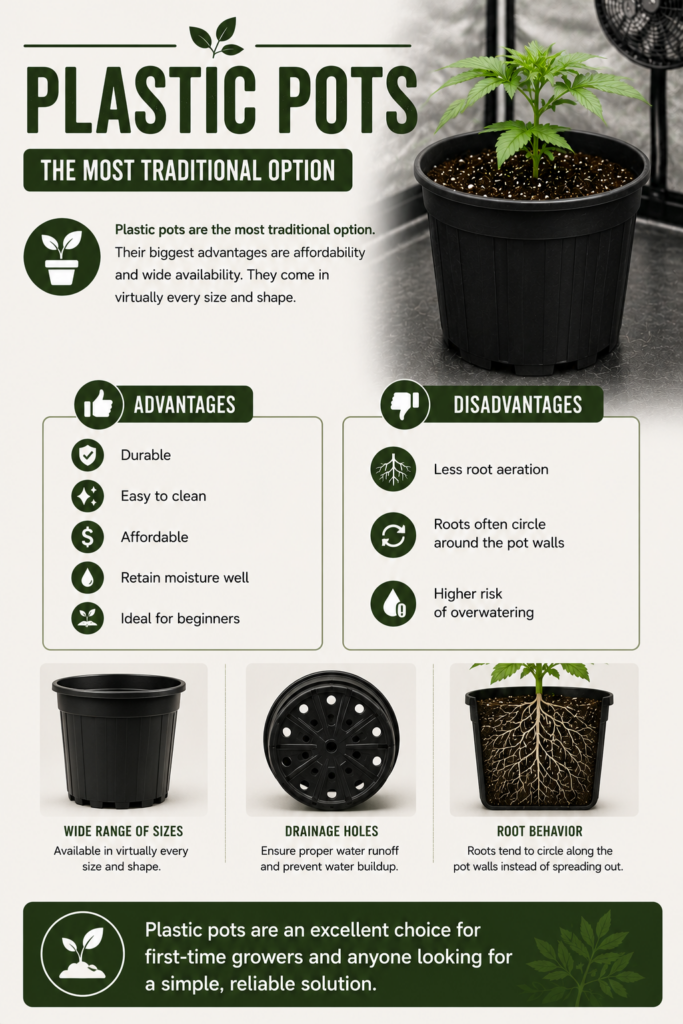
Plastic Pots
Plastic pots are the most traditional option.
Their biggest advantages are affordability and wide availability. They come in virtually every size and shape.
Advantages
durable,
easy to clean,
affordable,
retain moisture well,
ideal for beginners.
Disadvantages
less root aeration,
roots often circle around the pot walls,
higher risk of overwatering.
Plastic pots are an excellent choice for first-time growers and anyone looking for a simple, reliable solution.
Fabric Pots
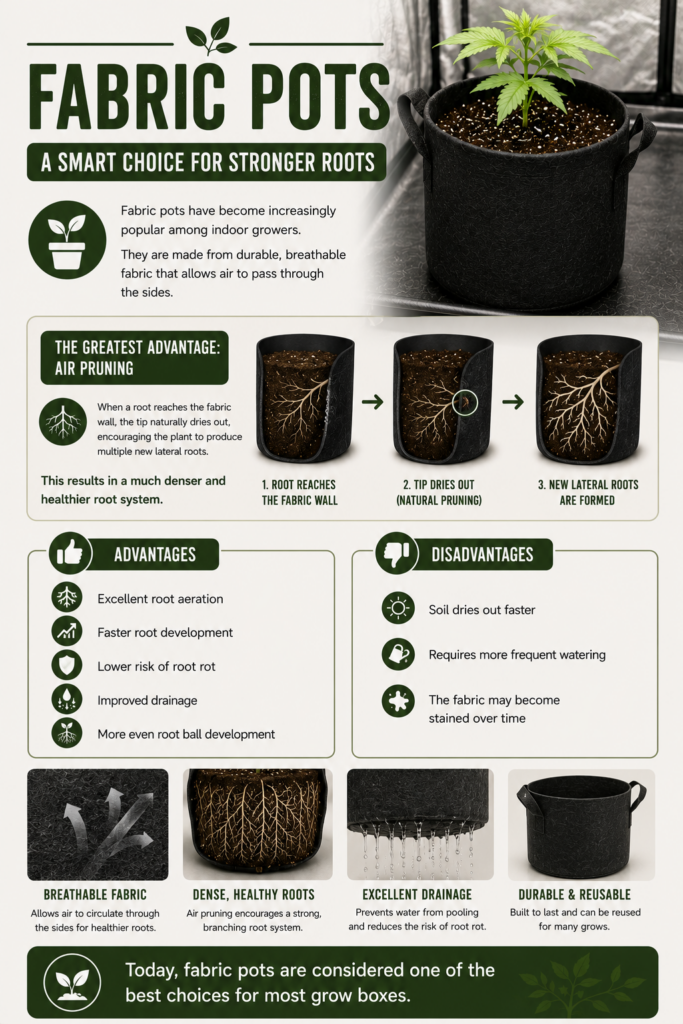
Fabric pots have become increasingly popular among indoor growers.
They are made from durable, breathable fabric that allows air to pass through the sides.
Their greatest advantage is air pruning.
When a root reaches the fabric wall, the tip naturally dries out, encouraging the plant to produce multiple new lateral roots. This results in a much denser and healthier root system.
Advantages
excellent root aeration,
faster root development,
lower risk of root rot,
improved drainage,
more even root ball development.
Disadvantages
soil dries out faster,
requires more frequent watering,
the fabric may become stained over time.
Today, fabric pots are considered one of the best choices for most grow boxes.
Fabric pots have become increasingly popular among indoor growers.
They are made from durable, breathable fabric that allows air to pass through the sides.
Their greatest advantage is air pruning.
When a root reaches the fabric wall, the tip naturally dries out, encouraging the plant to produce multiple new lateral roots. This results in a much denser and healthier root system.
Advantages
excellent root aeration,
faster root development,
lower risk of root rot,
improved drainage,
more even root ball development.
Disadvantages
soil dries out faster,
requires more frequent watering,
the fabric may become stained over time.
Today, fabric pots are considered one of the best choices for most grow boxes.
Air Pots
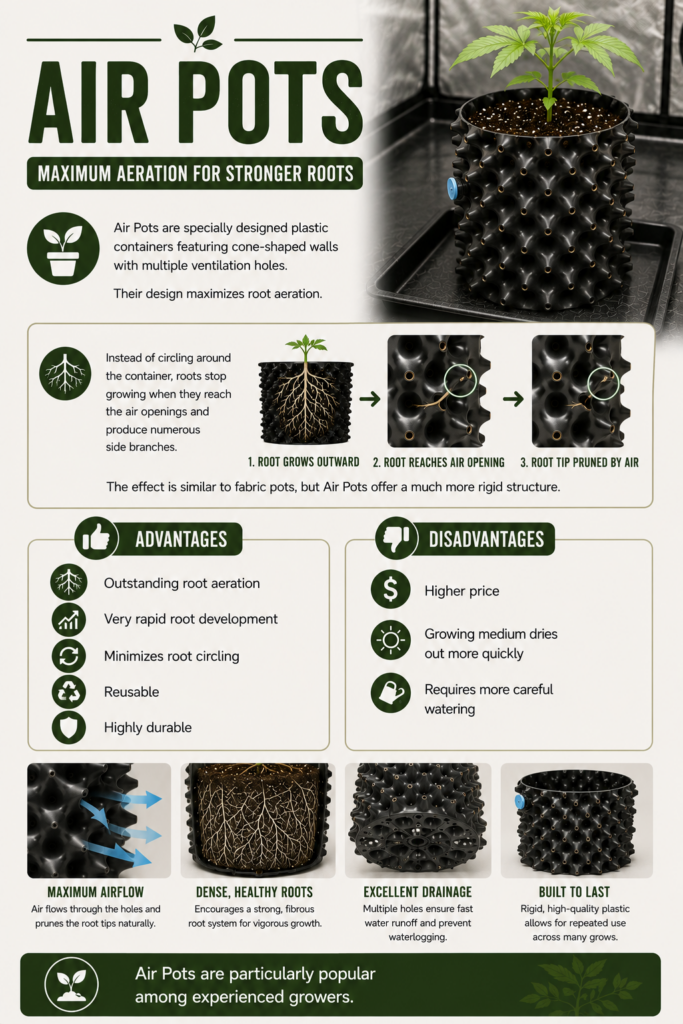
Air Pots are specially designed plastic containers featuring cone-shaped walls with multiple ventilation holes.
Their design maximizes root aeration.
Instead of circling around the container, roots stop growing when they reach the air openings and produce numerous side branches.
The effect is similar to fabric pots, but Air Pots offer a much more rigid structure.
Advantages
outstanding root aeration,
very rapid root development,
minimizes root circling,
reusable,
highly durable.
Disadvantages
higher price,
growing medium dries out more quickly,
requires more careful watering.
Air Pots are particularly popular among experienced growers.
Tall Pots
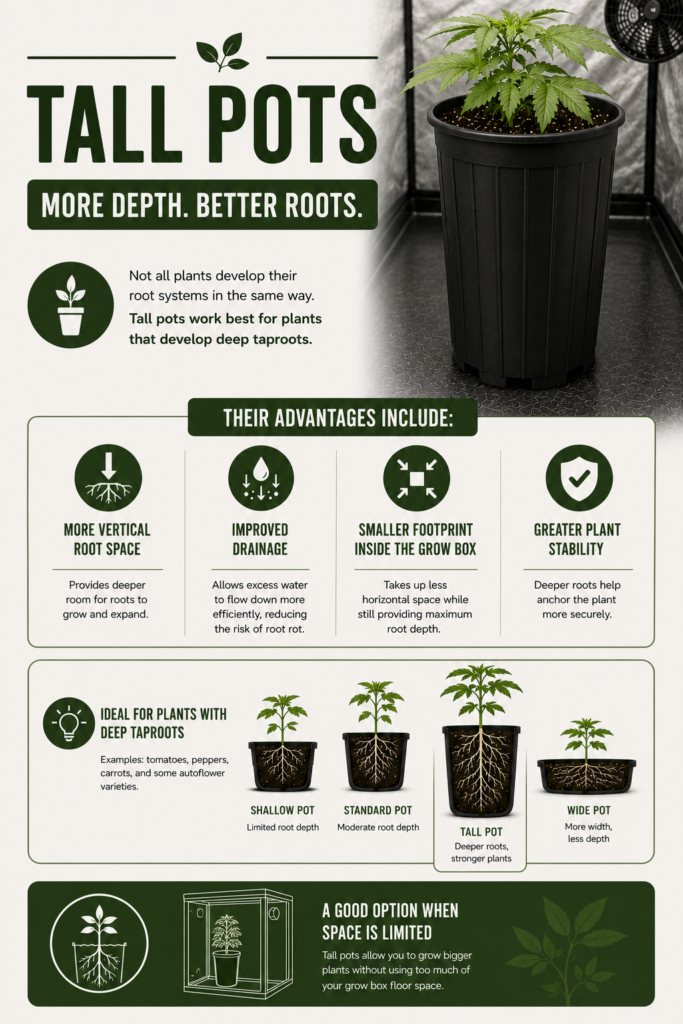
Not all plants develop their root systems in the same way.
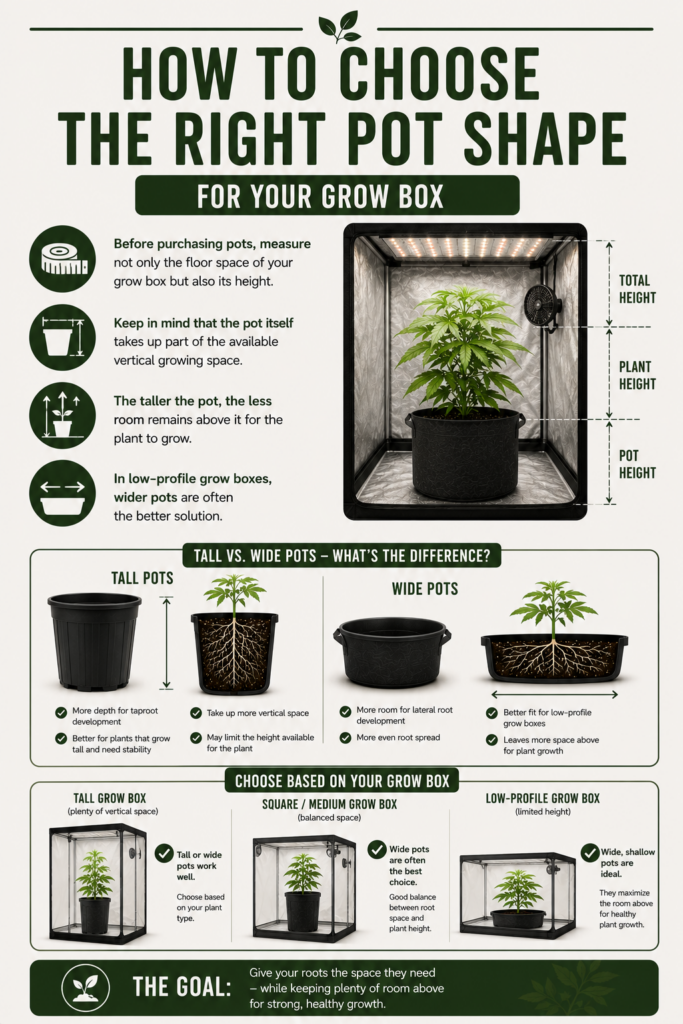
Tall pots work best for plants that develop deep taproots.
Their advantages include:
more vertical root space,
improved drainage,
smaller footprint inside the grow box.
They are also a good option when the grow box has limited floor space.
Wide Pots
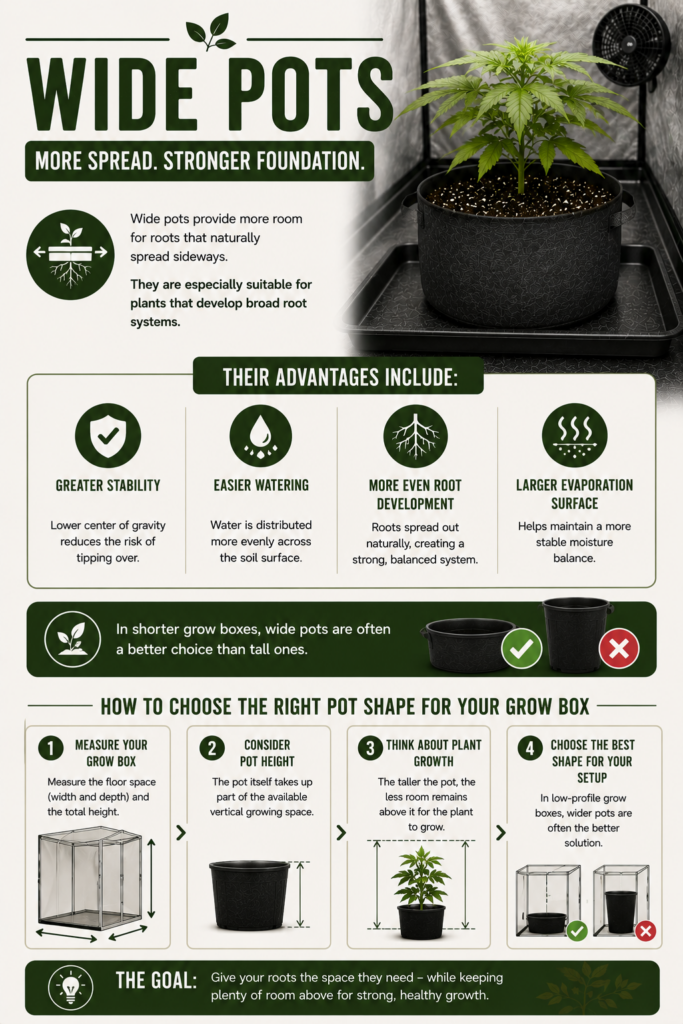
Wide pots provide more room for roots that naturally spread sideways.
They are especially suitable for plants that develop broad root systems.
Their advantages include:
greater stability,
easier watering,
more even root development,
larger evaporation surface.
In shorter grow boxes, wide pots are often a better choice than tall ones.
How to Choose the Right Pot Shape for Your Grow Box
Before purchasing pots, measure not only the floor space of your grow box but also its height.
Keep in mind that the pot itself takes up part of the available vertical growing space.
The taller the pot, the less room remains above it for the plant to grow.
In low-profile grow boxes, wider pots are often the better solution.
Is It Worth Investing in More Expensive Pots?
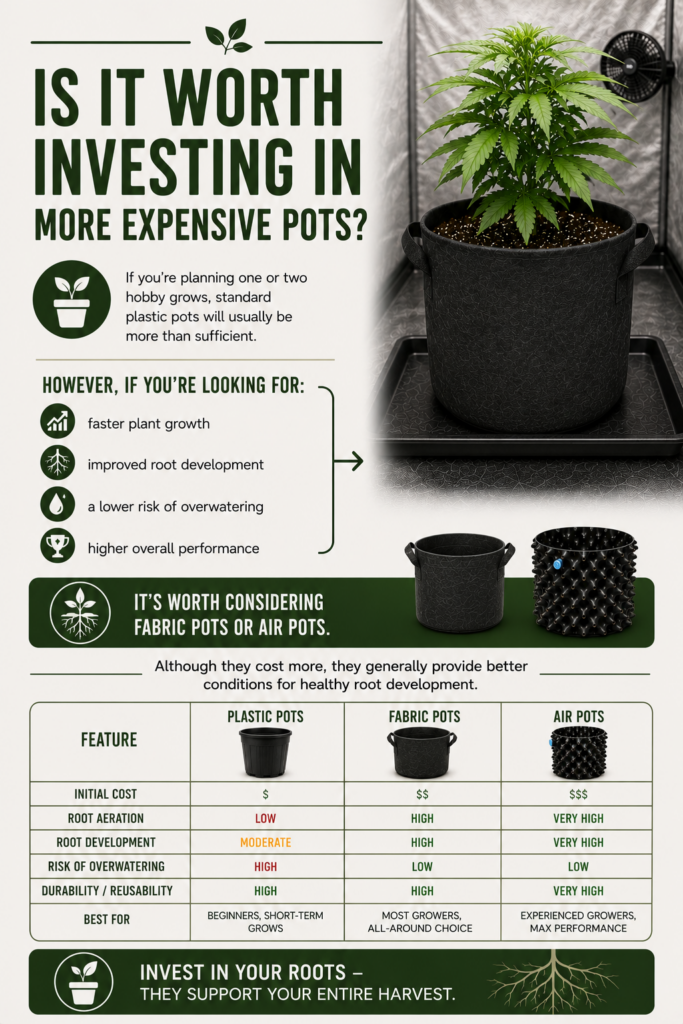
If you’re planning one or two hobby grows, standard plastic pots will usually be more than sufficient.
However, if you’re looking for:
faster plant growth,
improved root development,
a lower risk of overwatering,
higher overall performance,
it’s worth considering fabric pots or Air Pots.
Although they cost more, they generally provide better conditions for healthy root development.
The Most Common Mistakes
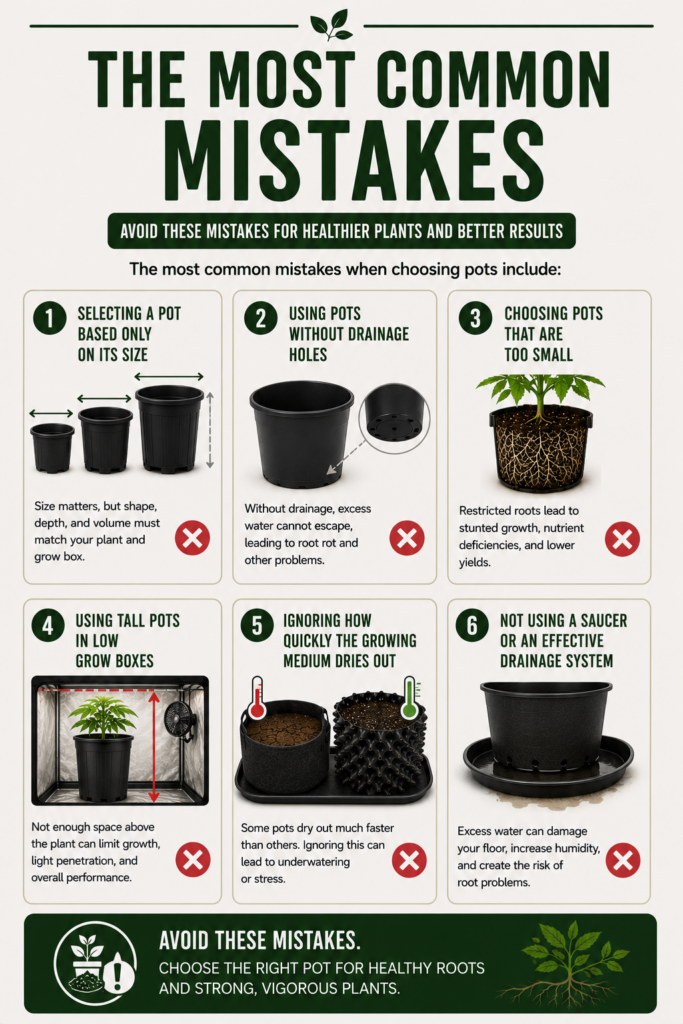
The most common mistakes when choosing pots include:
selecting a pot based only on its size,
using pots without drainage holes,
choosing pots that are too small,
using tall pots in low grow boxes,
ignoring how quickly the growing medium dries out,
not using a saucer or an effective drainage system.
My Experience with Grow Pots
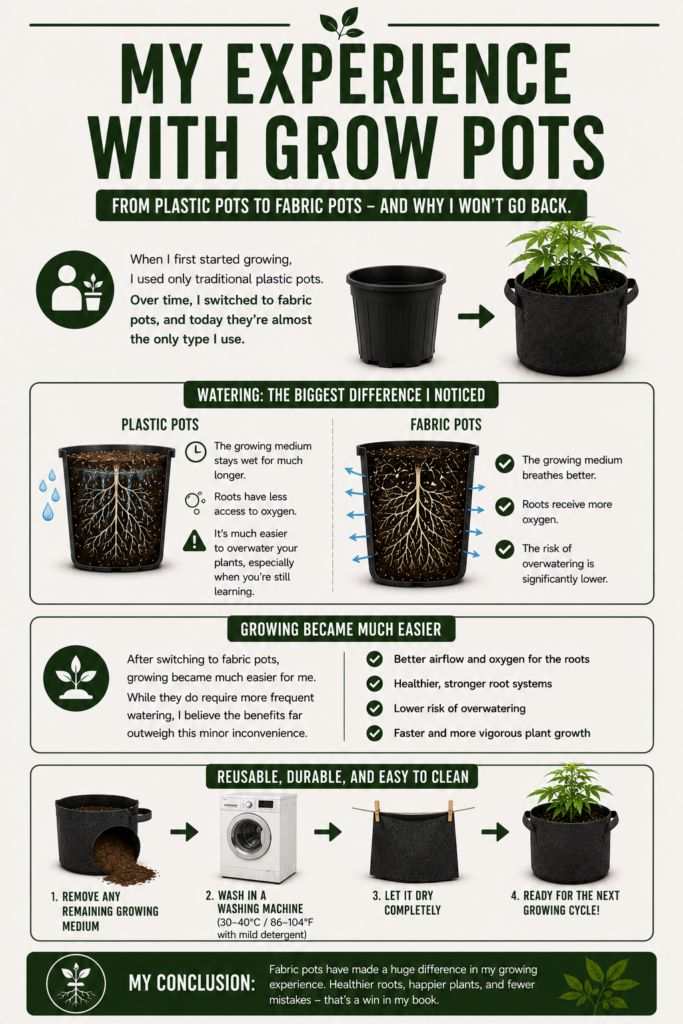
When I first started growing, I used only traditional plastic pots. Over time, I switched to fabric pots, and today they’re almost the only type I use.
The biggest difference I noticed was during watering. In plastic pots, the growing medium stays wet for much longer, and the roots have less access to oxygen. As a result, it’s much easier to overwater your plants, especially if you’re still learning proper watering techniques.
After switching to fabric pots, growing became much easier for me. The growing medium breathes better, the roots receive more oxygen, and the risk of overwatering is significantly lower. While they do require more frequent watering, I believe the benefits far outweigh this minor inconvenience.
Another major advantage of fabric pots is that they can be reused multiple times. After each grow, simply remove any remaining growing medium and wash the pot in a washing machine (preferably at 30–40°C (86–104°F) using a mild detergent). Once it’s completely dry, it’s ready for the next growing cycle.
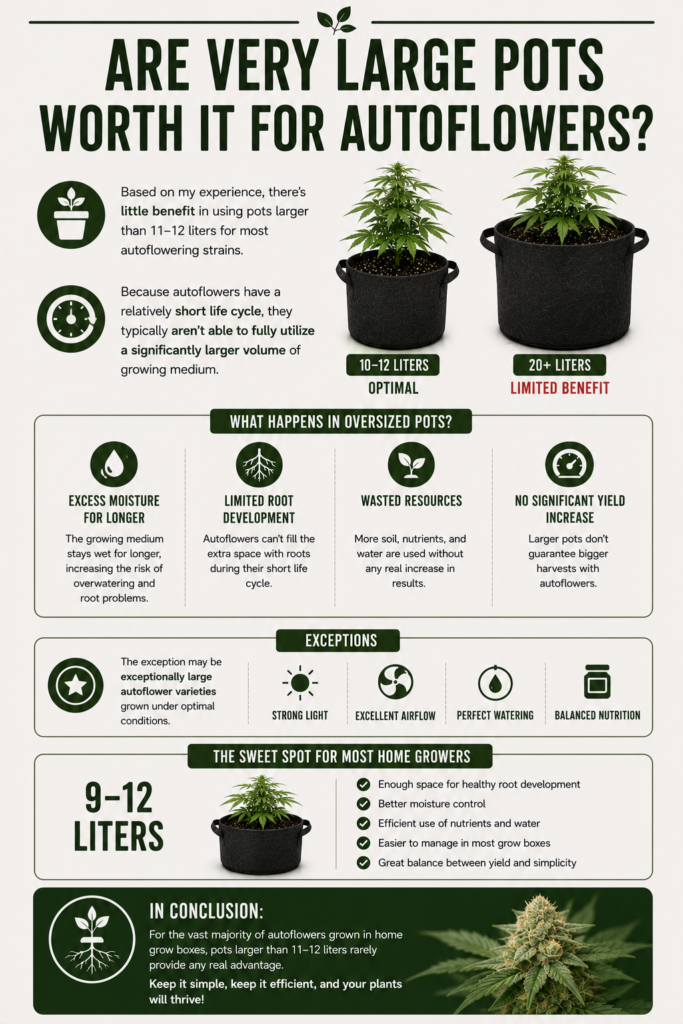
Are Very Large Pots Worth It for Autoflowers?
Based on my experience, there’s little benefit in using pots larger than 11–12 liters for most autoflowering strains. Because autoflowers have a relatively short life cycle, they typically aren’t able to fully utilize a significantly larger volume of growing medium.
The exception may be exceptionally large autoflower varieties grown under optimal conditions. However, in most home grow boxes, 9–12 liter pots provide an excellent balance between root development, growing medium volume, and overall ease of cultivation.
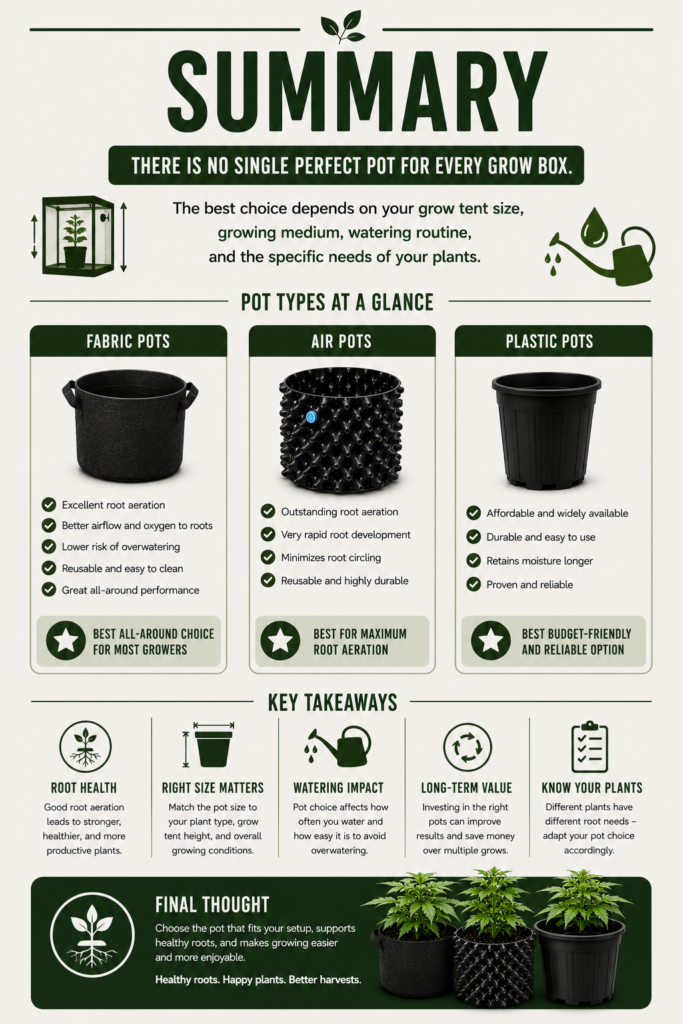
Summary
There is no single perfect pot for every grow box.
The best choice depends on your grow tent size, growing medium, watering routine, and the specific needs of your plants.
For most growers, fabric pots are an excellent all-around choice. Those looking for maximum root aeration may prefer Air Pots, while traditional plastic pots remain an affordable and proven solution.
Lorem ipsum dolor sit amet, consectetur adipiscing elit. Ut elit tellus, luctus nec ullamcorper mattis, pulvinar dapibus leo.
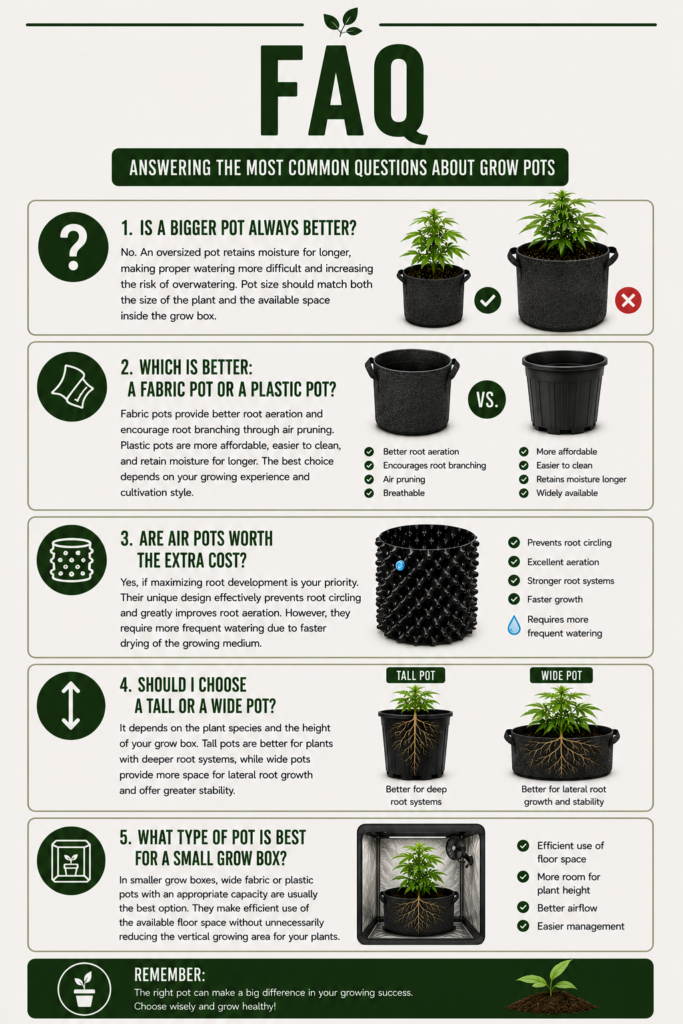
Frequently Asked Questions (FAQ)
Is a bigger pot always better?
No. An oversized pot retains moisture for longer, making proper watering more difficult and increasing the risk of overwatering. Pot size should match both the size of the plant and the available space inside the grow box.
Which is better: a fabric pot or a plastic pot?
Fabric pots provide better root aeration and encourage root branching through air pruning. Plastic pots are more affordable, easier to clean, and retain moisture for longer. The best choice depends on your growing experience and cultivation style.
Are Air Pots worth the extra cost?
Yes, if maximizing root development is your priority. Their unique design effectively prevents root circling and greatly improves root aeration. However, they require more frequent watering due to faster drying of the growing medium.
Should I choose a tall or a wide pot?
It depends on the plant species and the height of your grow box. Tall pots are better for plants with deeper root systems, while wide pots provide more space for lateral root growth and offer greater stability.
What type of pot is best for a small grow box?
In smaller grow boxes, wide fabric or plastic pots with an appropriate capacity are usually the best option. They make efficient use of the available floor space without unnecessarily reducing the vertical growing area for your plants.
Check Out Our Other Guides
If you are still setting up your grow tent or looking to improve your growing conditions, be sure to explore our other guides as well: