
Drying Cannabis in a Grow Tent — A Complete Beginner’s Guide
From Harvest to Assessing Dryness
Drying is one of the most important stages of cannabis post-harvest processing. Even well-grown plants can lose some of their quality if they are kept in unsuitable conditions after harvest. Excessive humidity encourages mold growth, while overly aggressive drying can lead to greater losses of aromatic compounds.
The good news is that a grow tent can be used as a dedicated drying space, as it allows you to control the environment and manage airflow. However, simply setting the desired humidity level on a controller is not enough. Air exchange, internal air circulation, even distribution of the plant material, and regular monitoring of environmental conditions are equally important.
In this guide, we cover the fundamentals of cannabis drying, the most common mistakes, and how to assess the risk of mold development.
Table of Contents
Why Is Proper Drying So Important?
Can You Use a Grow Tent to Dry Cannabis?
Temperature and Humidity — What Values Should You Know?
Why Is Air Exchange So Important?
Air Circulation and Fan Placement
Dehumidifiers — When Can They Help?
What Equipment Do You Need for Drying?
How Long Does Cannabis Take to Dry?
How to Assess Dryness
Mold During Drying — Signs and Risks
The Most Common Beginner Mistakes
Equipment Designed for Drying Cannabis
Key Parameters at a Glance
FAQ — Frequently Asked Questions
Conclusion
1. Why Is Proper Drying So Important?
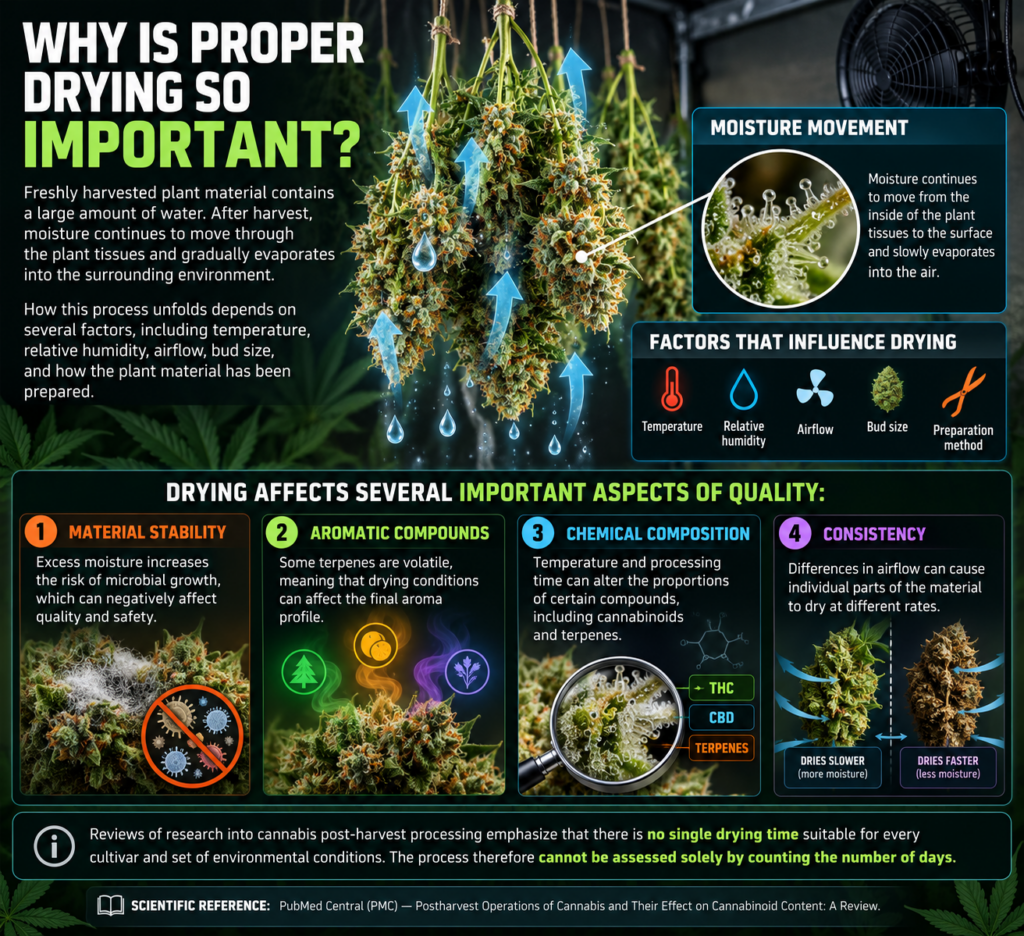
Freshly harvested plant material contains a large amount of water. After harvest, moisture continues to move through the plant tissues and gradually evaporates into the surrounding environment. How this process unfolds depends on several factors, including temperature, relative humidity, airflow, bud size, and how the plant material has been prepared.
Drying affects several important aspects of quality:
Material stability: Excess moisture increases the risk of microbial growth.
Aromatic compounds: Some terpenes are volatile, meaning that processing conditions can affect the final aroma profile.
Chemical composition: Temperature and processing time can alter the proportions of certain compounds.
Consistency: Differences in airflow can cause individual parts of the material to dry at different rates.
Reviews of research into cannabis post-harvest processing emphasize that there is no single drying time suitable for every cultivar and set of environmental conditions. The process therefore cannot be assessed solely by counting the number of days.
Scientific reference: PubMed Central (PMC) — Postharvest Operations of Cannabis and Their Effect on Cannabinoid Content: A Review.
2. Can You Use a Grow Tent to Dry Cannabis?
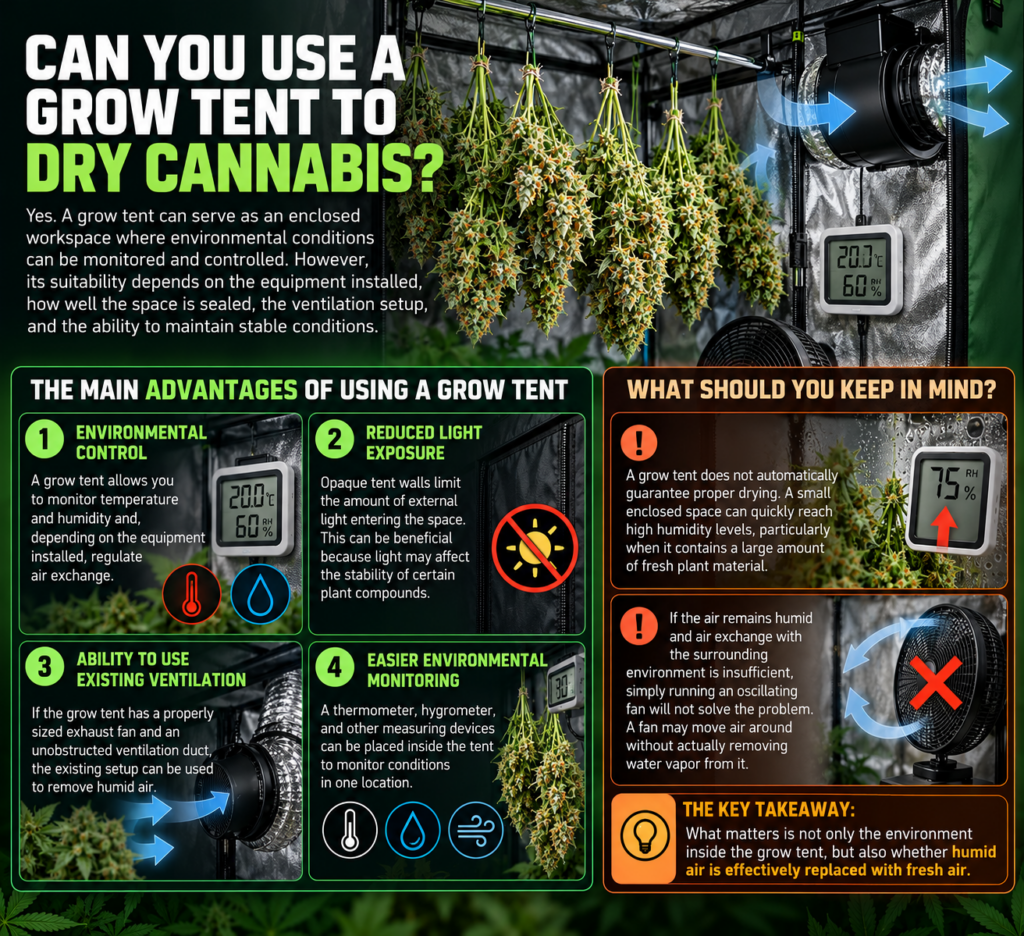
Yes. A grow tent can serve as an enclosed workspace where environmental conditions can be monitored and controlled. However, its suitability depends on the equipment installed, how well the space is sealed, the ventilation setup, and the ability to maintain stable conditions.
The Main Advantages of Using a Grow Tent
Environmental control
A grow tent allows you to monitor temperature and humidity and, depending on the equipment installed, regulate air exchange.
Reduced light exposure
Opaque tent walls limit the amount of external light entering the space. This can be beneficial because light may affect the stability of certain plant compounds.
Ability to use existing ventilation
If the grow tent has a properly sized exhaust fan and an unobstructed ventilation duct, the existing setup can be used to remove humid air.
Easier environmental monitoring
A thermometer, hygrometer, and other measuring devices can be placed inside the tent to monitor conditions in one location.
What Should You Keep in Mind?
A grow tent does not automatically guarantee proper drying. A small enclosed space can quickly reach high humidity levels, particularly when it contains a large amount of fresh plant material.
If the air remains humid and air exchange with the surrounding environment is insufficient, simply running an oscillating fan will not solve the problem. A fan may move air around without actually removing water vapor from it.
The key takeaway: What matters is not only the environment inside the grow tent, but also whether humid air is effectively replaced with fresh air.
3. Temperature and Humidity — What Values Should You Know?
Temperature and relative humidity are two of the fundamental parameters of the drying environment. However, it is important to understand that they describe different aspects of the surrounding conditions.
Temperature
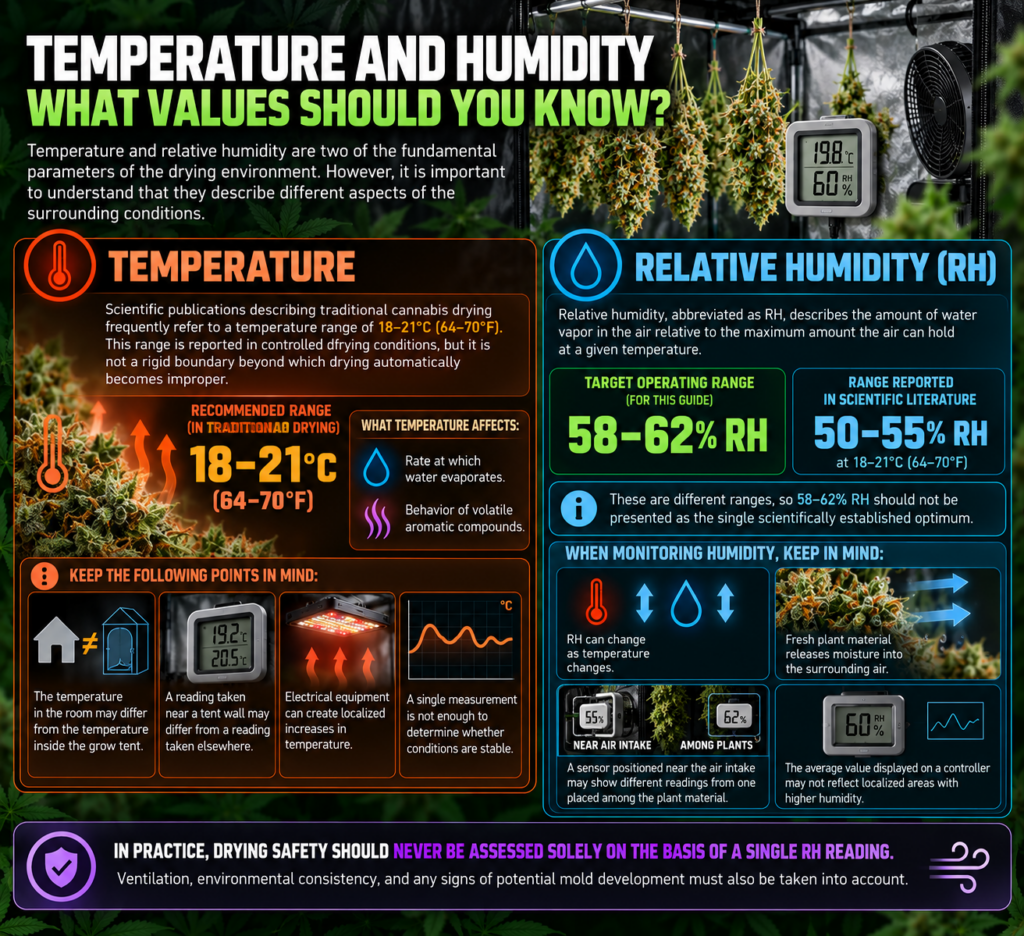
Scientific publications describing traditional cannabis drying frequently refer to a temperature range of 18–21°C (64–70°F). This range is reported in controlled drying conditions, but it is not a rigid boundary beyond which drying automatically becomes improper.
Temperature affects the rate at which water evaporates. Changes in temperature can also influence the behavior of volatile aromatic compounds.
Keep the following points in mind:
The temperature in the room may differ from the temperature inside the grow tent.
A reading taken near a tent wall may differ from a reading taken elsewhere.
Electrical equipment can create localized increases in temperature.
A single measurement is not enough to determine whether conditions are stable.
Relative Humidity
Relative humidity, abbreviated as RH, describes the amount of water vapor in the air relative to the maximum amount the air can hold at a given temperature.
For the purposes of this guide, the target operating range is 58–62% RH. However, this range must be distinguished from the values commonly described in the scientific literature. Reviews of traditional cannabis drying typically report 50–55% RH at temperatures of 18–21°C (64–70°F).
These are different ranges, so 58–62% RH should not be presented as the single scientifically established optimum.
When monitoring humidity, it is also important to understand that:
RH can change as temperature changes.
Fresh plant material releases moisture into the surrounding air.
A sensor positioned near the air intake may show different readings from one placed among the plant material.
The average value displayed on a controller may not reflect localized areas with higher humidity.
In practice, drying safety should never be assessed solely on the basis of a single RH reading. Ventilation, environmental consistency, and any signs of potential mold development must also be taken into account.
4. Why Is Air Exchange So Important?
This is one of the most important aspects of the entire drying process.
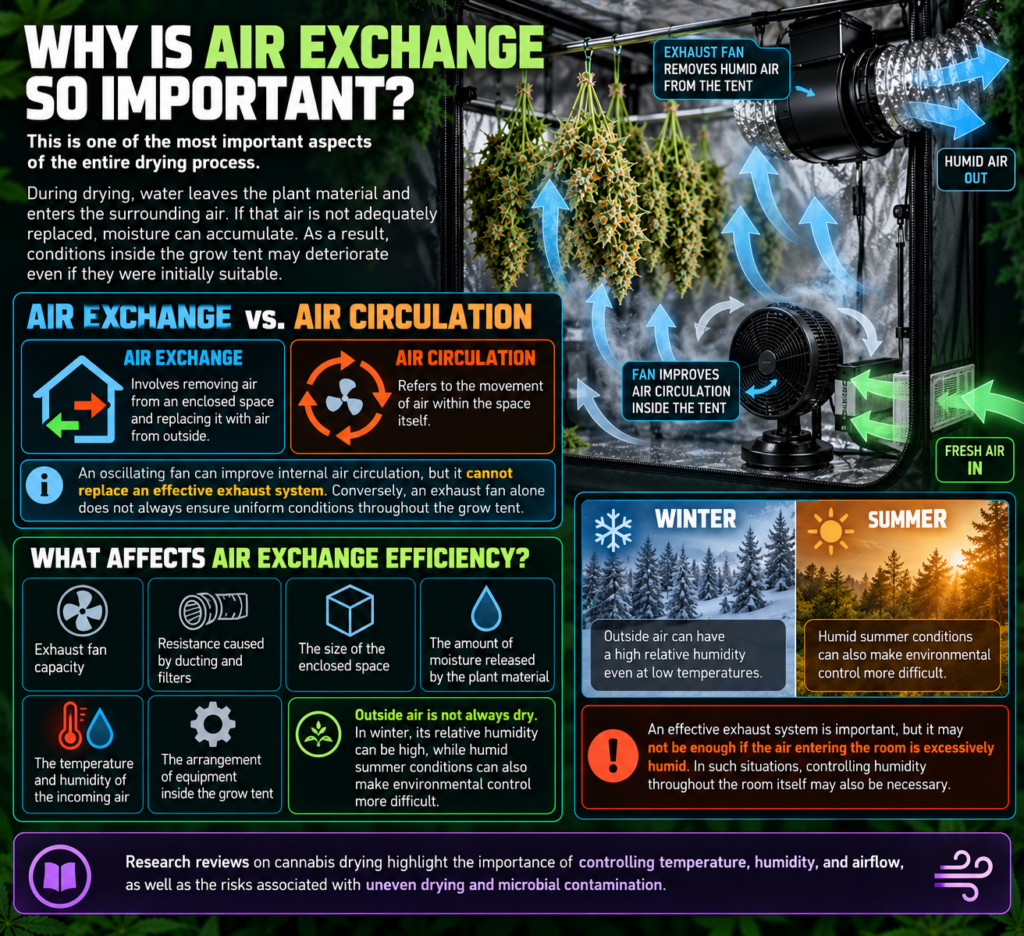
During drying, water leaves the plant material and enters the surrounding air. If that air is not adequately replaced, moisture can accumulate. As a result, conditions inside the grow tent may deteriorate even if they were initially suitable.
Air Exchange vs. Air Circulation — What’s the Difference?
These two terms are often confused, even though they describe different processes.
Air exchange involves removing air from an enclosed space and replacing it with air from outside.
Air circulation refers to the movement of air within the space itself.
An oscillating fan can improve internal air circulation, but it cannot replace an effective exhaust system. Conversely, an exhaust fan alone does not always ensure uniform conditions throughout the grow tent.
What Affects Air Exchange Efficiency?
Several factors influence how effectively air is exchanged:
Exhaust fan capacity.
Resistance caused by ducting and filters.
The size of the enclosed space.
The amount of moisture released by the plant material.
The temperature and humidity of the incoming air.
The arrangement of equipment inside the grow tent.
It is also important to understand that outside air is not always dry. In winter, its relative humidity can be high, while humid summer conditions can also make environmental control more difficult.
An effective exhaust system is important, but it may not be enough if the air entering the room is excessively humid. In such situations, controlling humidity throughout the room itself may also be necessary.
Research reviews on cannabis drying highlight the importance of controlling temperature, humidity, and airflow, as well as the risks associated with uneven drying and microbial contamination.
5. Air Circulation and Fan Placement
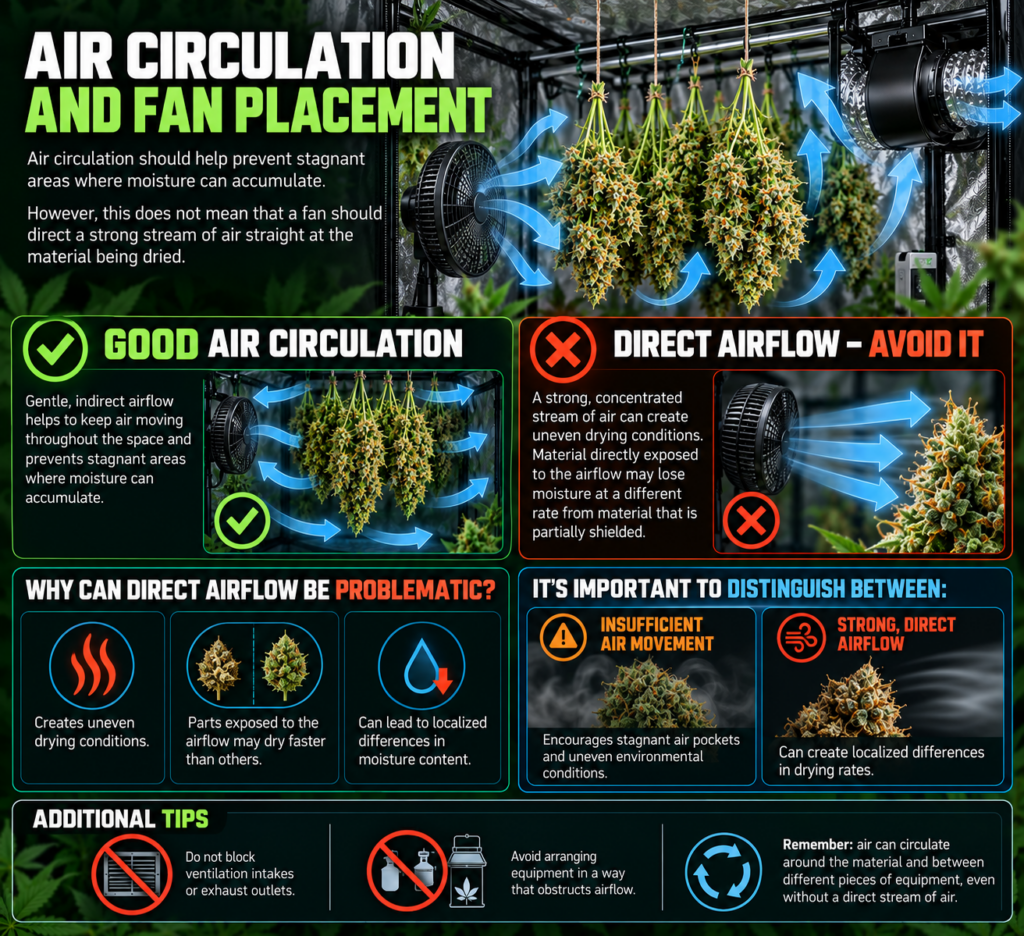
Air circulation should help prevent stagnant areas where moisture can accumulate.
However, this does not mean that a fan should direct a strong stream of air straight at the material being dried.
Why Can Direct Airflow Be Problematic?
A strong, concentrated stream of air can create uneven drying conditions. Material directly exposed to the airflow may lose moisture at a different rate from material that is partially shielded.
At the same time, the absence of direct airflow does not automatically mean that there is no air movement. Air can circulate around the material and between different pieces of equipment.
It is important to distinguish between two situations:
Insufficient air movement: This encourages stagnant air pockets and uneven environmental conditions.
Strong, direct airflow: This can create localized differences in drying rates.
You should also avoid blocking ventilation intakes or exhaust outlets and arranging equipment in a way that obstructs airflow.
6. Dehumidifiers — When Can They Help?
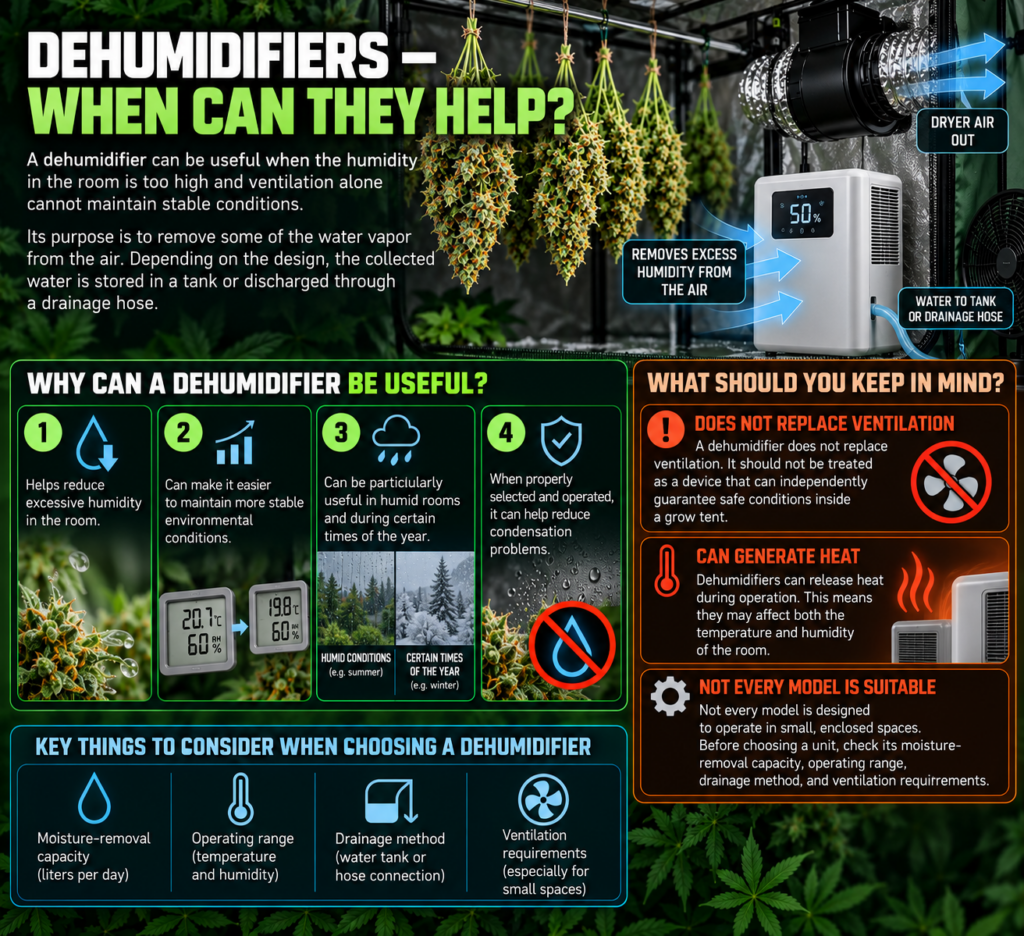
A dehumidifier can be useful when the humidity in the room is too high and ventilation alone cannot maintain stable conditions.
Its purpose is to remove some of the water vapor from the air. Depending on the design, the collected water is stored in a tank or discharged through a drainage hose.
Why Can a Dehumidifier Be Useful?
It helps reduce excessive humidity in the room.
It can make it easier to maintain more stable environmental conditions.
It can be particularly useful in humid rooms and during certain times of the year.
When properly selected and operated, it can help reduce condensation problems.
What Should You Keep in Mind?
A dehumidifier does not replace ventilation. It should not be treated as a device that can independently guarantee safe conditions inside a grow tent.
You should also consider that dehumidifiers can release heat during operation. This means they may affect both the temperature and humidity of the room.
Not every model is designed to operate in small, enclosed spaces. Before choosing a unit, check its moisture-removal capacity, operating range, drainage method, and ventilation requirements.
7. What Equipment Do You Need for Drying?
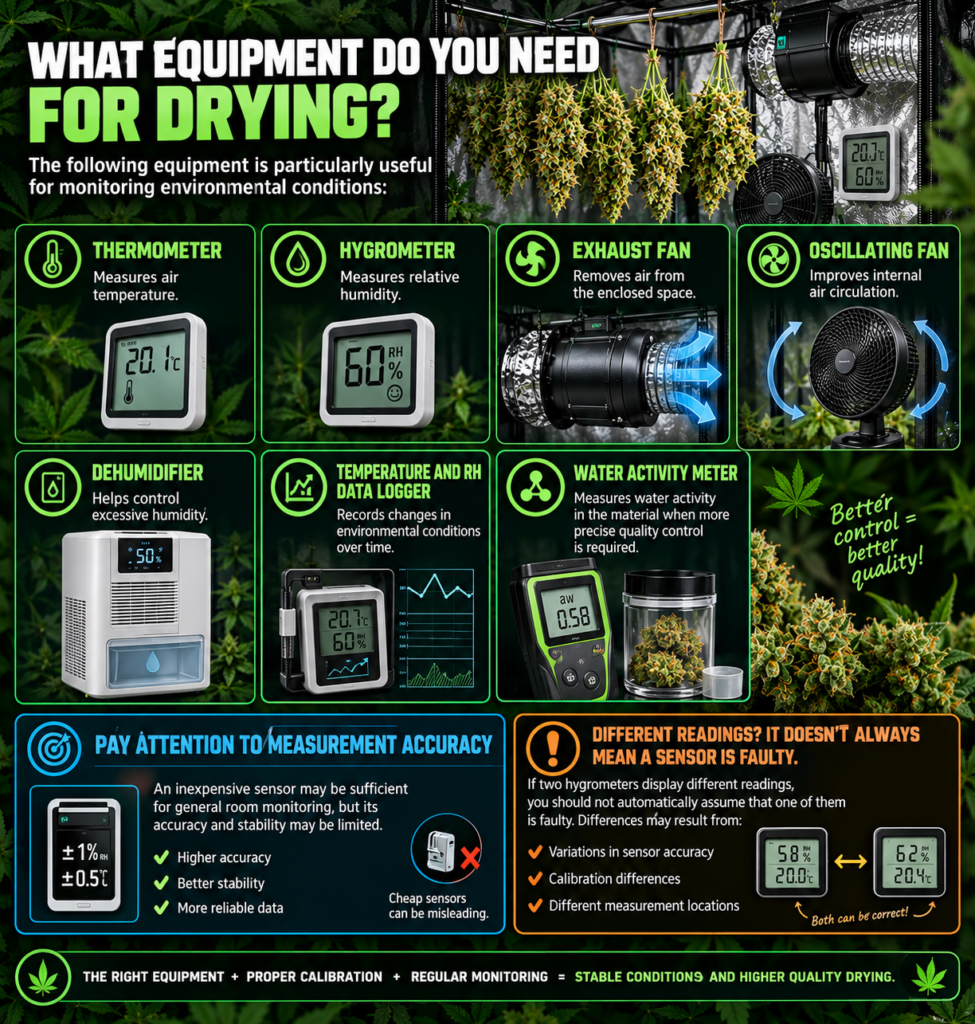
The following equipment is particularly useful for monitoring environmental conditions:
| Equipment | Purpose |
|---|---|
| Thermometer | Measures air temperature. |
| Hygrometer | Measures relative humidity. |
| Exhaust fan | Removes air from the enclosed space. |
| Oscillating fan | Improves internal air circulation. |
| Dehumidifier | Helps control excessive humidity. |
| Temperature and RH data logger | Records changes in environmental conditions over time. |
| Water activity meter | Measures water activity in the material when more precise quality control is required. |
Pay particular attention to measurement accuracy. An inexpensive sensor may be sufficient for general room monitoring, but its accuracy and stability may be limited.
If two hygrometers display different readings, you should not automatically assume that one of them is faulty. Differences may result from variations in sensor accuracy, calibration, or measurement location.
8. How Long Does Cannabis Take to Dry?
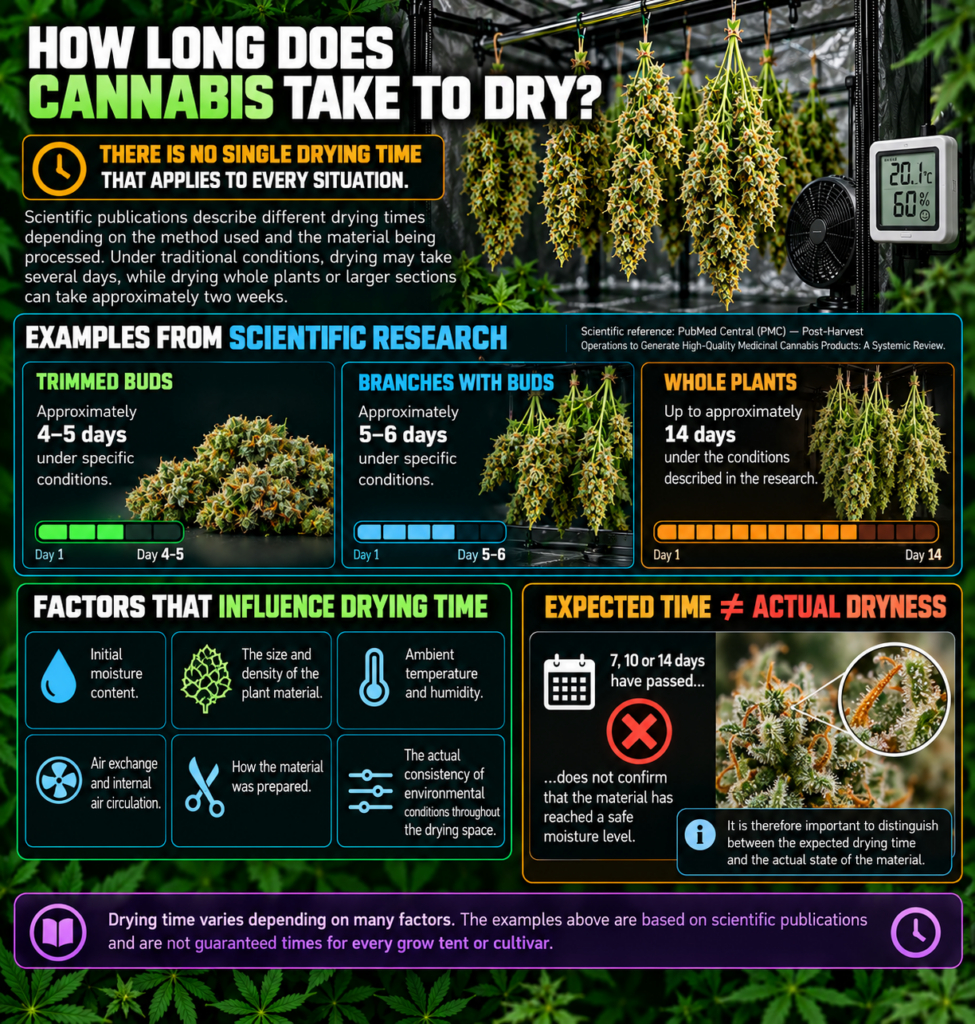
There is no single drying time that applies to every situation.
Scientific publications describe different drying times depending on the method used and the material being processed. Under traditional conditions, drying may take several days, while drying whole plants or larger sections can take approximately two weeks.
One scientific review describes the following examples:
Approximately 4–5 days for trimmed buds under specific conditions.
Approximately 5–6 days for branches carrying buds.
Up to approximately 14 days for whole plants under the conditions described in the research.
These are not guaranteed drying times for every grow tent or cultivar.
Scientific reference: PubMed Central (PMC) — Post-Harvest Operations to Generate High-Quality Medicinal Cannabis Products: A Systemic Review.
Several factors influence drying time:
Initial moisture content.
The size and density of the plant material.
Ambient temperature and humidity.
Air exchange and internal air circulation.
How the material was prepared.
The actual consistency of environmental conditions throughout the drying space.
It is therefore important to distinguish between the expected drying time and the actual state of the material.
The fact that 7, 10, or 14 days have passed does not, by itself, confirm that the material has reached a safe moisture level.
9. How to Assess Dryness
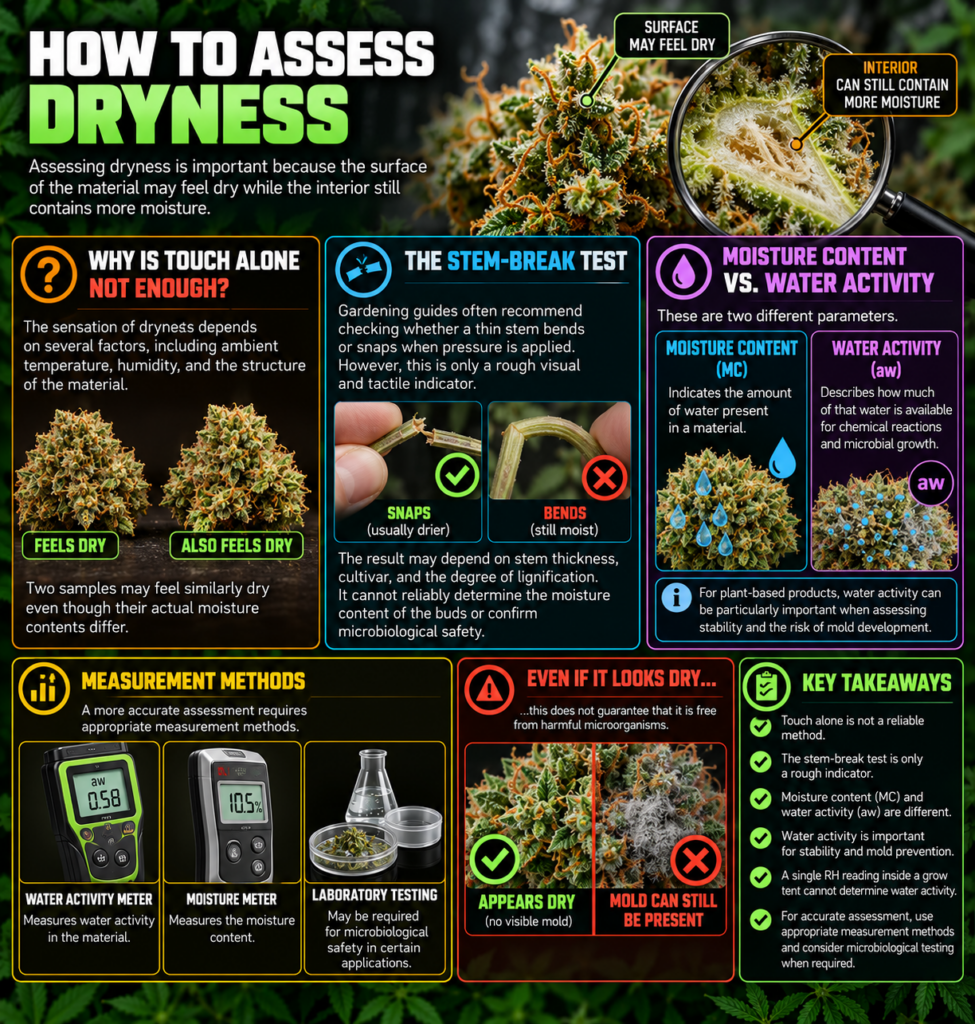
Assessing dryness is important because the surface of the material may feel dry while the interior still contains more moisture.
Why Is Touch Alone Not Enough?
The sensation of dryness depends on several factors, including ambient temperature, humidity, and the structure of the material.
Two samples may feel similarly dry even though their actual moisture contents differ.
The Stem-Break Test
Gardening guides often recommend checking whether a thin stem bends or snaps when pressure is applied. However, this is only a rough visual and tactile indicator.
The result may depend on stem thickness, cultivar, and the degree of lignification. It cannot reliably determine the moisture content of the buds or confirm microbiological safety.
Moisture Content vs. Water Activity
These are two different parameters.
Moisture content indicates the amount of water present in a material.
Water activity (aw) describes how much of that water is available for chemical reactions and microbial growth.
For plant-based products, water activity can be particularly important when assessing stability and the risk of mold development. However, it cannot be calculated directly from a single relative humidity reading taken inside a grow tent.
Even when the material appears dry, this does not guarantee that it is free from harmful microorganisms. A more accurate assessment requires appropriate measurement methods, and applications requiring quality control may also need microbiological testing.
10. Mold During Drying — Signs and Risks
Mold is one of the most significant risks associated with improper drying of plant material.
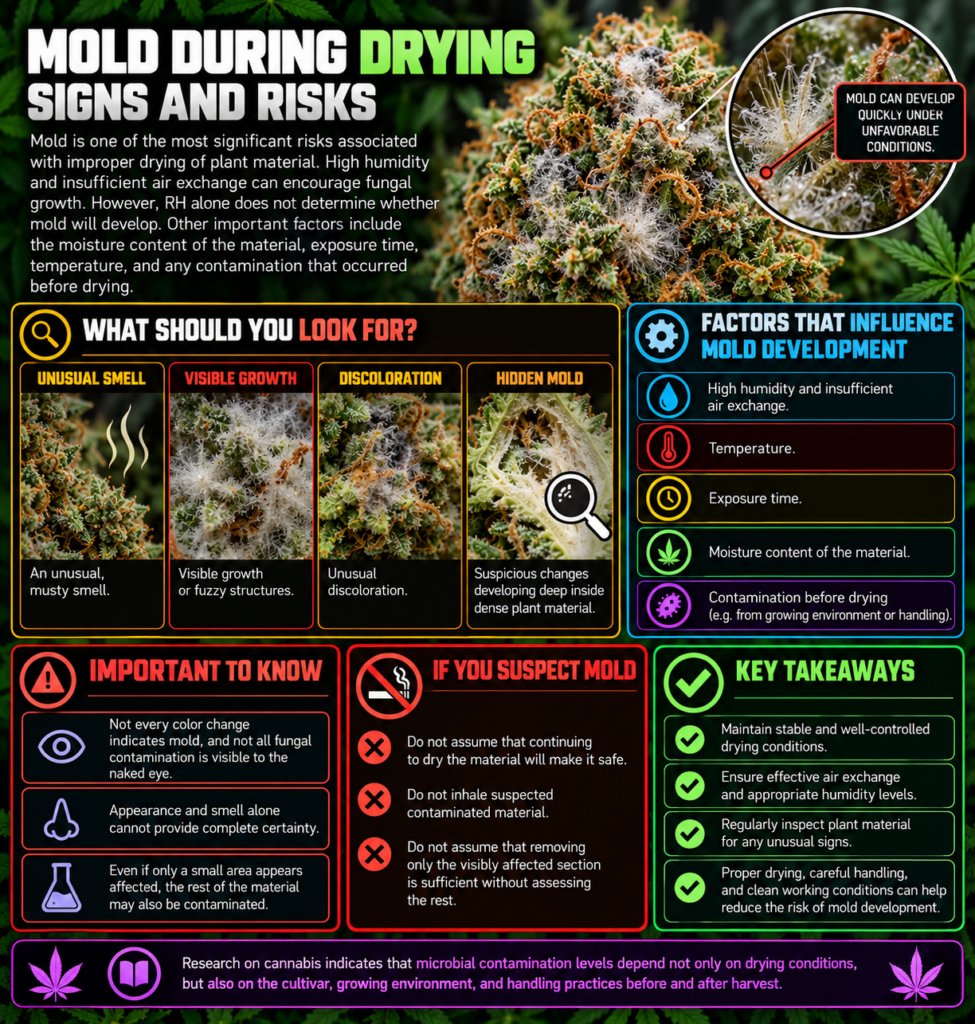
High humidity and insufficient air exchange can encourage fungal growth. However, RH alone does not determine whether mold will develop. Other important factors include the moisture content of the material, exposure time, temperature, and any contamination that occurred before drying.
What Should You Look For?
Potential warning signs include:
An unusual, musty smell.
Visible growth or fuzzy structures.
Unusual discoloration.
Suspicious changes developing deep inside dense plant material.
Not every color change indicates mold, and not all fungal contamination is visible to the naked eye. For this reason, appearance and smell alone cannot provide complete certainty.
If you suspect mold, do not assume that continuing to dry the material will make it safe. Do not inhale suspected contaminated material or assume that removing only the visibly affected section is sufficient without assessing the rest.
Research on cannabis indicates that microbial contamination levels depend not only on drying conditions but also on the cultivar, growing environment, and handling practices before and after harvest.
11. The Most Common Beginner Mistakes
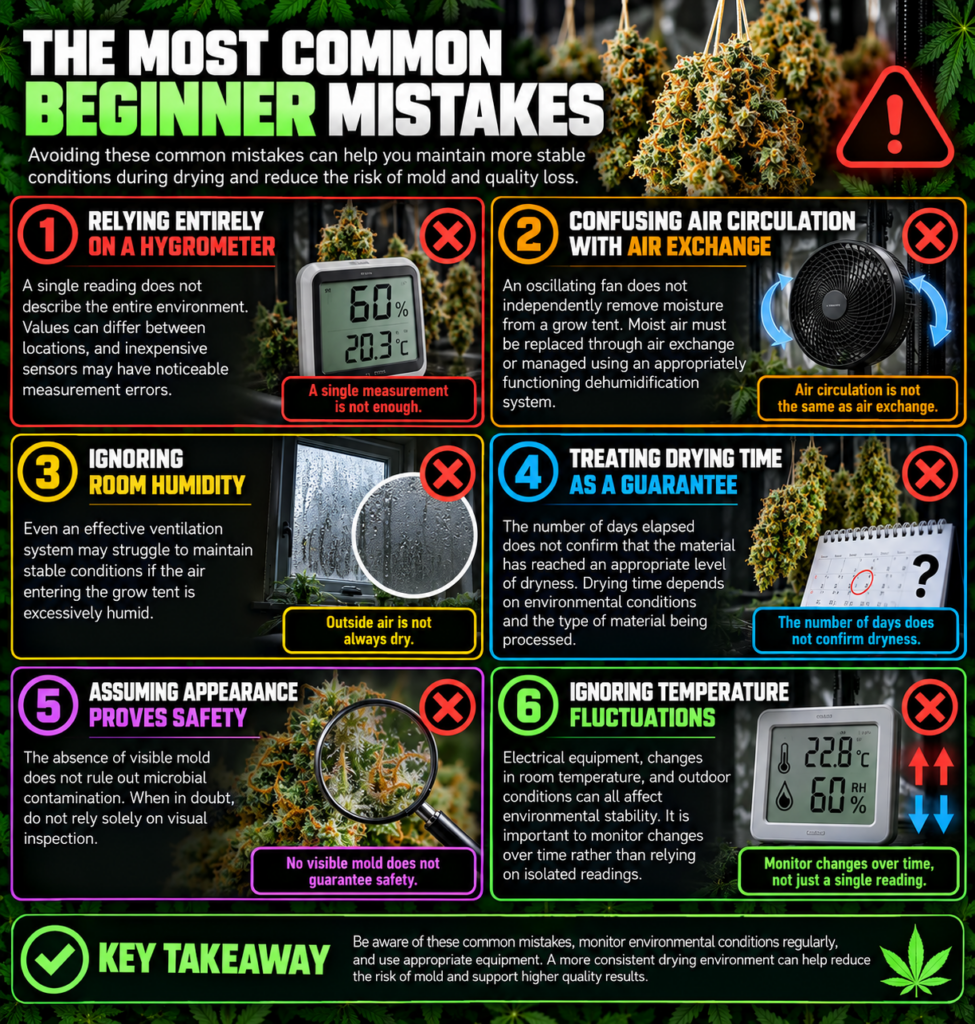
Relying Entirely on a Hygrometer
A single reading does not describe the entire environment. Values can differ between locations, and inexpensive sensors may have noticeable measurement errors.
Confusing Air Circulation with Air Exchange
An oscillating fan does not independently remove moisture from a grow tent. Moist air must be replaced through air exchange or managed using an appropriately functioning dehumidification system.
Ignoring Room Humidity
Even an effective ventilation system may struggle to maintain stable conditions if the air entering the grow tent is excessively humid.
Treating Drying Time as a Guarantee
The number of days elapsed does not confirm that the material has reached an appropriate level of dryness. Drying time depends on environmental conditions and the type of material being processed.
Assuming Appearance Proves Safety
The absence of visible mold does not rule out microbial contamination. When in doubt, do not rely solely on visual inspection.
Ignoring Temperature Fluctuations
Electrical equipment, changes in room temperature, and outdoor conditions can all affect environmental stability. It is important to monitor changes over time rather than relying on isolated readings.
12. Equipment Designed for Drying Cannabis
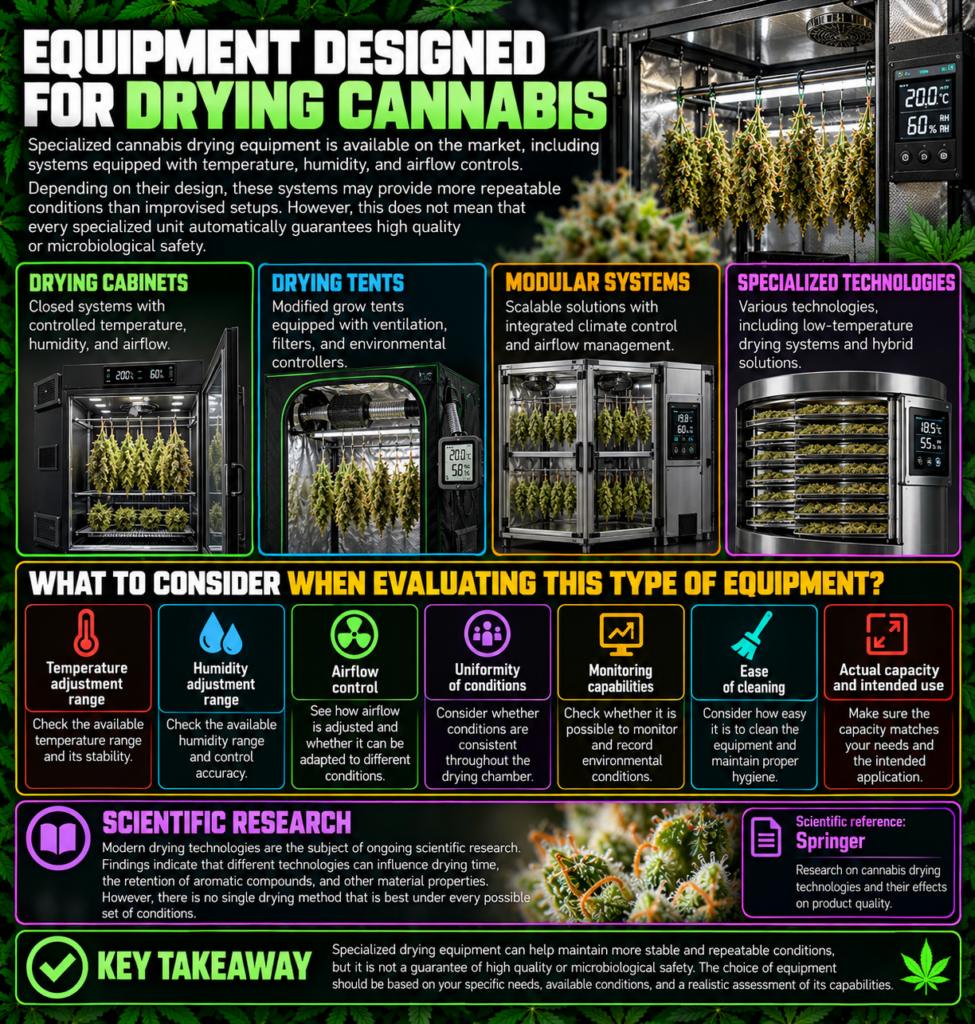
Specialized cannabis drying equipment is available on the market, including systems equipped with temperature, humidity, and airflow controls.
Depending on their design, these systems may provide more repeatable conditions than improvised setups. However, this does not mean that every specialized unit automatically guarantees high quality or microbiological safety.
When evaluating this type of equipment, consider the following:
The available temperature and humidity adjustment ranges.
How airflow is controlled.
The uniformity of conditions throughout the drying chamber.
The ability to monitor the process.
Ease of cleaning.
The actual capacity and intended use of the equipment.
Modern drying technologies are the subject of ongoing scientific research. Findings indicate that different technologies can influence drying time, the retention of aromatic compounds, and other material properties.
However, there is no single drying method that is best under every possible set of conditions.
Scientific reference: Springer — Research on cannabis drying technologies and their effects on product quality.
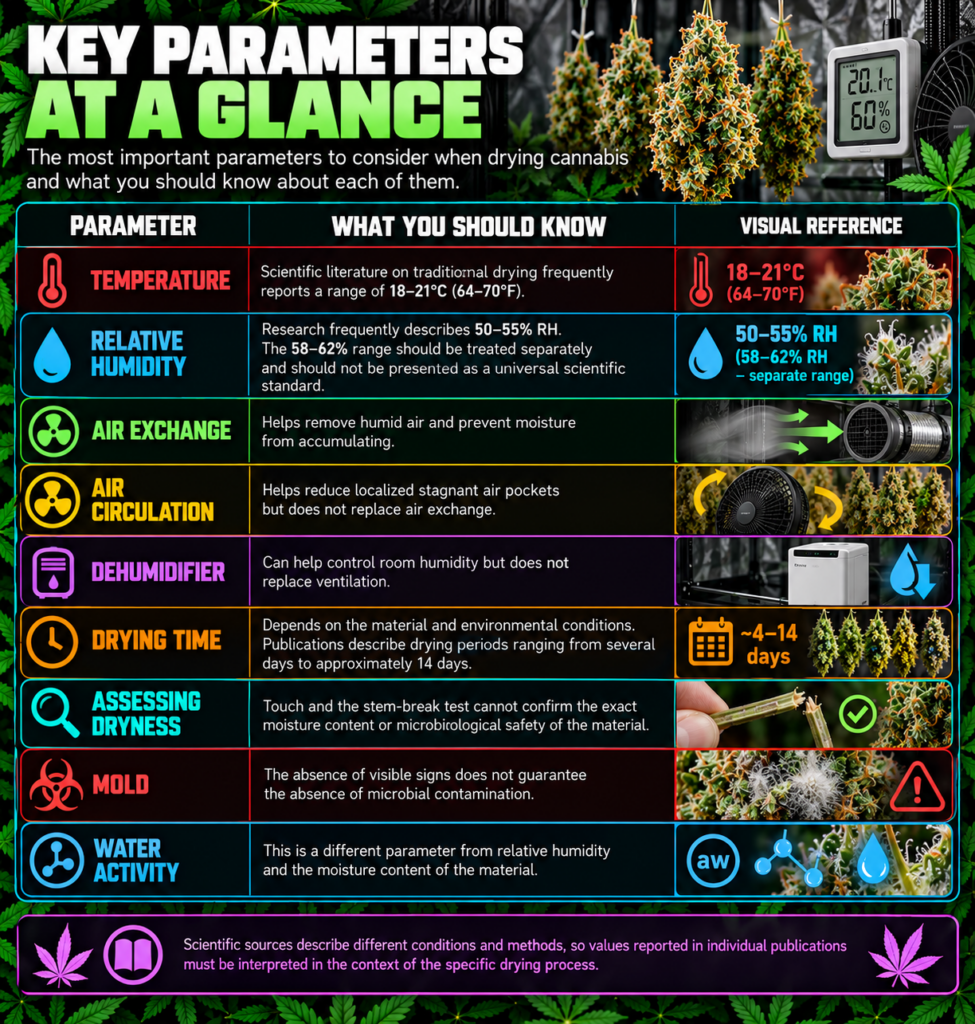
13. Key Parameters at a Glance
| Parameter | What You Should Know |
|---|---|
| Temperature | Scientific literature on traditional drying frequently reports a range of 18–21°C (64–70°F). |
| Relative humidity | Research frequently describes 50–55% RH. The 58–62% range should be treated separately and should not be presented as a universal scientific standard. |
| Air exchange | Helps remove humid air and prevent moisture from accumulating. |
| Air circulation | Helps reduce localized stagnant air pockets but does not replace air exchange. |
| Dehumidifier | Can help control room humidity but does not replace ventilation. |
| Drying time | Depends on the material and environmental conditions. Publications describe drying periods ranging from several days to approximately 14 days. |
| Assessing dryness | Touch and the stem-break test cannot confirm the exact moisture content or microbiological safety of the material. |
| Mold | The absence of visible signs does not guarantee the absence of microbial contamination. |
| Water activity | This is a different parameter from relative humidity and the moisture content of the material. |
Scientific sources describe different conditions and methods, so values reported in individual publications must be interpreted in the context of the specific drying process.
14. FAQ — Frequently Asked Questions
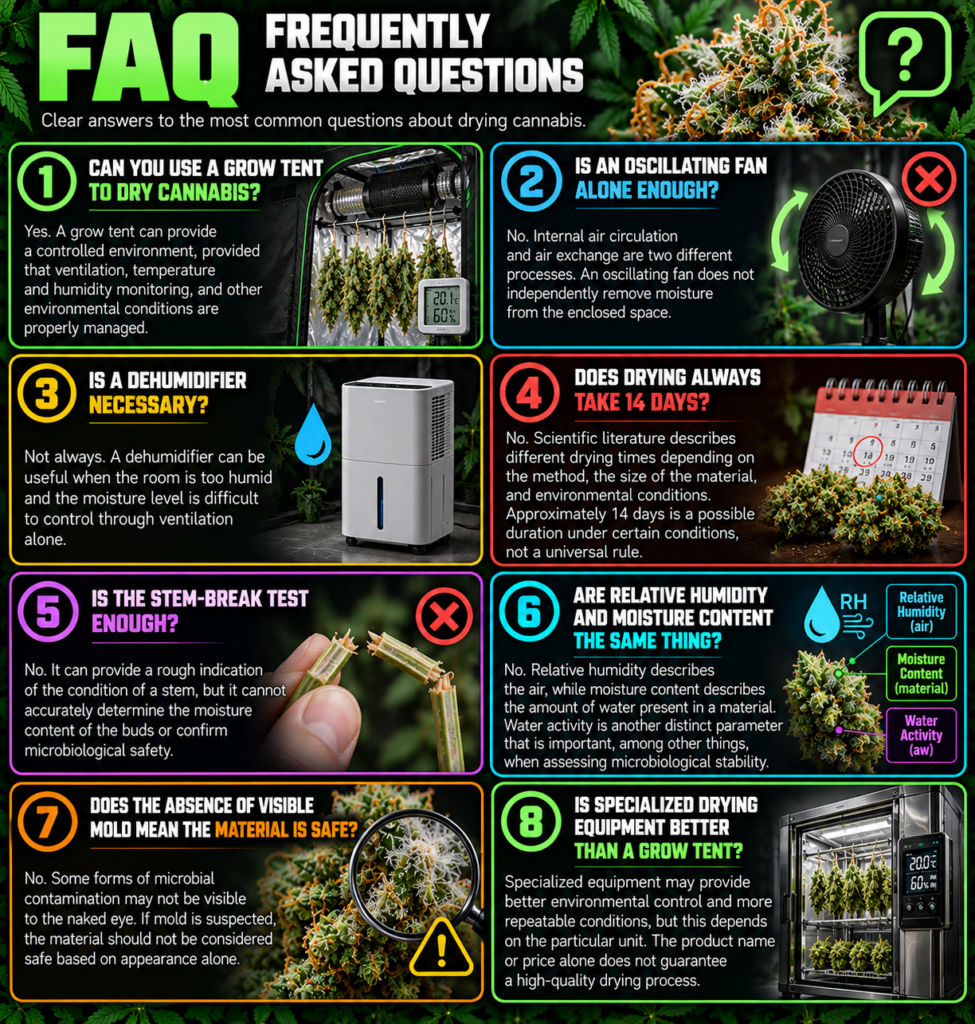
Can You Use a Grow Tent to Dry Cannabis?
Yes. A grow tent can provide a controlled environment, provided that ventilation, temperature and humidity monitoring, and other environmental conditions are properly managed.
Is an Oscillating Fan Alone Enough?
No. Internal air circulation and air exchange are two different processes. An oscillating fan does not independently remove moisture from the enclosed space.
Is a Dehumidifier Necessary?
Not always. A dehumidifier can be useful when the room is too humid and the moisture level is difficult to control through ventilation alone.
Does Drying Always Take 14 Days?
No. Scientific literature describes different drying times depending on the method, the size of the material, and environmental conditions. Approximately 14 days is a possible duration under certain conditions, not a universal rule.
Is the Stem-Break Test Enough?
No. It can provide a rough indication of the condition of a stem, but it cannot accurately determine the moisture content of the buds or confirm microbiological safety.
Are Relative Humidity and Moisture Content the Same Thing?
No. Relative humidity describes the air, while moisture content describes the amount of water present in a material. Water activity is another distinct parameter that is important, among other things, when assessing microbiological stability.
Does the Absence of Visible Mold Mean the Material Is Safe?
No. Some forms of microbial contamination may not be visible to the naked eye. If mold is suspected, the material should not be considered safe based on appearance alone.
Is Specialized Drying Equipment Better Than a Grow Tent?
Specialized equipment may provide better environmental control and more repeatable conditions, but this depends on the particular unit. The product name or price alone does not guarantee a high-quality drying process.
15. Conclusion
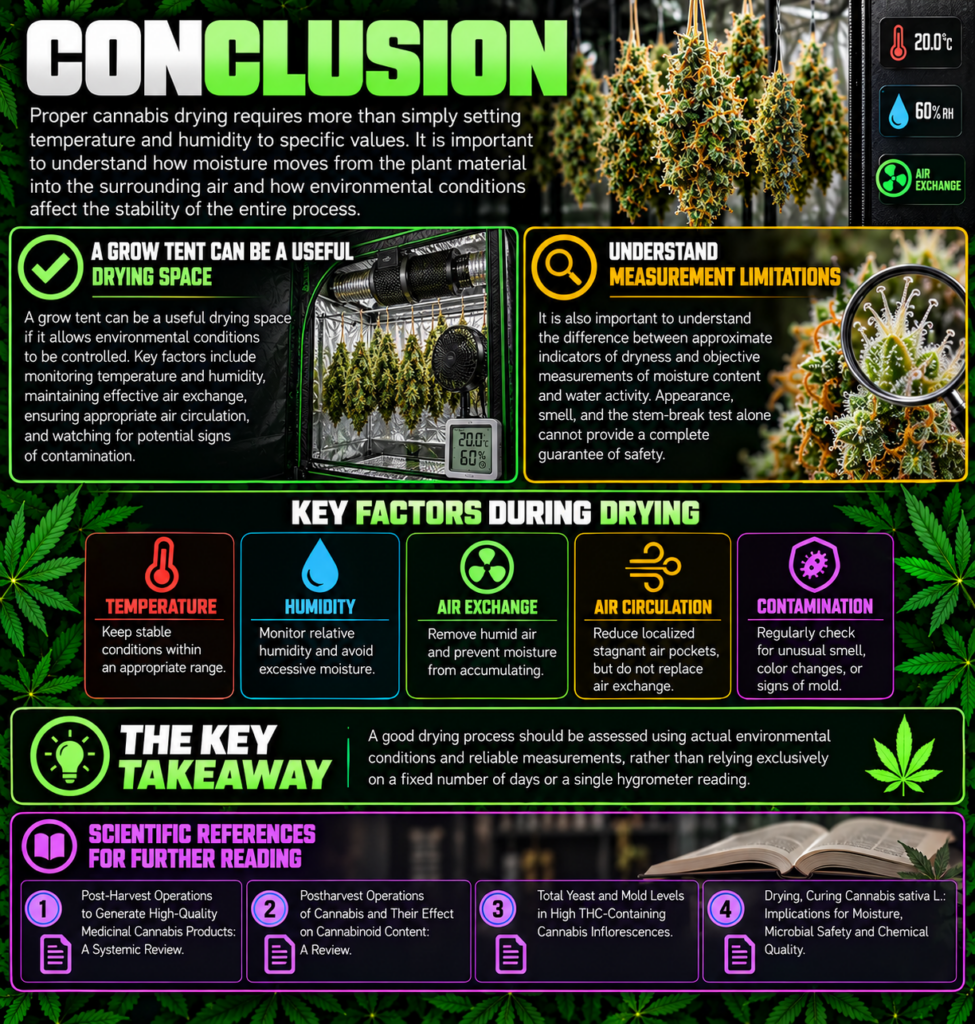
Proper cannabis drying requires more than simply setting temperature and humidity to specific values. It is important to understand how moisture moves from the plant material into the surrounding air and how environmental conditions affect the stability of the entire process.
A grow tent can be a useful drying space if it allows environmental conditions to be controlled. Key factors include monitoring temperature and humidity, maintaining effective air exchange, ensuring appropriate air circulation, and watching for potential signs of contamination.
It is also important to understand the difference between approximate indicators of dryness and objective measurements of moisture content and water activity. Appearance, smell, and the stem-break test alone cannot provide a complete guarantee of safety.
The key takeaway: A good drying process should be assessed using actual environmental conditions and reliable measurements, rather than relying exclusively on a fixed number of days or a single hygrometer reading.
Scientific References for Further Reading
Post-Harvest Operations to Generate High-Quality Medicinal Cannabis Products: A Systemic Review.
Postharvest Operations of Cannabis and Their Effect on Cannabinoid Content: A Review.
Total Yeast and Mold Levels in High THC-Containing Cannabis Inflorescences.
Drying, Curing Cannabis sativa L.: Implications for Moisture, Microbial Safety and Chemical Quality.
🌱 Keep Learning with LowKeyLab
Drying is just one step in understanding the full growing process. If you want to expand your knowledge, explore our other guides covering plant development, grow room equipment, environmental control, and common growing challenges.
Whether you’re just getting started or looking to improve your knowledge, the LowKeyLab Guides section is a great place to find practical information, useful explanations, and answers to common questions.
Explore more LowKeyLab guides and keep growing your knowledge!