How to Tell When a Cannabis Plant Is Ready for Harvest: A Complete Guide
How can you tell when a cannabis plant has reached full maturity and is ready for harvest? This is one of the most common questions asked by people who are new to growing cannabis in a grow tent. The problem is that the number of weeks in flower, leaf color, or the appearance of the buds alone is not enough to determine the right time with certainty.
In this guide, we explain which signs of maturity to look for, what trichomes are, how to interpret their appearance, and which common mistakes can lead to an inaccurate assessment of a plant’s maturity.
You’ll also learn why these signs should be evaluated together and why two plants of the same strain can mature at different rates.
Table of Contents
1. Why Is Harvest Timing So Important? {#why-harvest-timing-matters}
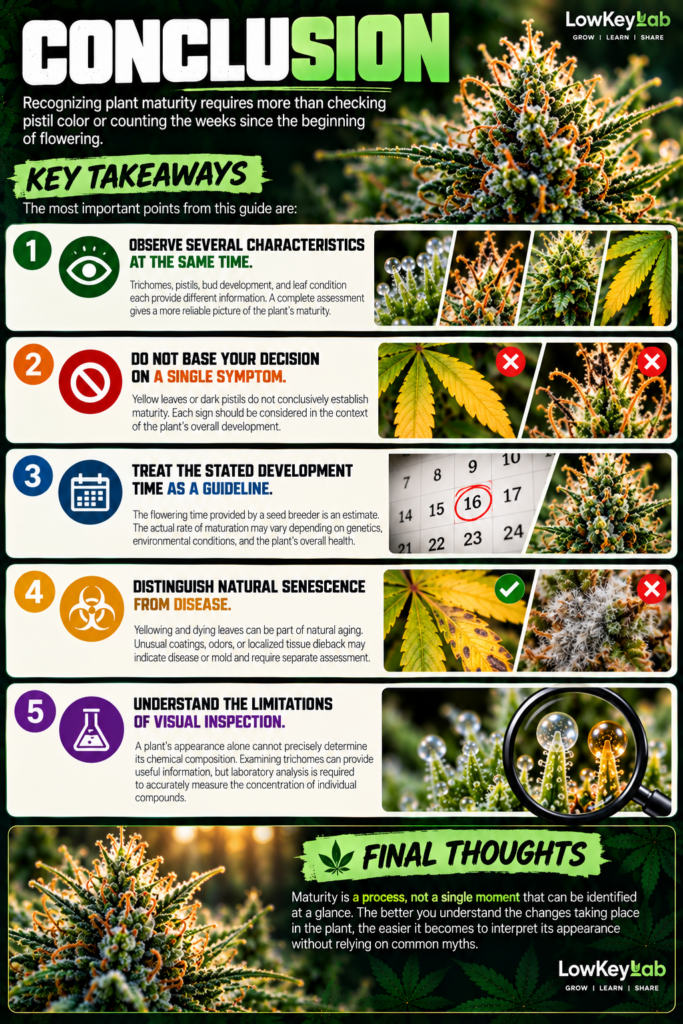
Plant maturity plays an important role in the quality and characteristics of the final product. In flowering plants, changes occur gradually: the buds develop, the appearance of plant tissues changes, and glandular trichomes go through successive stages of maturation.
Misjudging maturity and harvesting too early can result in immature buds. On the other hand, delaying harvest for too long can increase the risk of quality deterioration, tissue aging, and mold development.
However, there is no single universal harvest date that works for every grow. The rate of maturation depends on several factors, including the plant’s genetics, overall health, and environmental conditions.
The most important rule: Never assess maturity based on a single sign alone. You’ll get a much more reliable picture by evaluating several independent indicators at the same time.
2. How to Recognize Plant Maturity {#signs-of-maturity}
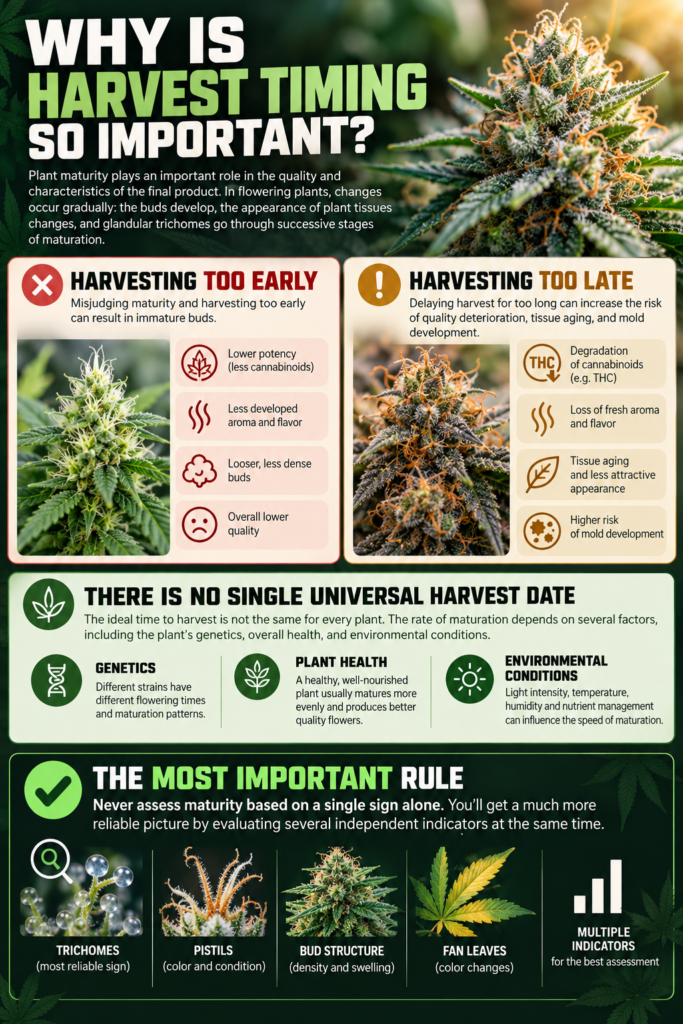
Toward the end of the growth cycle, a cannabis plant may display several characteristic changes. Not all of them necessarily occur at the same time or to the same extent.
Changes in Bud Appearance
As cannabis buds mature, they may become denser, and their individual structures may become more pronounced. During the final stages of development, the growth of new bud mass often begins to slow down.
However, size alone does not determine maturity. Some strains naturally produce looser buds, while others maintain a particular structure even toward the end of the flowering cycle.
Changes in Pistil Color
Light-colored pistils, often informally called hairs, may gradually darken and turn cream, orange, or brown.
This is a useful indicator, but it is not a definitive measure of maturity. Pistils can also change color due to stress, pollination, or physical damage.
Changes in Trichome Appearance
Glandular trichomes are structures responsible for producing and storing many of the compounds found in cannabis, including cannabinoids and terpenes.
Their appearance changes as the plant develops. For this reason, observing trichomes is one of the most commonly used methods of assessing bud maturity.
Natural Leaf Senescence
Toward the end of the growth cycle, some older fan leaves may turn yellow and gradually die off. This can be part of the plant’s natural aging process, but similar symptoms can also result from nutrient deficiencies, root problems, or improper watering.
Therefore, yellowing leaves should not be treated as standalone proof that a plant has reached maturity.
3. Trichomes: What Are They and What Do They Tell Us? {#trichomes}
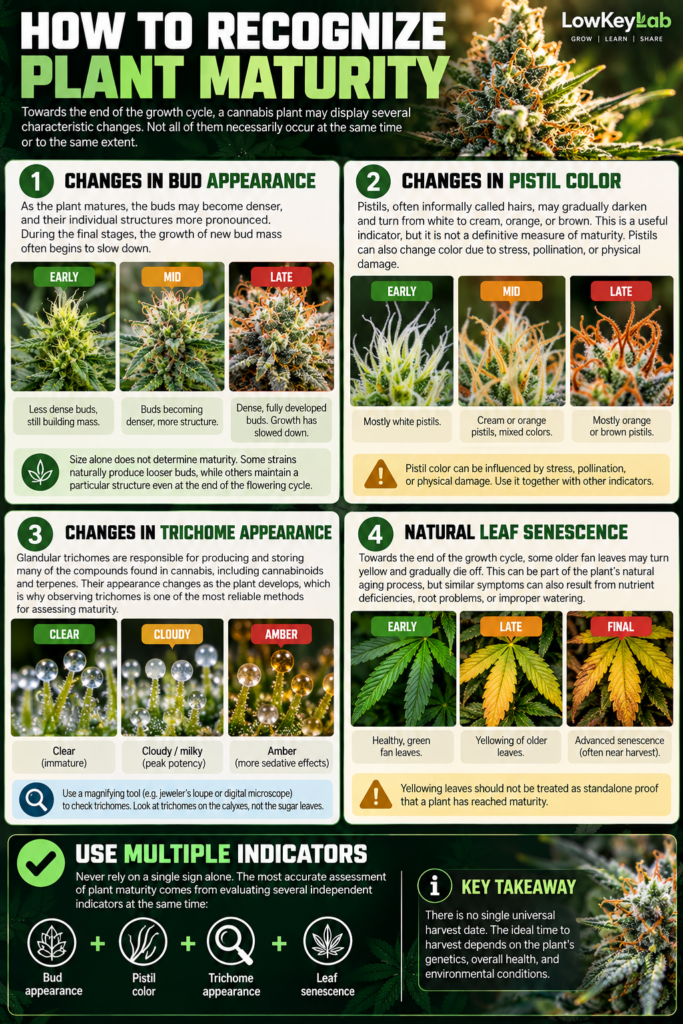
Trichomes are tiny structures that grow on the surface of a plant. In cannabis flowers, glandular trichomes are particularly important because they produce and accumulate various chemical compounds.
Due to their small size, accurately assessing them can be difficult without magnification.
What Do Trichomes Look Like?
Under sufficient magnification, some glandular trichomes resemble tiny mushrooms, with a stalk and a rounded head.
When examining a plant, it is important to distinguish trichome heads from pistils. These are two completely different structures, and their appearance and changes during development are not interchangeable indicators.
A magnifying loupe or digital microscope can be used to inspect small plant structures in detail.
Keep in mind that not all trichomes have the same shape, and their appearance can vary depending on the part of the plant and its stage of development.
4. How to Distinguish Clear, Cloudy, and Amber Trichomes {#trichome-colors}
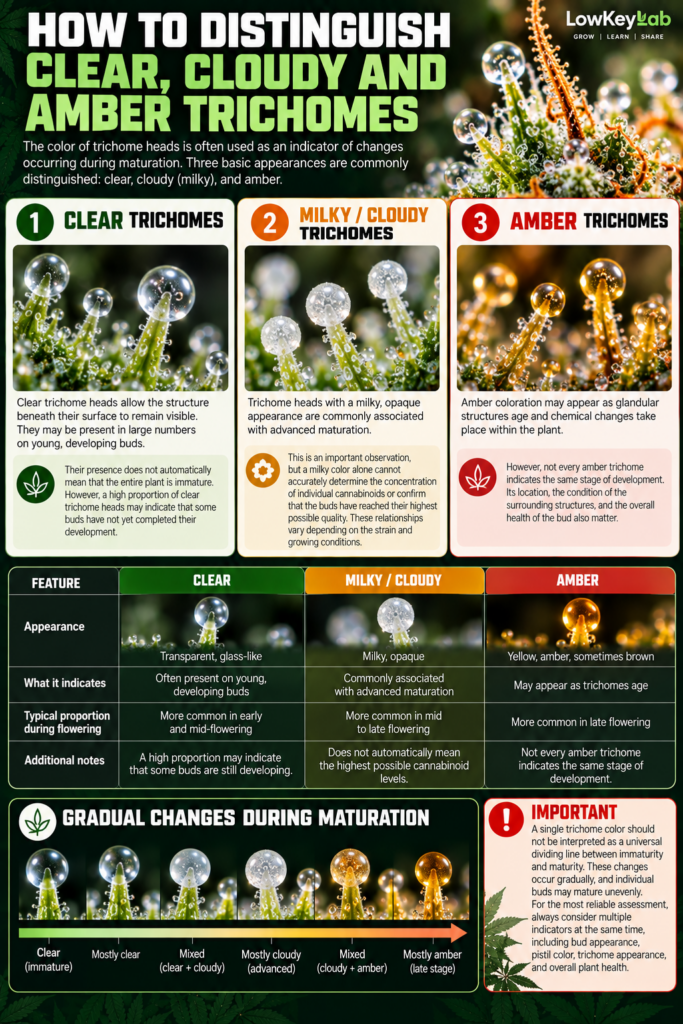
The color of trichome heads is often used as an indicator of changes occurring during maturation. Three basic appearances are commonly distinguished.
Clear Trichomes
Clear trichome heads allow the structure beneath their surface to remain visible. They may be present in large numbers on young, developing buds.
Their presence does not automatically mean that the entire plant is immature. However, a high proportion of clear trichome heads may indicate that some buds have not yet completed their development.
Milky or Cloudy Trichomes
Trichome heads with a milky, opaque appearance are commonly associated with advanced maturation.
This is an important observation, but a milky color alone cannot accurately determine the concentration of individual cannabinoids or confirm that the buds have reached their highest possible quality. These relationships vary depending on the strain and growing conditions.
Amber Trichomes
Amber coloration may appear as glandular structures age and chemical changes take place within the plant.
However, not every amber trichome indicates the same stage of development. Its location, the condition of the surrounding structures, and the overall health of the bud also matter.
Important: A single trichome color should not be interpreted as a universal dividing line between immaturity and maturity. These changes occur gradually, and individual buds may mature unevenly.
5. Do Brown Pistils Mean the Plant Is Ready? {#brown-pistils}
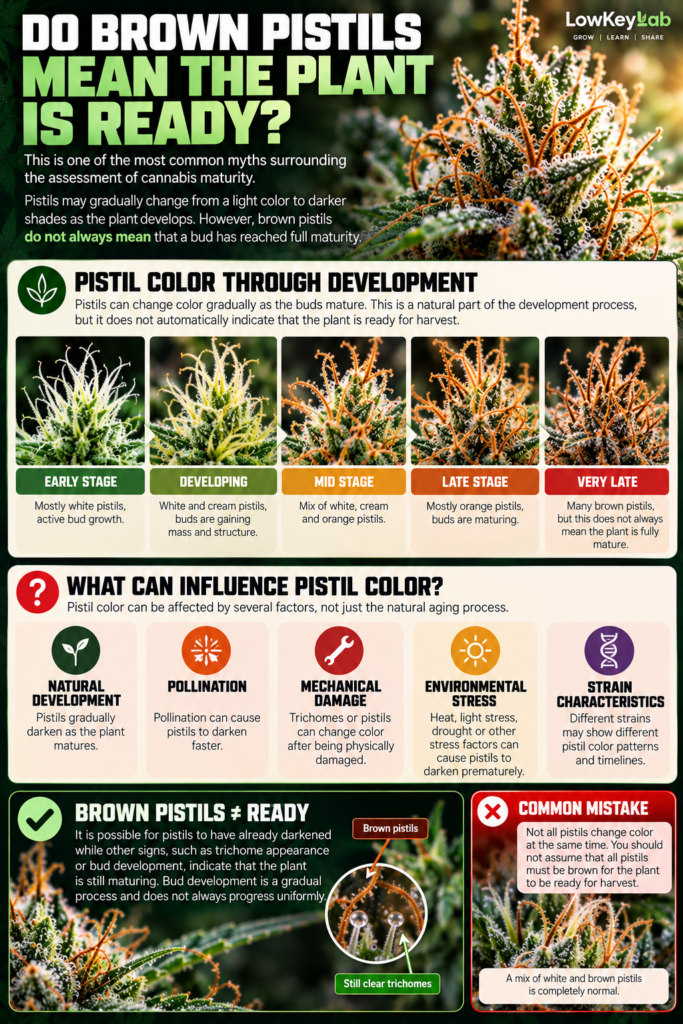
This is one of the most common myths surrounding the assessment of cannabis maturity.
Pistils may gradually change from a light color to darker shades as the plant develops. However, brown pistils do not always mean that a bud has reached full maturity.
Pistil color can also be influenced by other factors, including:
The natural course of development.
Pollination.
Mechanical damage.
Environmental stress.
Characteristics specific to the strain.
It is therefore possible for pistils to have already darkened while other signs indicate that the bud is still developing.
You should also not assume that all pistils must change color at the same time. Bud development is a gradual process and does not always progress uniformly.
6. Do Yellow Leaves Mean the Flowering Stage Is Over? {#yellow-leaves}
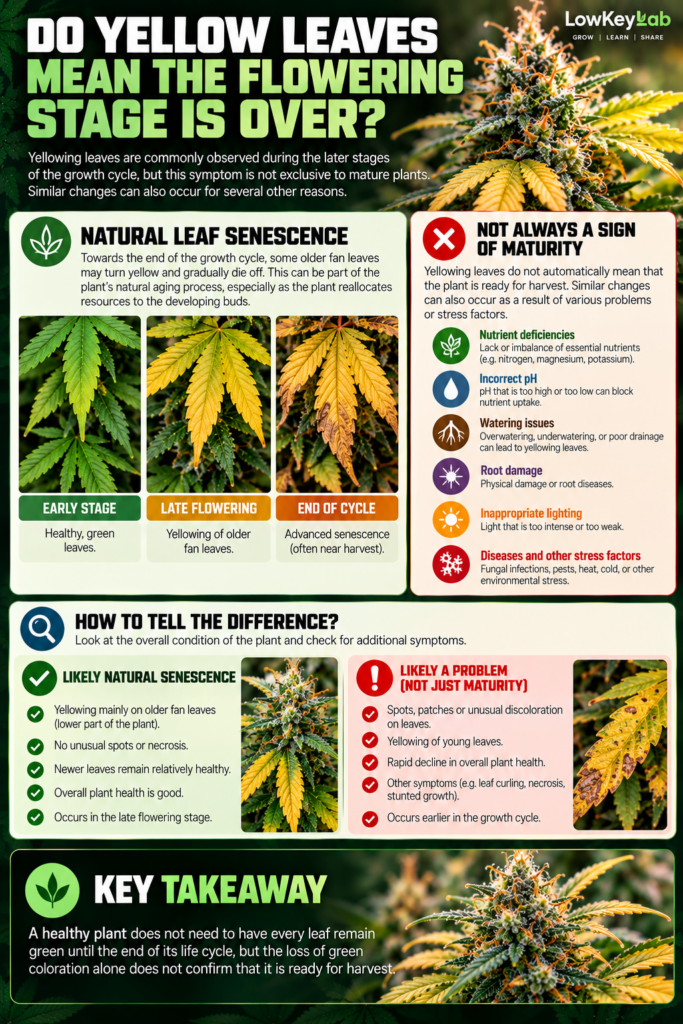
Yellowing leaves are commonly observed during the later stages of the growth cycle, but this symptom is not exclusive to mature plants.
Similar changes can also occur as a result of:
Nutrient deficiencies.
Incorrect growing medium pH.
Problems with water uptake.
Root damage.
Inappropriate lighting.
Diseases and other stress factors.
It is therefore important to distinguish natural plant senescence from a problem that developed earlier and is still progressing.
If yellowing is accompanied by spots, unusual discoloration, dying young leaves, or a decline in the overall health of the plant, it should not automatically be considered a sign of maturity.
Remember: A healthy plant does not need to have every leaf remain green until the end of its life cycle, but the loss of green coloration alone does not confirm that it is ready for harvest.
7. Is Counting Weeks of Flowering Enough? {#flowering-weeks}
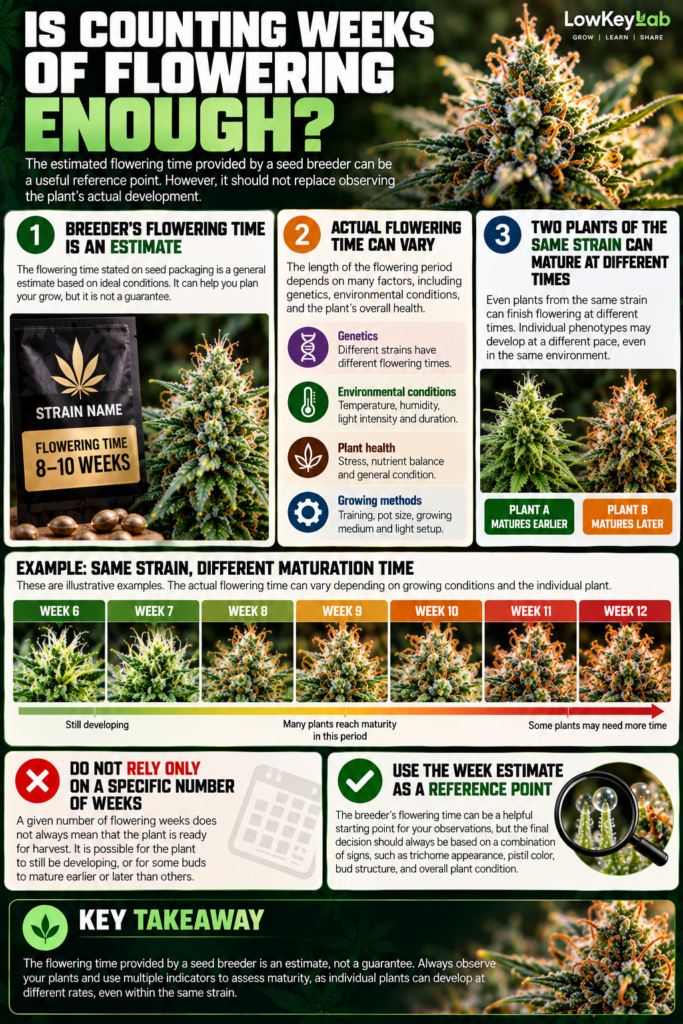
The estimated flowering time provided by a seed breeder can be a useful reference point. However, it should not replace observing the plant’s actual development.
The stated flowering time is generally an estimate. The actual length of the cycle may vary depending on genetics, environmental conditions, and the plant’s overall health.
In practice, two plants of the same strain can reach maturity at different times.
For this reason, you should not assume that a specific number of flowering weeks always means a plant is ready for harvest. Dates provided on seed packaging can help you plan your observations, but they are not a guarantee.
8. Common Mistakes When Assessing Plant Maturity {#common-mistakes}
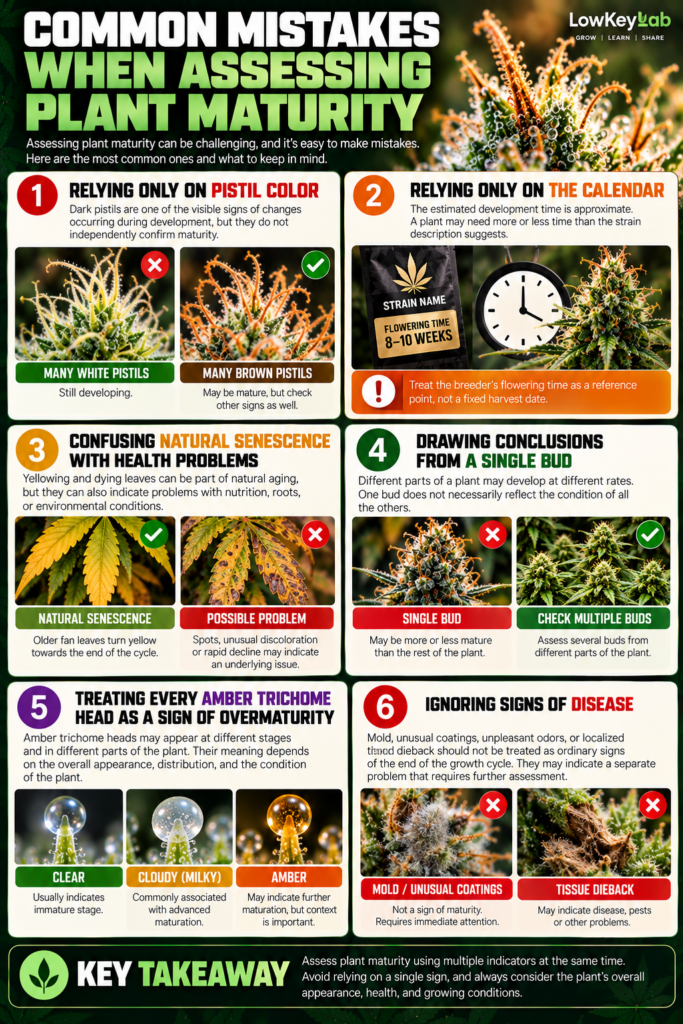
Mistake 1: Relying Only on Pistil Color
Dark pistils are one of the visible signs of changes occurring during development, but they do not independently confirm maturity.
Mistake 2: Relying Only on the Calendar
The estimated development time is approximate. A plant may need more or less time than the strain description suggests.
Mistake 3: Confusing Natural Senescence with Health Problems
Yellowing and dying leaves can be part of natural aging, but they can also indicate problems with nutrition, roots, or environmental conditions.
Mistake 4: Drawing Conclusions from a Single Bud
Different parts of a plant may develop at different rates. One bud does not necessarily reflect the condition of all the others.
Mistake 5: Treating Every Amber Trichome Head as a Sign of Overmaturity
Trichome color should be interpreted in the context of their overall appearance, distribution, and the condition of the plant.
Mistake 6: Ignoring Signs of Disease
Mold, unusual coatings, unpleasant odors, or localized tissue dieback should not be treated as ordinary signs of the end of the growth cycle. They may indicate a separate problem that requires further assessment.
9. Table: How to Interpret Signs of Maturity {#maturity-table}
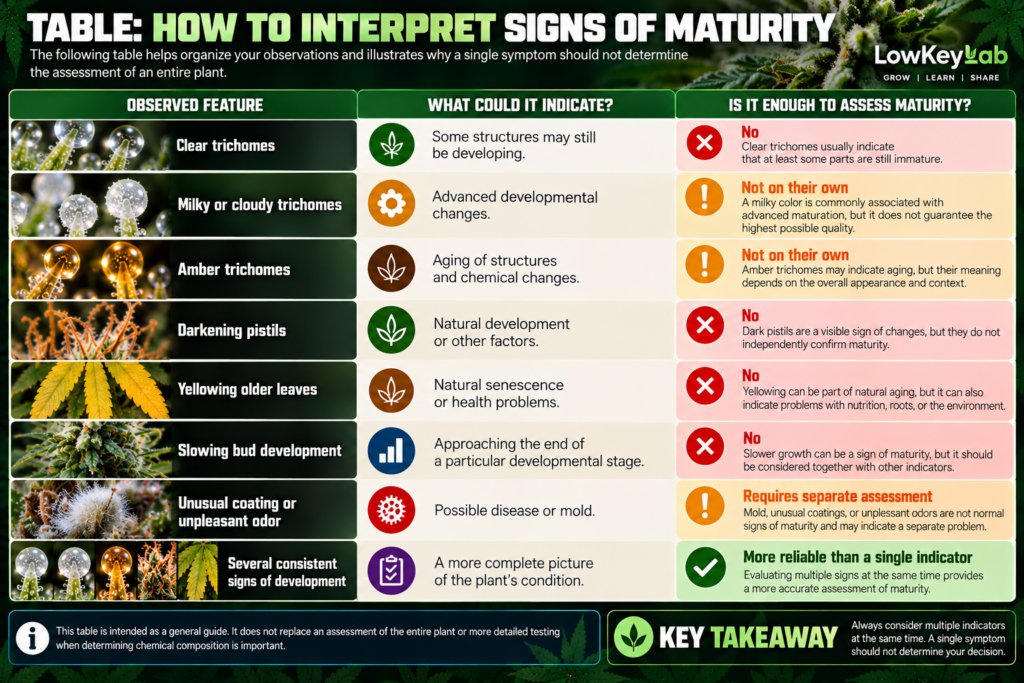
The following table helps organize your observations and illustrates why a single symptom should not determine the assessment of an entire plant.
| Observed Feature | What Could It Indicate? | Is It Enough to Assess Maturity? |
|---|---|---|
| Clear trichomes | Some structures may still be developing | No |
| Milky or cloudy trichomes | Advanced developmental changes | Not on their own |
| Amber trichomes | Aging of structures and chemical changes | Not on their own |
| Darkening pistils | Natural development or other factors | No |
| Yellowing older leaves | Natural senescence or health problems | No |
| Slowing bud development | Approaching the end of a particular developmental stage | No |
| Unusual coating or unpleasant odor | Possible disease or mold | Requires separate assessment |
| Several consistent signs of development | A more complete picture of the plant’s condition | More reliable than a single indicator |
This table is intended as a general guide. It does not replace an assessment of the entire plant or more detailed testing when determining chemical composition is important.
10. FAQ – Frequently Asked Questions {#faq}
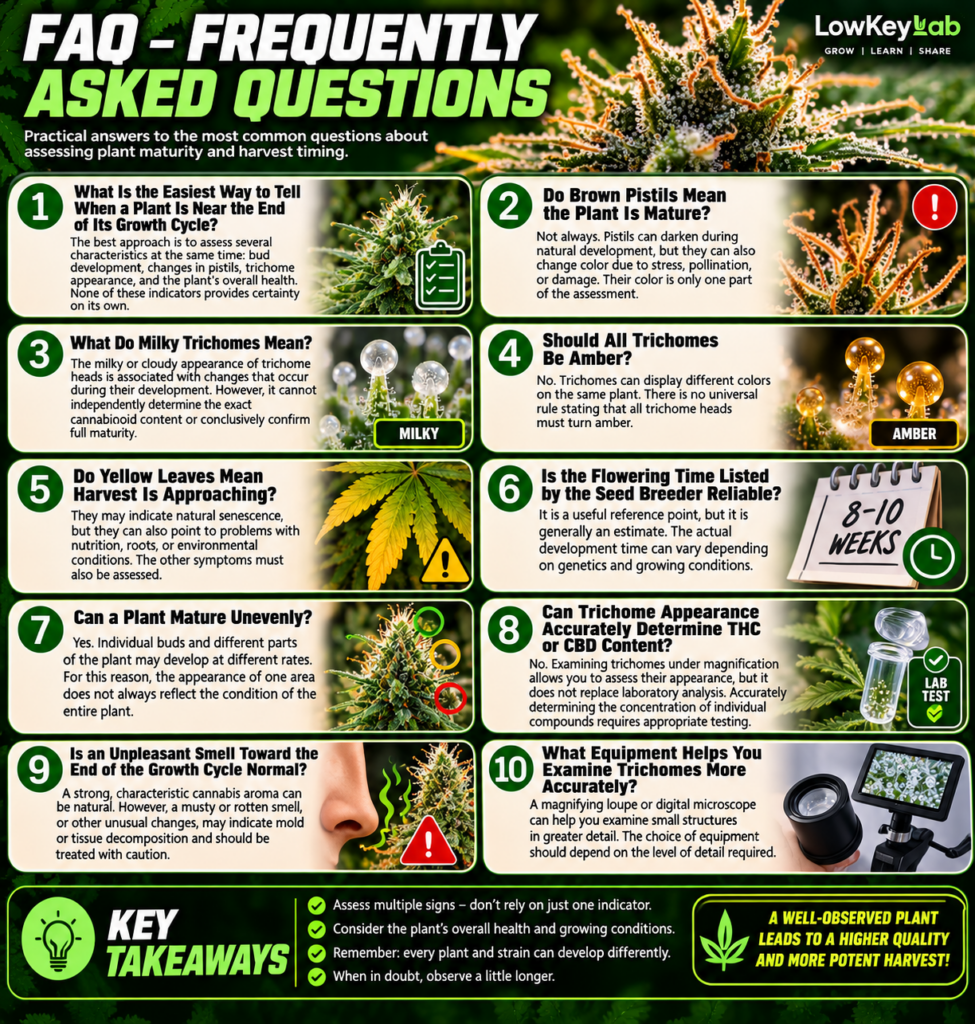
1. What Is the Easiest Way to Tell When a Plant Is Near the End of Its Growth Cycle?
The best approach is to assess several characteristics at the same time: bud development, changes in pistils, trichome appearance, and the plant’s overall health. None of these indicators provides certainty on its own.
2. Do Brown Pistils Mean the Plant Is Mature?
Not always. Pistils can darken during natural development, but they can also change color due to stress, pollination, or damage. Their color is only one part of the assessment.
3. What Do Milky Trichomes Mean?
The milky or cloudy appearance of trichome heads is associated with changes that occur during their development. However, it cannot independently determine the exact cannabinoid content or conclusively confirm full maturity.
4. Should All Trichomes Be Amber?
No. Trichomes can display different colors on the same plant. There is no universal rule stating that all trichome heads must turn amber.
5. Do Yellow Leaves Mean Harvest Is Approaching?
They may indicate natural senescence, but they can also point to problems with nutrition, roots, or environmental conditions. The other symptoms must also be assessed.
6. Is the Flowering Time Listed by the Seed Breeder Reliable?
It is a useful reference point, but it is generally an estimate. The actual development time can vary depending on genetics and growing conditions.
7. Can a Plant Mature Unevenly?
Yes. Individual buds and different parts of the plant may develop at different rates. For this reason, the appearance of one area does not always reflect the condition of the entire plant.
8. Can Trichome Appearance Accurately Determine THC or CBD Content?
No. Examining trichomes under magnification allows you to assess their appearance, but it does not replace laboratory analysis. Accurately determining the concentration of individual compounds requires appropriate testing.
9. Is an Unpleasant Smell Toward the End of the Growth Cycle Normal?
A strong, characteristic cannabis aroma can be natural. However, a musty or rotten smell, or other unusual changes, may indicate mold or tissue decomposition and should be treated with caution.
10. What Equipment Helps You Examine Trichomes More Accurately?
A magnifying loupe or digital microscope can help you examine small structures in greater detail. The choice of equipment should depend on the level of detail required.
11. Conclusion {#conclusion}
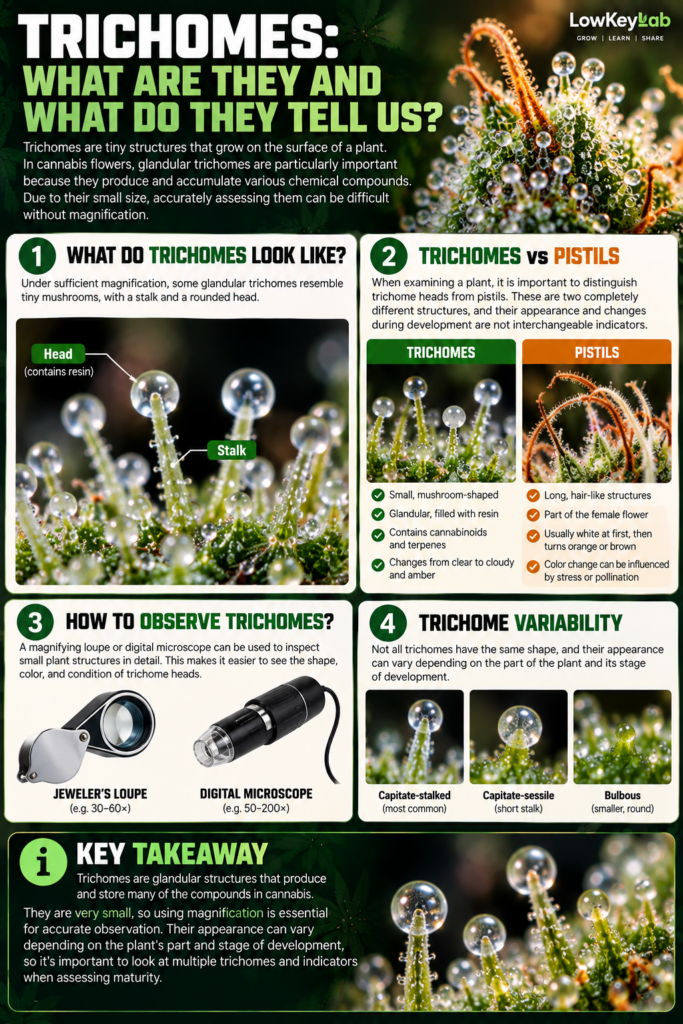
Recognizing plant maturity requires more than checking pistil color or counting the weeks since the beginning of flowering.
The key takeaways from this guide are:
Observe several characteristics at the same time. Trichomes, pistils, bud development, and leaf condition each provide different information.
Do not base your decision on a single symptom. Yellow leaves or dark pistils do not conclusively establish maturity.
Treat the stated development time as a guideline. The actual rate of maturation may vary.
Distinguish natural senescence from disease. Unusual coatings, odors, or localized tissue dieback require separate assessment.
Understand the limitations of visual inspection. A plant’s appearance alone cannot precisely determine its chemical composition.
Maturity is a process, not a single moment that can be identified at a glance. The better you understand the changes taking place in the plant, the easier it becomes to interpret its appearance without relying on common myths.